All Nine Award Winners in Japan’s NEDO Quantum Challenge Leverage IBM Hardware; Four Dedicated Industry Sponsor Prizes Awarded
In October 2026, Japan's NEDO Quantum Challenge announced the winners of its first season, recognizing nine projects for their advancements in quantum…
Japan’s New Energy and Industrial Technology Development Organization (NEDO), operating under the Ministry of Economy, Trade and Industry (METI), has formally announced the award recipients for Season 1 of its national prize-based competition, the "NEDO Prize-Funded Program / Development of Social Problem Solutions Using Quantum Computing." The award ceremony was held at the Marunouchi Building Hall in Tokyo following the conclusion of research evaluations across 87 competitive entries.
The program aims to accelerate the transition of quantum algorithms from theoretical concepts to practical industrial implementation. Out of 87 project submissions—spanning 46 in Society 5.0, 25 in Quality of Life (QoL), and 16 in Cool Japan—judges awarded nine general prizes, while also presenting dedicated corporate sponsor awards via the private-sector-led WIRED Quantum Partnership (sponsored by Quantinuum, Mitsui & Co., Mitsubishi Estate, and Toshiba). All nine general track award winners conducted their research on IBM Quantum hardware, with six relying exclusively on IBM superconducting systems.
[ NEDO Quantum Challenge Season 1: Complete Prize Winners & Project Matrix ] | |||
Competition Area | Award Recipient | Prize Level | Technical Scope & Target Problem |
• Quality of Life (QoL) (25 Entries) | • Shionogi & Co., Ltd. | • 1st Place ¥40M (~$255,000 USD) | • Quantum-HPC hybrid drug discovery evaluating intermolecular binding energy and structure generation via Deep QSCI. |
• Mori-san Love Club | • 2nd Place ¥20M (~$128,000 USD) | • Gut microbiome swarm design pairing dynamical systems stability with quantum search algorithms and Q-CTRL functions. | |
• Q4Health | • 3rd Place ¥10M (~$64,000 USD) | • Next-generation antimicrobial microbiome engineering using diagonal Pauli encodings and Kipu Quantum's Iskay algorithm. (Spun out as startup). | |
• Society 5.0 (46 Entries) | • NV Learning Center | • 2nd Place ¥20M (~$128,000 USD) (1st Place Vacant) | • Disaster detection and predictive simulation using quantum sensors, quantum Krylov learning, and state transfer protocols. |
• From Setouchi to the Quantum World | • 3rd Place (Tie) ¥10M (~$64,000 USD) | • Large-scale automotive body design and weight reduction integrating quantum annealing with QAOA. | |
• Q-Chainners (KDDI Research) | • 3rd Place (Tie) ¥10M (~$64,000 USD) | • Blockchain transaction security using gate-based quantum hash generation across four IBM QPUs. | |
• Cool Japan (16 Entries) | • EntangleTune | • 2nd Place ¥20M (~$128,000 USD) (1st Place Vacant) | • Timbre generation and musical performance infrastructure using quantum interference and entanglement. (Spun out as startup). |
• Mitsubishi Chemical / Keio / ASU / IBM | • 3rd Place (Tie) ¥10M (~$64,000 USD) | • Multi-objective hybrid optimization for low-carbon chemical synthesis on the Univ. of Tokyo IBM System One. | |
• Qrazy Qreators | • 3rd Place (Tie) ¥10M (~$64,000 USD) | • AI-assisted manga and animation generation using quantum flow matching (~30s runtime per frame). | |
[ WIRED Quantum Partnership Sponsor Awards ] | |||
• Quantinuum Award | • Team Salt | • Quantum Pathfinder | • Large-scale power distribution network optimization using quantum algorithms. |
• Mitsui & Co. Award | • Team KvN | • Industrial Hybrid Solutions | • Fluid dynamics simulation applying extended Koopman-von Neumann linearization to non-linear equations. |
• Mitsubishi Estate Award | • ActLab | • Quantum Urban Impact | • Active learning framework to accelerate QSCI measurements for next-generation materials discovery. |
• Toshiba Award | • Q-MOBILITY-AI | • Optimal Future Award | • Large-scale quantum annealing for unmanned aerial vehicle (UAV) flight routing and autonomous swarm control. |
Rigorous Benchmark Standards and Transition to Season 2 Commercialization
The judging committee, chaired by Professor Keisuke Fujii of Kyoto University, held the evaluation criteria to strict computational standards. Consequently, the committee declined to award first-place prizes in both Society 5.0 and Cool Japan, and withheld the Jury Chairman's Special Award, setting a high threshold for projects claiming verifiable advantages over classical supercomputing.
Across the challenge, 65 of the 80 participating teams (81%) selected IBM Quantum Platform systems, logging 11,159 execution jobs and utilizing over 5,900 minutes of QPU compute time. IBM Fellow and Director of IBM Research Jay Gambetta emphasized that participant success was accelerated by coupling hardware with third-party software catalog extensions, citing the direct deployment of Q-CTRL’s error-mitigation tooling and Kipu Quantum’s Iskay algorithm via Qiskit Functions.
During the ceremony, special lectures were delivered by Makoto Gonokami, President of RIKEN, and Mitsunobu Koshiba, Chairman of the Quantum Innovation Initiative (QII) Council. To ensure long-term commercialization beyond the prize awards, NEDO announced a series of post-challenge support mechanisms:
Case Study Release (December 2026): NEDO will publish a comprehensive "Collection of Case Studies on Understanding and Connecting with Quantum Technology" to profile industrial problem definitions, technical architectures, and commercialization plans for partner matching.
R&D Barrier Analysis (March 2027): A structured analysis report titled "Quantum R&D: The Common Sense of the Future" will synthesize operational lessons and technical bottlenecks identified across Season 1 participants.
Launch of Season 2 (2026–2027): Research operations for Season 2 are already underway, focusing on expanding startup incubation, business model planning, and corporate technology transfer.
Review the official government release on the NEDO Newsroom here, examine the full challenge review on the NEDO Quantum Challenge Portal here, read technical hardware commentary via the IBM Quantum Research Blog here, and view Jay Gambetta's commentary on LinkedIn here.
October 23, 2026
Related Intelligence

Test of USydney article with HTML.
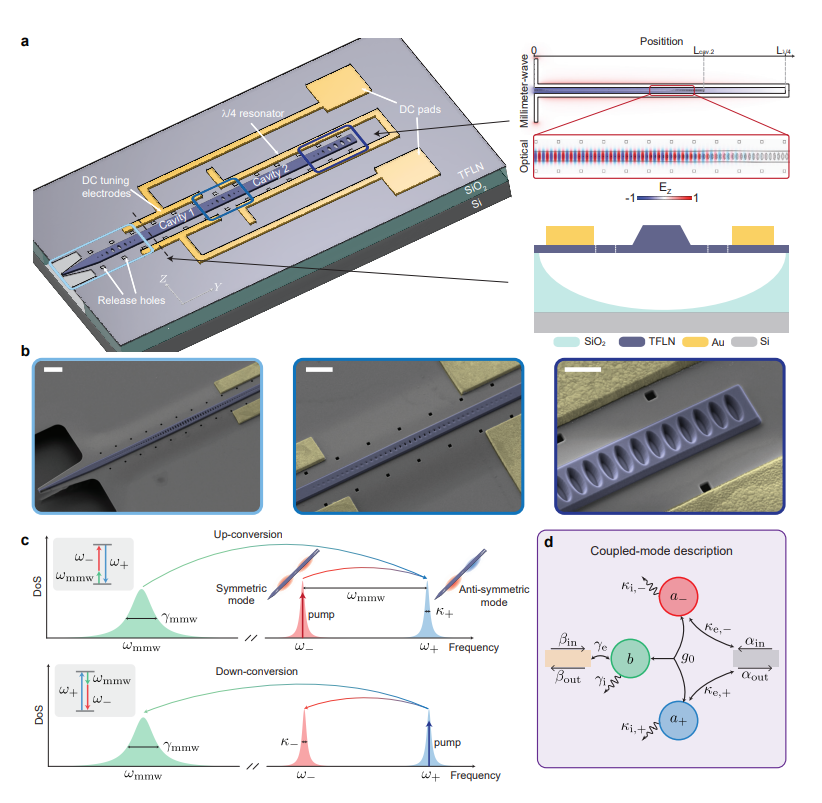
EPFL Demonstrates Millimeter-Wave-to-Optical Transducer with 67% Internal Efficiency
November 10, 2026
Why Quantum Hardware Needs Its Own Threat Model
November 9, 2026
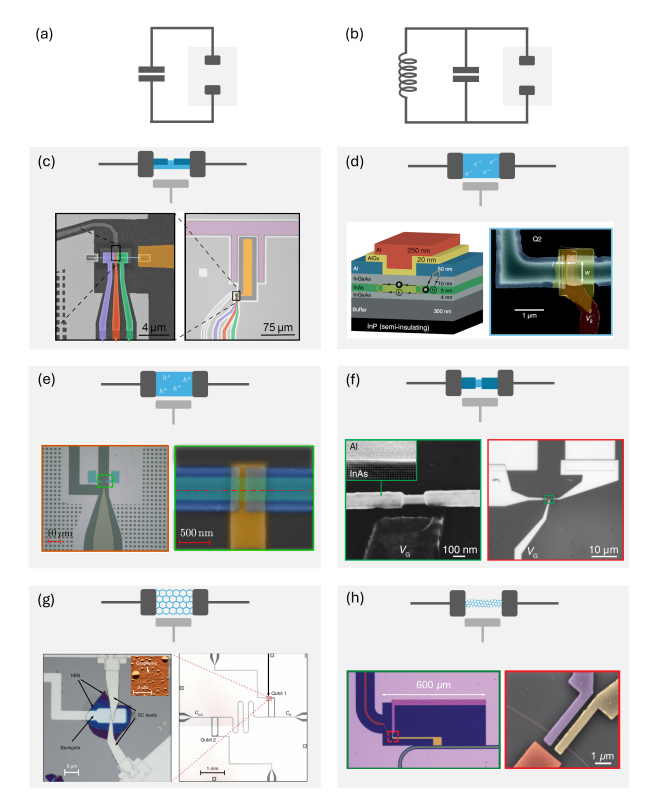
Physics Reports Analysis Evaluates Emergence of Hybrid Semiconductor–Superconducting Qubit Architectures
November 9, 2026
DLR Develops Scalable Unitary Data Encoding Beating Exponential State-Preparation Depth
November 9, 2026
IonQ and Classiq Outline Architectural Trade-Offs in Fault-Tolerant Resource Estimation
November 9, 2026