BIRD Foundation Backs Qarakal Quantum and Quantum Elements for $2.4 Million Quantum-Accelerated Catalysis Project
The BIRD Foundation has awarded a conditional grant to Qarakal Quantum and Quantum Elements for a joint quantum computational chemistry project. …
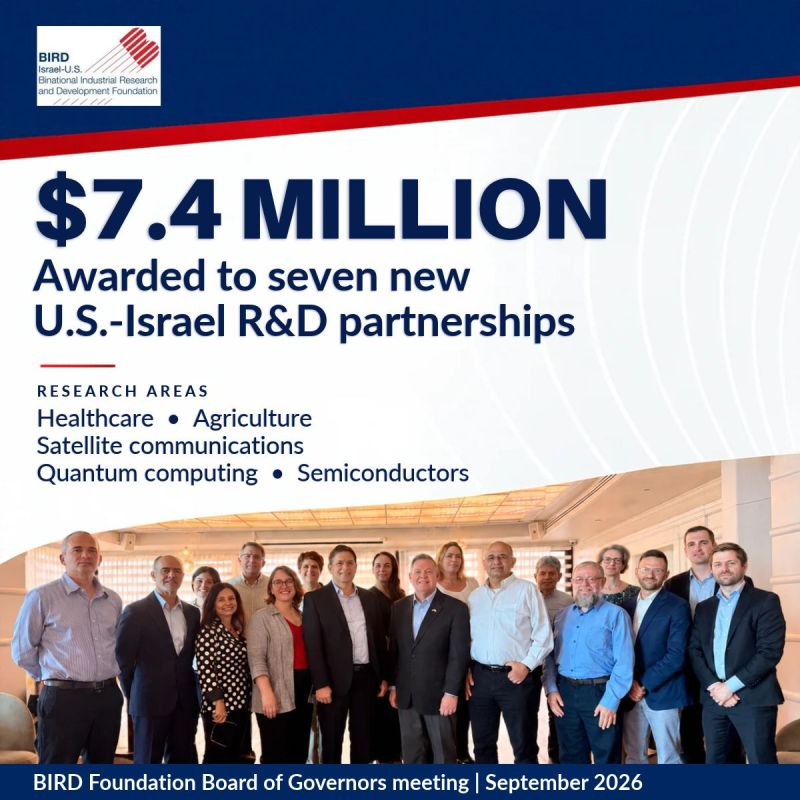
The Israel-U.S. Binational Industrial Research and Development (BIRD) Foundation has approved matching grant funding for a joint $2.4 million quantum computational chemistry initiative between Tel Aviv-based Qarakal Quantum and California-based Quantum Elements. Selected by the BIRD Board of Governors as part of a $7.4 million funding round unlocking $20 million in public-private deep-tech projects, the program is evaluated by reviewers appointed by the National Institute of Standards and Technology (NIST) and the Israel Innovation Authority. BIRD grants fund up to 50% of an approved venture's project budget (up to $1.2 million for this initiative) on a non-dilutive matching basis, repaid through commercial royalties once revenue is generated.
Integrated Hardware-Software Co-Design Stack for Surface Catalysis
The collaboration pairs Qarakal Quantum's modular superconducting quantum architecture with Quantum Elements' AI-driven digital twins and error-suppression toolchains to build a simulation platform for heterogeneous surface catalysis. Modeling active-site electron correlations and bond-breaking intermediate states in transition-metal catalysts exceeds the tractability limits of classical Density Functional Theory (DFT) and post-Hartree-Fock approximations. Rather than running chemistry algorithms on uncharacterized physical devices, the project employs a vertical hardware-software co-design strategy: Quantum Elements models the specific noise parameters and physical crosstalk of Qarakal's 3D Pangaea bus architecture, optimizing compiler pipelines, pulse-level control, and dynamical decoupling techniques—drawing on the firm's error-suppression methods deployed in tools like Orbit—before deploying circuits on physical superconducting hardware.
BIRD Foundation Bilateral Quantum Project Specifications | ||
Project Dimension | Institutional Framework | Technical Scope & Implementation |
Bilateral Consortium | Qarakal Quantum (Tel Aviv, Israel) & Quantum Elements (Los Angeles, CA) | Joint commercialization of a hardware-software simulation platform for surface chemistry. |
Project Financing | $2.4 Million Total Budget (BIRD Foundation Matching Grant) | Non-dilutive funding covering up to 50% of development costs, repaid via commercial royalties. |
Hardware Architecture | Qarakal Quantum Modular Superconducting Processor | 3D Pangaea modular bus and routing motherboard assigning dedicated physical resources to algorithmic roles. |
Software & Control Layer | Quantum Elements AI Digital Twins & Error Suppression | Pre-execution noise-environment modeling, calibration optimization, and pulse-level error mitigation. |
Target Chemistry Workloads | Heterogeneous Surface Catalysis | Predictive modeling of transition-state kinetics, clean hydrogen production, CO2 conversion, and nitrogen fixation. |
Industrial Objectives and Commercial Simulation Constraints
The initiative aims to deliver a validated minimum viable product (MVP) featuring application programming interfaces (APIs) tailored for computational chemists and industrial materials engineers in the chemical and energy sectors. Heterogeneous catalytic processes underpin an estimated 80% to 90% of global chemical processing products, representing an annual market of $5 to $6 trillion where computational screening of transition-metal surfaces can reduce experimental development cycles. However, translating prototype co-design workflows into verifiable computational advantage over classical High-Performance Computing (HPC) clusters requires executing chemical Hamiltonian mappings within the coherence and connectivity constraints of near-term superconducting modules, while scaling physical hardware without accumulating prohibitive phase noise across inter-module interconnects.
Project details and commercial objectives are outlined in the Qarakal Quantum Project Announcement here, with institutional grant background available via the BIRD Foundation Newsroom here.
October 24, 2026 / Updated: October 28, 2026
Related Intelligence

Test of USydney article with HTML.
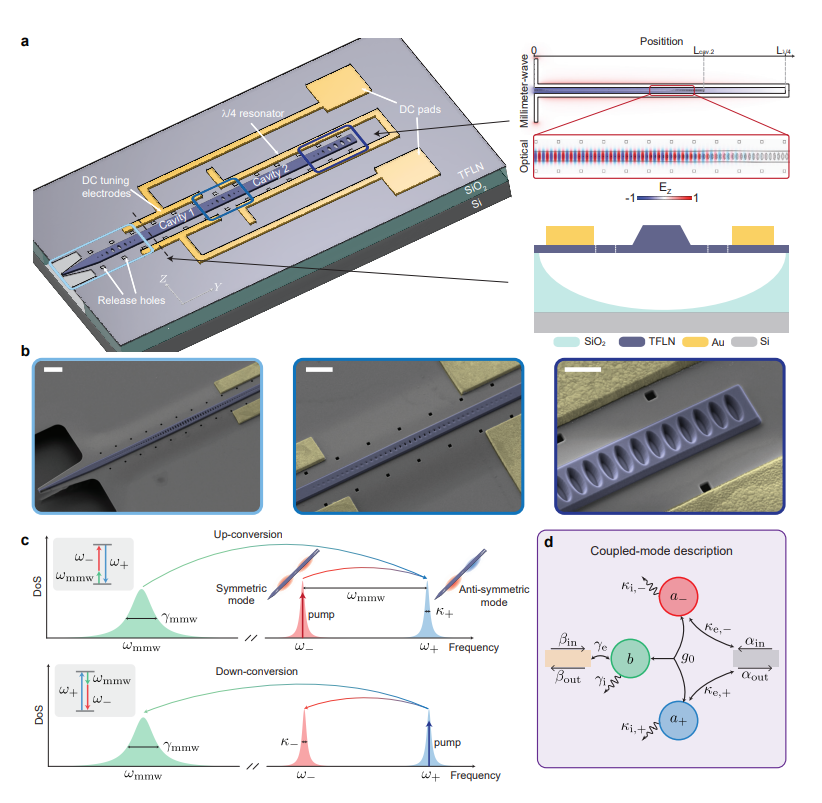
EPFL Demonstrates Millimeter-Wave-to-Optical Transducer with 67% Internal Efficiency
November 10, 2026
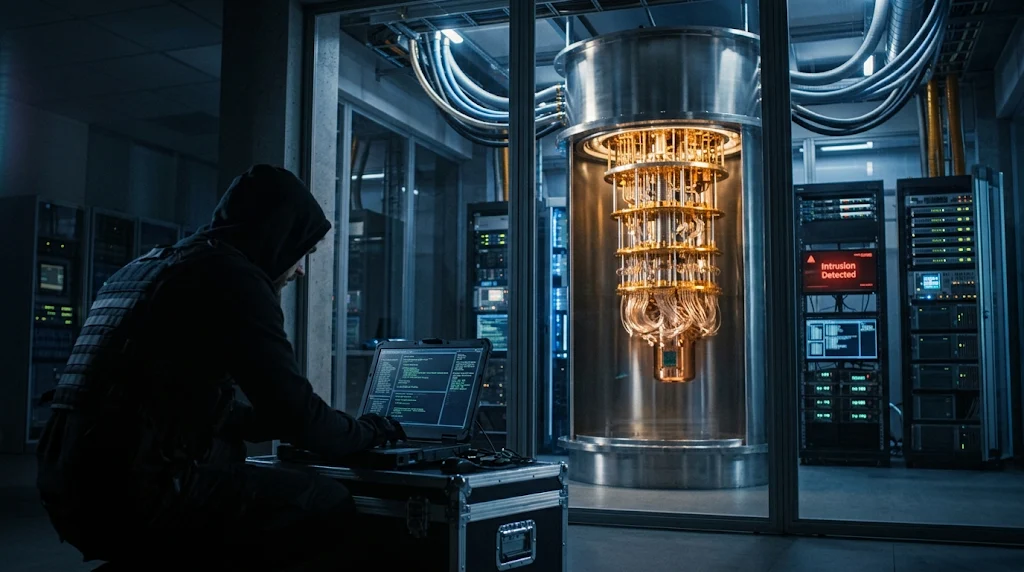
Why Quantum Hardware Needs Its Own Threat Model
November 9, 2026
Physics Reports Analysis Evaluates Emergence of Hybrid Semiconductor–Superconducting Qubit Architectures
November 9, 2026
DLR Develops Scalable Unitary Data Encoding Beating Exponential State-Preparation Depth
November 9, 2026
IonQ and Classiq Outline Architectural Trade-Offs in Fault-Tolerant Resource Estimation
November 9, 2026