D-Wave Selected for $1.5 Million NSF Grant to Provide Dual-Rail Hardware for Yale-Led Fault-Tolerant 'ERASE' Project

Dual-platform quantum hardware supplier D-Wave Quantum Inc. (NYSE: QBTS) has been awarded a $1,566,250 sub-grant from the U.S. National Science Foundation (NSF). Distributed through the NSF’s National Quantum Virtual Laboratory (NQVL) program, the funding positions D-Wave as the primary industrial implementation partner for the Yale University-led project ERASE (Erasure Qubits and Dynamic Circuits for Quantum Advantage). The award moves the ERASE consortium into its formal Phase II lifecycle—supported by a broader $4 million agency allocation over two years—to build out software, compiler, and error-correction layers optimized for fault-tolerant gate-model quantum computing.
Under the terms of the infrastructure agreement, D-Wave will deliver cloud-based development interfaces and APIs linking researchers straight to its proprietary gate-model hardware assets. This deployment is executed via D-Wave's New Haven, Connecticut-based subsidiary, Quantum Circuits, LLC—the Yale spin-off originally acquired by D-Wave to anchor its gate-model program. The ERASE architecture departs from standard superconducting topologies by encoding information across specialized dual-rail erasure qubits. While standard superconducting transmon configurations suffer from blind, unpredictable errors that require deep decoding cycles to locate, a dual-rail circuit handles faults as discrete "erasures." When a dominant decay event occurs, the physical system natively triggers a real-time erasure flag that alerts the classical control software to the exact coordinates of the fault, allowing for ultra-compact, low-overhead error-correction matrices.
The $1.5 million NSF grant joins a series of major federal capital injections designed to expand the domestic quantum technology industrial base. The NQVL sub-grant follows a previously executed Letter of Intent securing $100 million in proposed funding under the CHIPS and Science Act to fast-track the commercial manufacturing of D-Wave's dual-platform systems. By basing the industrial R&D core of the ERASE project directly within its New Haven facility, D-Wave is driving local workforce development and tech-transfer programs in tandem with Yale University, expanding the local engineering ecosystem to systematically lower the physical gate counts needed to reach error-corrected scale.
The official corporate transaction logs, federal grant filing structures, and executive statements can be reviewed in the D-Wave Quantum press release here, with comprehensive historical tracking on multi-vendor federal microchip foundry investments and commercial funding distributions detailed in the Quantum Computing Report policy brief here.
The official corporate transaction logs and executive statements can be reviewed in the D-Wave press release here, with historical context on federal microchip foundry investments detailed in the Quantum Computing Report by GQI policy brief here. Additional analysis on the strategic milestones of the virtual lab network can be tracked in the NQVL program brief here.
June 30, 2026
Related Intelligence
Test of USydney article with HTML.
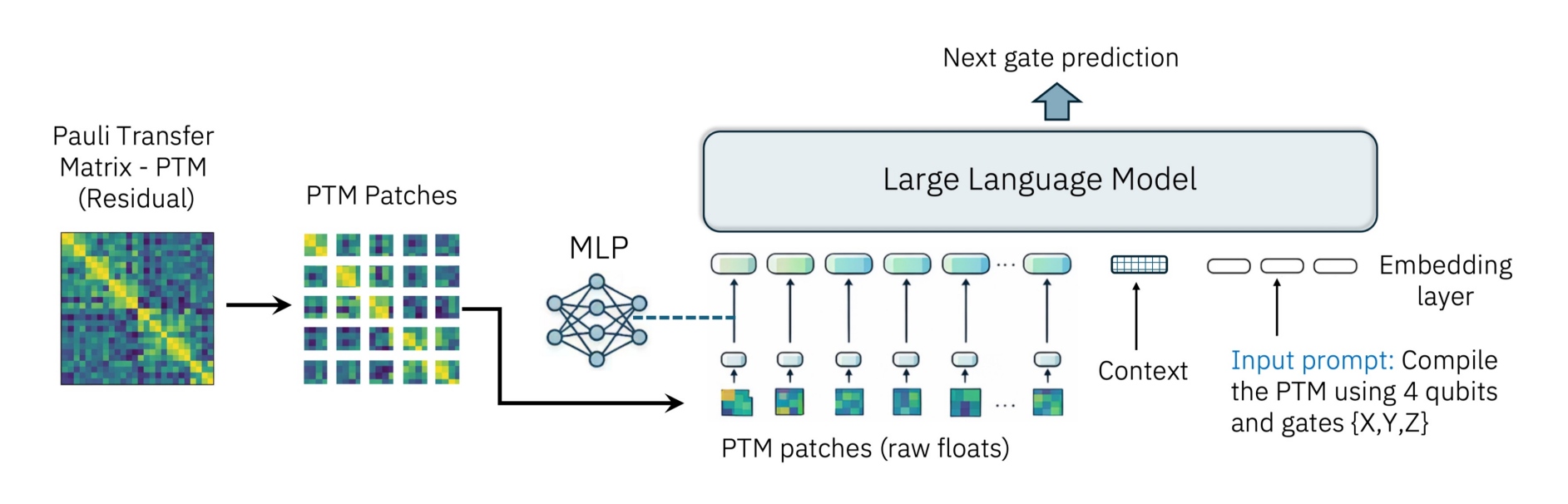
MIT and IBM Project Quantum Unity Operators into Language Model Latent Spaces for Multimodal Circuit Synthesis
July 11, 2026

ETH Zurich Combines Superconducting Qubits with Mechanical Resonators to Build Vibrating Quantum RAM
July 11, 2026
Google and Fraunhofer Launch Global Calls for Early Fault-Tolerant Algorithms and Enterprise Use Cases
July 11, 2026

Who’s News: Strategic Appointments at Photonic, Aliro Quantum, Florida Atlantic University, QuSecure, Quantum Elements, and QAI Ventures
July 11, 2026
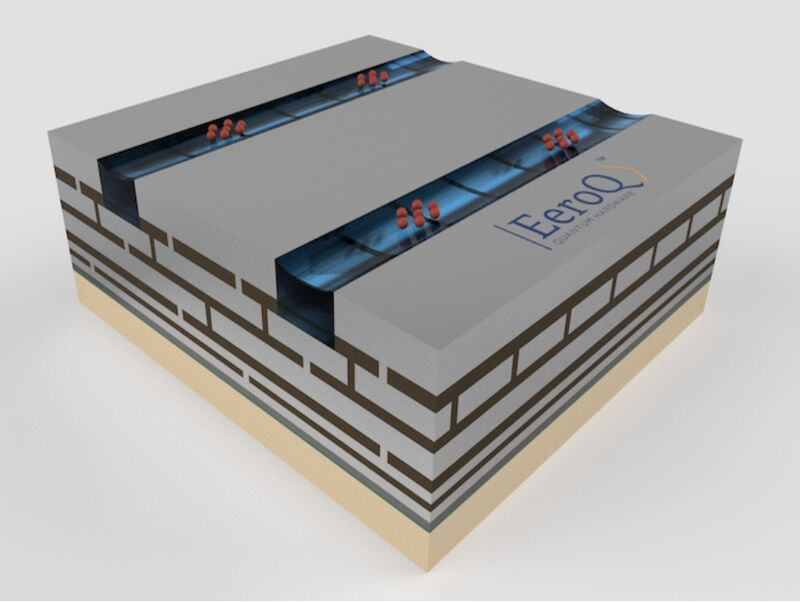
EeroQ Validates CMOS-Controlled Electron Shuttling on Superfluid Helium for All-to-All Qubit Routing
July 11, 2026