DOE ARPA-E Launches $37 Million QC3 Program Across Ten Quantum Chemistry Performers
The U.S. Department of Energy’s ARPA-E has launched the $37 million Quantum Computing for Computational Chemistry (QC3) program, funding ten research…
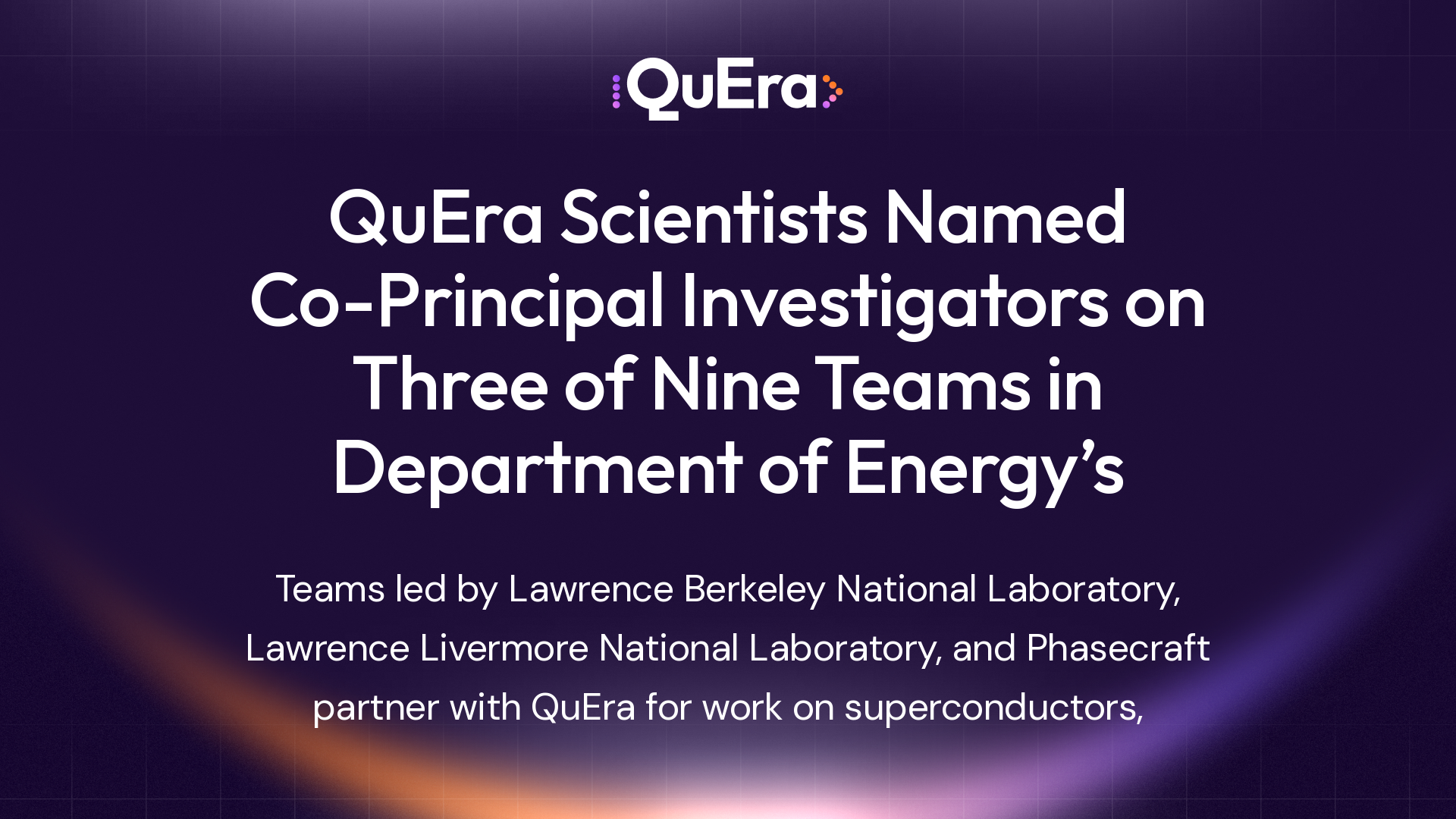
The U.S. Department of Energy's Advanced Research Projects Agency-Energy (ARPA-E) has officially launched its Quantum Computing for Computational Chemistry (QC3) program, directing $37 million across ten selected research teams over three years. Directed by Dr. Jyotsna Sharma, the initiative focuses on full-stack co-design across algorithms, error correction, and quantum hardware to achieve a 100-fold speedup over classical computation validated at ~100 logical qubits for high-impact energy applications.
A key gating requirement of the solicitation required applicants to partner directly with quantum hardware providers. Neutral-atom quantum developer QuEra Computing was selected as the exclusive external QPU hardware and algorithm co-design partner for three of the non-hardware prime performers (LBNL, LLNL, and Phasecraft).
[ ARPA-E QC3 Program: Full 10 Project Performers & Hardware Partners ] | |||
Prime Performer | Funding & Hardware Partner | Technical Focus | Target Energy Application |
• Lawrence Berkeley National Lab (LBNL) | • $4,449,973 • Partner: QuEra | • Krylov-inspired algorithms & reconfigurable QEC. | • Discovery of high-temperature superconductors for loss-free power transmission. |
• Lawrence Livermore National Lab (LLNL) | • $4,107,554 • Partner: QuEra | • Hybrid quantum/machine learning MAGNETIQC software. | • Development of ultra-strong, rare-earth-free permanent magnets for motors and IT. |
• Phasecraft, Inc. | • $4,519,658 • Partner: QuEra | • Optimized quantum algorithms for electrolysis simulation. | • Reducing reliance on critical iridium catalysts in hydrogen fuel production. |
• Infleqtion (ColdQuanta) | • $3,949,109 • Internal QPU | • Quantum-classical ab initio co-simulation (QASUS). | • Discovery of unconventional high-temperature superconductors. |
• Alice & Bob USA | • $3,911,986 • Internal Cat Qubits | • Fault-tolerant cat-qubit algorithms. | • Quantum simulation of magnetic materials for rare-earth-free permanent magnets. |
• Quantinuum | • $4,097,637 • Internal Trapped-Ion | • Dynamical simulation of nuclear quantum effects. | • Modeling proton exchange membranes (PEM) for fuel cells and electrolyzers. |
• Caltech | • $3,765,866 • Academic Prime | • Bio-electrocatalytic algorithm workflows. | • Energy-efficient nitrogen fixation for fertilizer and ammonia production. |
• Xanadu Quantum Tech | • $2,027,507 • Internal Photonic QPU | • Quantum simulation of X-ray absorption spectroscopy. | • Defect analysis inside fully assembled batteries to enhance battery lifespan. |
• The Boeing Company | • $2,509,300 • Industrial Prime | • QUantum Innovation for Corrosion Kinetics (QUICK). | • Modeling material corrosion rates for aerospace, steel, and battery durability. |
• PsiQuantum Corp. | • $3,641,923 • Internal Photonic QPU | • Direct Methane-to-Methanol (DMTM) catalyst workflows. | • Converting natural gas/methane into liquid methanol energy feedstocks. |
The program emphasizes full-stack co-design across algorithms, error correction, and reconfigurable hardware architectures, connecting public sector research directly to fault-tolerant quantum roadmaps.
The full rollout builds upon LLNL's initial $4.1M MAGNETIQC award selection, complements Phasecraft's ARPA-E hydrogen catalyst selection, and supports QuEra's fault-tolerant roadmap targeting 1,000 logical qubits by 2029.
Review the full program overview on the ARPA-E QC3 Portal here and inspect press announcement details via the QuEra Pressroom here.
October 15, 2026
Related Intelligence

Test of USydney article with HTML.
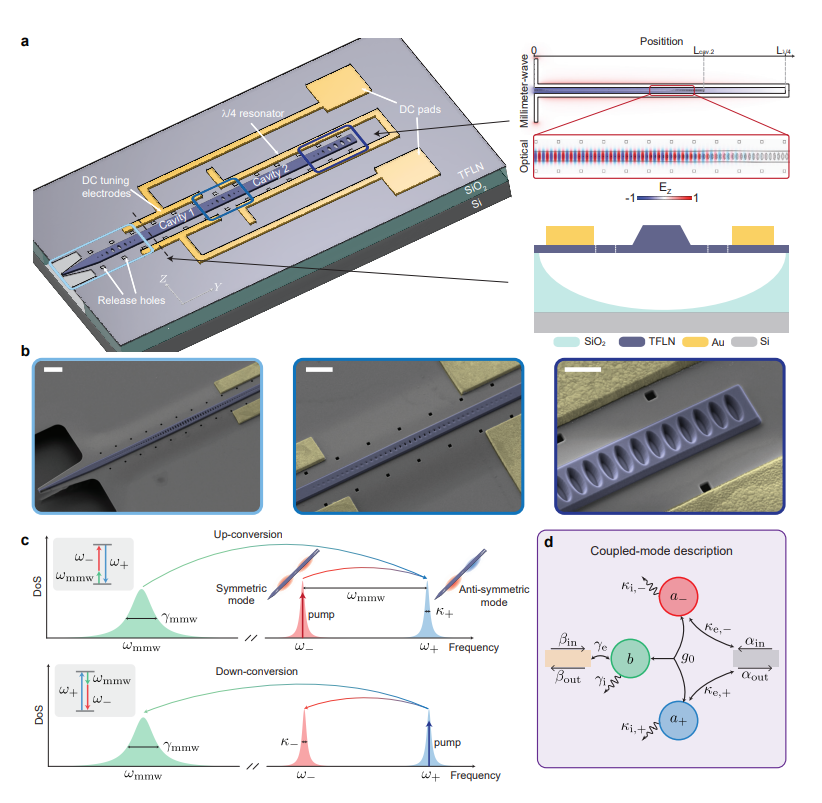
EPFL Demonstrates Millimeter-Wave-to-Optical Transducer with 67% Internal Efficiency
November 10, 2026
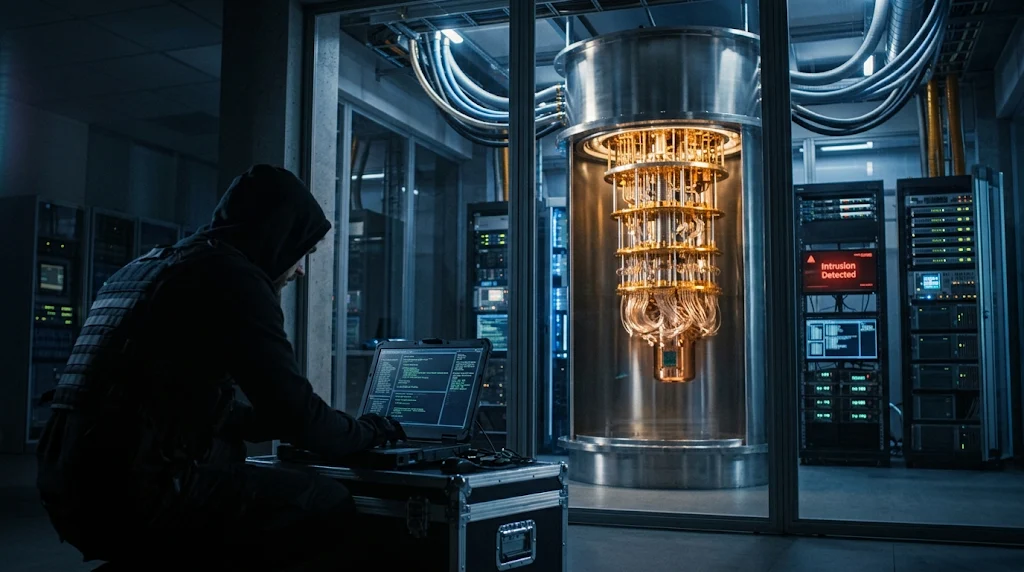
Why Quantum Hardware Needs Its Own Threat Model
November 9, 2026
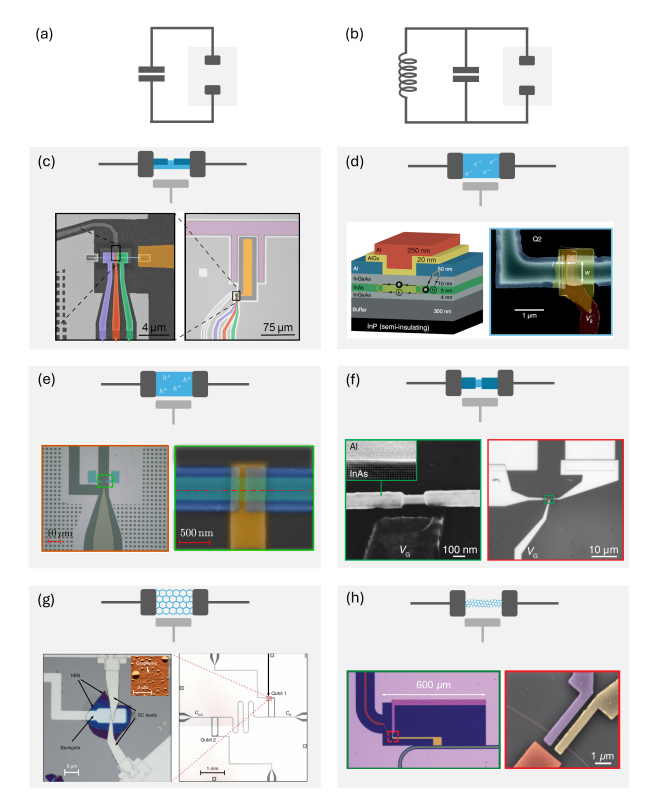
Physics Reports Analysis Evaluates Emergence of Hybrid Semiconductor–Superconducting Qubit Architectures
November 9, 2026
DLR Develops Scalable Unitary Data Encoding Beating Exponential State-Preparation Depth
November 9, 2026
IonQ and Classiq Outline Architectural Trade-Offs in Fault-Tolerant Resource Estimation
November 9, 2026