IBM and Rutgers Control Quantum Chaos Across 100 Qubits on Heron Processor
IBM and Rutgers researchers have demonstrated real-time quantum feedback control across 100 qubits on an IBM Quantum Heron processor. …
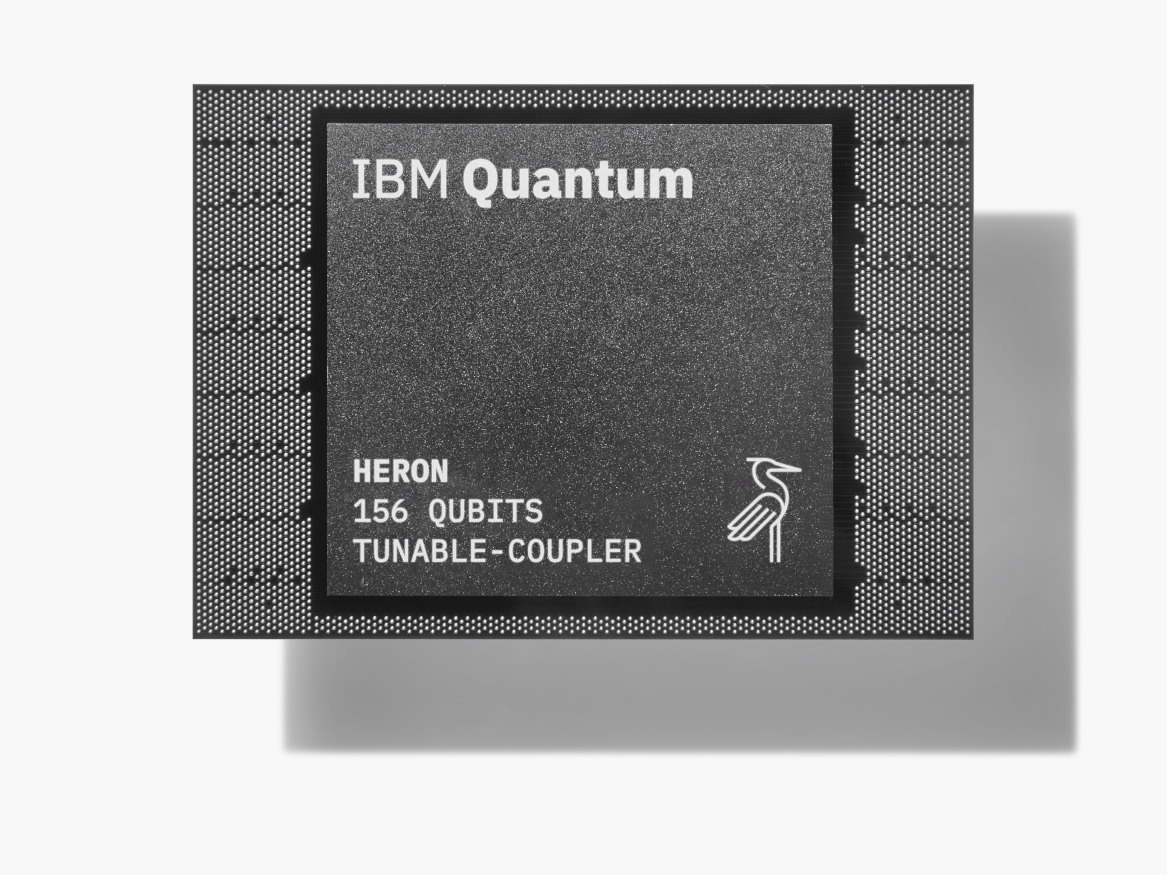
Researchers from Rutgers University, IBM Quantum, and collaborating academic institutions have demonstrated real-time quantum feedback control across 100 qubits on a 156-qubit IBM Quantum Heron superconducting processor (`ibm_fez`). Published in Nature Physics, the study implements adaptive quantum circuits that interleave entangling gates with mid-circuit measurements and resets, providing experimental validation of non-unitary dynamics critical for scalable quantum error correction (QEC).
The experiment executed nearly 5,000 two-qubit entangling gates and nearly 5,000 mid-circuit measurement-based resets across 100 linearly connected qubits. By stochastically competing information-scrambling operations (a quantum analog of the classically chaotic Bernoulli map) against local resets pushing qubits toward the zero state, the team observed and characterized a dynamical control-induced phase transition (CIPT) between chaotic volume-law and controlled unentangled phases.
[ IBM Heron 100-Qubit Adaptive Circuit & Phase Transition Parameters ] | |||
Dynamical Regime | Control Rate (p) & Operations | Entanglement & Lyapunov Scaling | Measured Critical Exponents |
• 1. Chaotic Volume-Law | • 0 ≤ p < 0.3 • Scrambling unitaries dominate | • Extensive volume-law entanglement; positive Lyapunov exponent (λ > 0). | • N/A (Fully scrambled state) |
• 2. Chaotic Area-Law | • 0.3 < p < 0.5 • Interleaved unitaries and resets | • Subextensive area-law entanglement; retains exponential superposition components. | • N/A (Area-law trajectory) |
• 3. Critical Point (CIPT) | • p = pc ≈ 0.5 • Balanced scrambling and resets | • Unbiased random walk dynamics; diffusive growth of magnetization (⟨Mz⟩). | • pc = 0.495(1) • ν = 1.05(2) • z = 2.08(1) (Dynamical) • β = 1.05(2) |
• 4. Controlled Phase | • 0.5 < p ≤ 1.0 • Resets dominate scrambling | • Unentangled state; system locks to fixed target state (|0…0⟩) (λ < 0). | • N/A (Absorbing fixed point) |
Quantum Fluctuation Sampling and Hardware Certification
To distinguish true coherent quantum dynamics from classical noise, the researchers measured the variance of shot-to-shot quantum fluctuations (varQ[Mz]) across 10,000 shots per circuit configuration. Comparing experimental distributions against classical dephasing Markov models using Kullback-Leibler (KL) divergence confirmed that the processor sampled a genuine quantum random process rather than purely incoherent stochastic noise.
The study marks one of the largest experimental realizations of real-time feedback and non-unitary adaptive circuits to date, validating theoretical matrix product state (MPS) models and statistical mechanics mappings on physical hardware.
Review the peer-reviewed study in Nature Physics here, inspect the institutional report on Rutgers Today here, and read the technical preprint on arXiv here.
October 22, 2026
Related Intelligence

Test of USydney article with HTML.
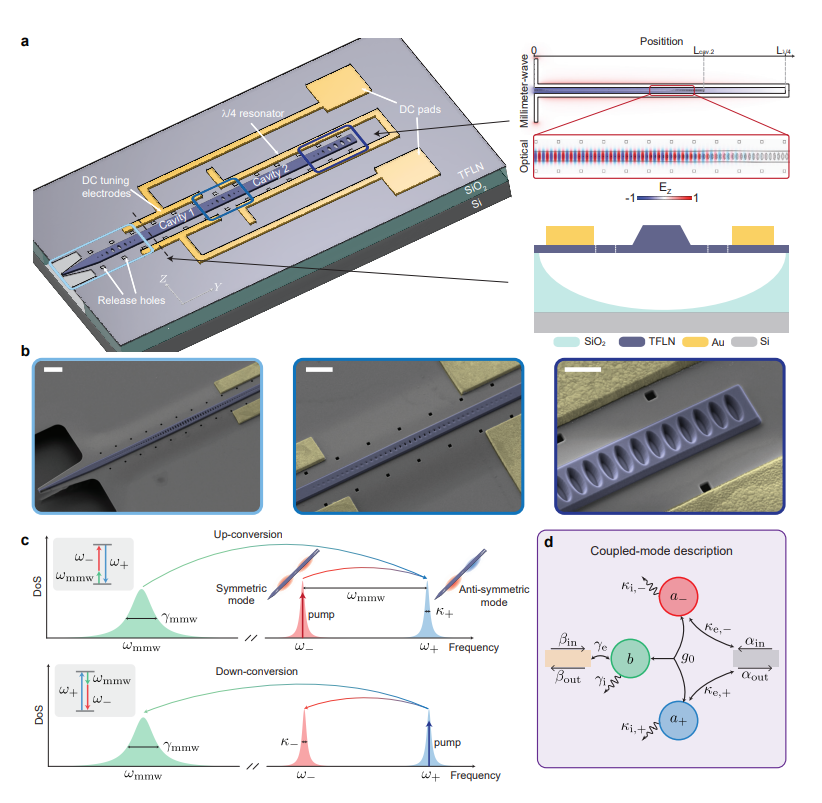
EPFL Demonstrates Millimeter-Wave-to-Optical Transducer with 67% Internal Efficiency
November 10, 2026
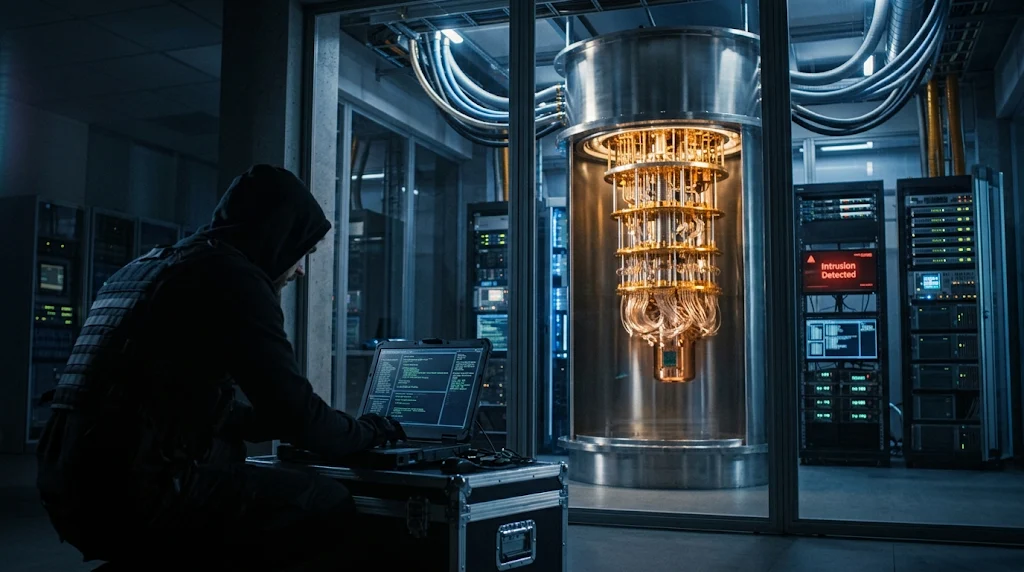
Why Quantum Hardware Needs Its Own Threat Model
November 9, 2026
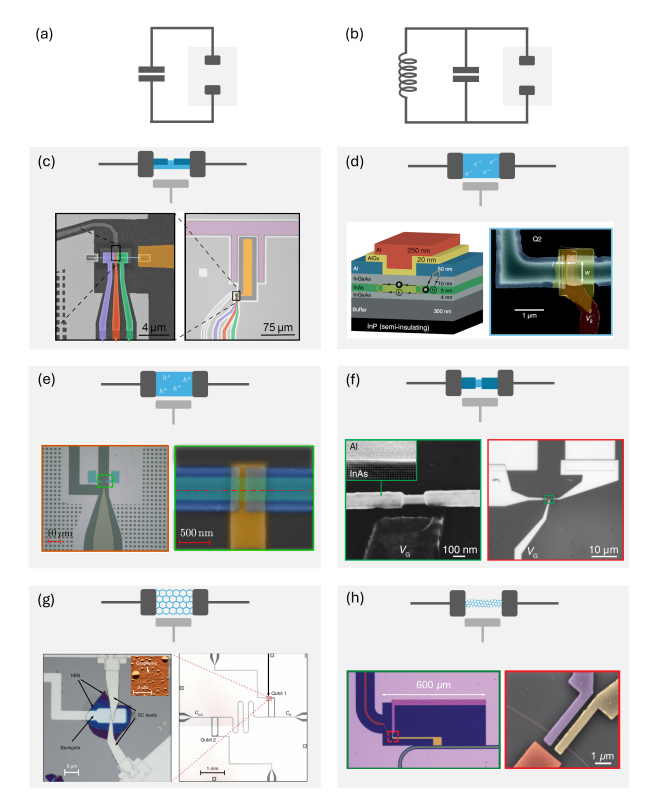
Physics Reports Analysis Evaluates Emergence of Hybrid Semiconductor–Superconducting Qubit Architectures
November 9, 2026
DLR Develops Scalable Unitary Data Encoding Beating Exponential State-Preparation Depth
November 9, 2026
IonQ and Classiq Outline Architectural Trade-Offs in Fault-Tolerant Resource Estimation
November 9, 2026