IDEMIA and KT Deploy Quantum-Resistant SIMs Supporting Dual NIST and KpqC Algorithms for South Korean Military Networks
IDEMIA Secure Transactions and KT Corporation are deploying quantum-resistant SIMs in South Korea's military networks, supporting both NIST and Korean…

Security and identity technology vendor IDEMIA Secure Transactions (IST) has partnered with South Korean telecommunications operator KT Corporation to implement post-quantum cryptographic primitives on smart-card and SIM platforms for national defense communications. The collaboration operates under South Korea's 2026 Post-Quantum Cryptography Pilot Conversion Project, organized by the Ministry of Science and ICT (MSIT) and the Korea Internet & Security Agency (KISA).
The pilot represents the first reported deployment of domestic Korean Post-Quantum Cryptography (KpqC) algorithms alongside international NIST standards directly within a tamper-resistant SIM/eSIM secure element. By serving as an isolated hardware root of trust, the Quantum-Resistant SIM offloads processing- and memory-intensive lattice-based cryptographic handshakes from host devices, allowing South Korea’s defense forces to achieve crypto-agility without replacing tactical endpoints.
[ South Korea Defense PQC Pilot: System Architecture ] | ||
Implementation Layer | Institutional Stakeholders | Technical Scope & Target Deployment |
• Government Oversight | • MSIT & KISA | • National 2026 PQC Pilot Conversion framework governing standard migration across public and defense assets. |
• Network & Field Lead | • KT Corporation | • Leading defense trials for the Ministry of National Defense and the Army Information and Communication School. |
• Secure Element & SIM | • IDEMIA Secure Transactions (IST) | • Quantum-Resistant SIM/eSIM acting as a cryptographic hardware root of trust running on the IDEMIA SPHERE platform. |
• Cryptographic Schemes | • Dual NIST & KpqC Standards | • Co-existence of international FIPS 203/204 algorithms with domestic Korean PQC algorithms in a single crypto-agile secure element. |
• Operational Environments | • Defense & Tactical Infrastructure | • Deployed across tactical smart units, military PCs, CCTV/video storage, drone ground control systems, and defense 5G networks. |
Embedded Crypto-Agility at the Secure Element Layer
Post-quantum cryptographic algorithms introduce significantly larger key sizes, signatures, and memory demands compared to legacy asymmetric schemes like RSA and ECC. Running these algorithms directly on low-power internet-of-things (IoT) devices, tactical sensors, and field terminals can introduce substantial processing latency and drain battery life.
IDEMIA’s approach embeds the cryptographic operations inside a dedicated, tamper-resistant smart-card platform. In this configuration, the SIM generates, stores, and executes quantum-safe session keys internally, insulating sensitive key material from host system vulnerabilities. By packaging the cryptographic runtime within standard SIM/eSIM sockets, military operators can upgrade fielded commercial hardware to post-quantum standards by swapping or re-provisioning the secure module.
A primary objective of the MSIT/KISA pilot is testing crypto-agility—the technical capacity to alternate between cryptographic standards without rewriting application software. Supporting both NIST standards and the domestic KpqC framework within a unified secure element ensures interoperability with multinational allied forces (such as the U.S. and NATO) while remaining compliant with South Korea’s national sovereign cryptography mandates.
Validating Operational Resilience Across Military Infrastructure
Conducted on behalf of South Korea’s Ministry of National Defense and the Army Information and Communication School, KT's pilot evaluates PQC encryption and authentication under operational military conditions. Target platforms include:
Uncrewed Systems: Securing telemetry, flight commands, and mission payload links between tactical uncrewed aerial vehicles (UAVs) and ground control stations.
Base Surveillance & Video Storage: Implementing quantum-safe authenticated encryption across perimeter CCTV feeds and digital video evidence archives.
Defense 5G Networks: Testing post-quantum mutual authentication across core private 5G military wireless base stations and connected endpoints.
The program serves as a reference model for South Korea’s broader timeline to migrate critical national infrastructure away from quantum-vulnerable public-key algorithms over the next decade.
Review the official commercial announcement on the IDEMIA Newsroom here.
October 27, 2026
Related Intelligence

Test of USydney article with HTML.
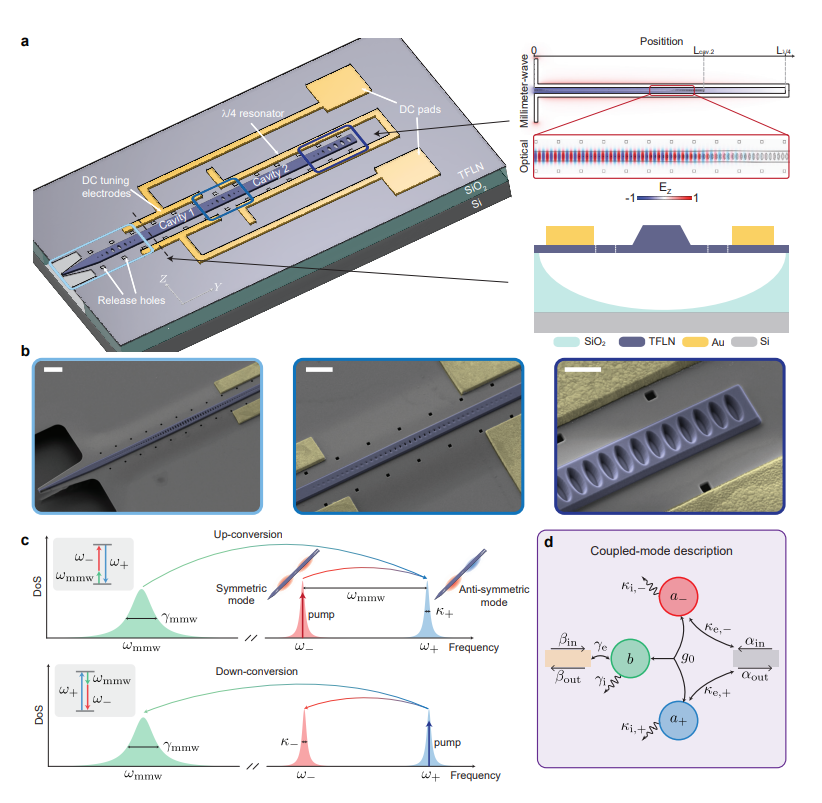
EPFL Demonstrates Millimeter-Wave-to-Optical Transducer with 67% Internal Efficiency
November 10, 2026
Why Quantum Hardware Needs Its Own Threat Model
November 9, 2026
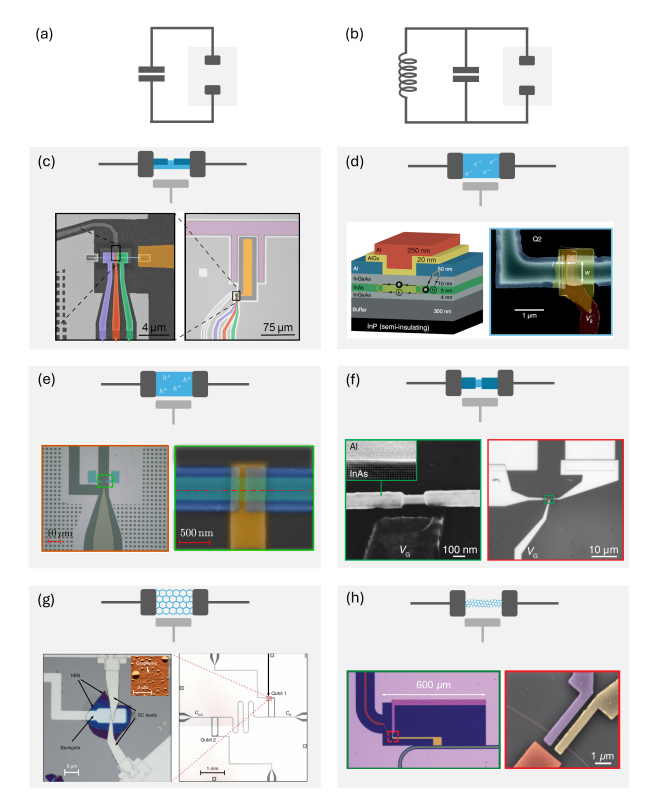
Physics Reports Analysis Evaluates Emergence of Hybrid Semiconductor–Superconducting Qubit Architectures
November 9, 2026
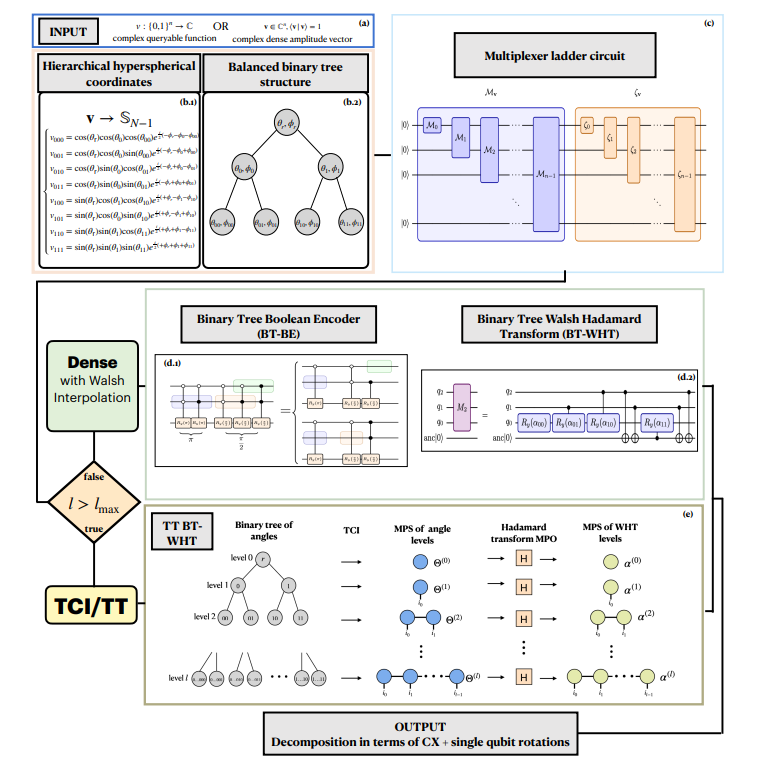
DLR Develops Scalable Unitary Data Encoding Beating Exponential State-Preparation Depth
November 9, 2026
IonQ and Classiq Outline Architectural Trade-Offs in Fault-Tolerant Resource Estimation
November 9, 2026