IonQ, ORNL, NVIDIA, and UT Knoxville Advance AI-Driven Generative Quantum Circuit Synthesis
A collaboration between ORNL, IonQ, NVIDIA, and UT Knoxville introduced DQAOA-GPT, a generative AI framework that synthesizes quantum optimization…
A research collaboration led by Oak Ridge National Laboratory (ORNL) alongside IonQ (NYSE: IONQ), NVIDIA, and the University of Tennessee, Knoxville (UT) has introduced DQAOA-GPT, a generative AI framework that synthesizes quantum optimization circuits directly to eliminate iterative parameter-tuning loops in distributed quantum algorithms. Presented at IEEE Quantum Week 2026 in Toronto, the paper received a Best Paper Award for demonstrating constant-time circuit synthesis for subproblem evaluations across scaling quantum domain widths.
The framework replaces the traditional trial-and-error variational loop of the Distributed Quantum Approximate Optimization Algorithm (DQAOA) with a transformer model trained on high-performing circuit profiles. For each subproblem, the generative transformer outputs candidate quantum circuits directly, which are evaluated in a fixed 10-candidate sampling step before updating global solution parameters. Benchmarked on a 100-variable higher-order unconstrained binary optimization (HUBO) problem using single NVIDIA H200 GPUs via NVIDIA CUDA-Q and the cuQuantum SDK, conventional variational circuit optimization times escalated from 34 seconds (4 qubits) to over 11 minutes (12 qubits), whereas the generative DQAOA-GPT approach maintained a constant synthesis runtime of approximately 28 seconds regardless of subproblem qubit count while doubling overall solution quality.
[ DQAOA-GPT vs. Variational Quantum Circuit Synthesis Baseline ] | ||
Optimization Metric | Traditional Variational DQAOA | Generative DQAOA-GPT Framework |
Circuit Synthesis Runtime | • 4 Qubits: ~34 Seconds • 12 Qubits: >11 Minutes (>19.4× Growth) | • 4 to 12 Qubits: ~28 Seconds (Constant Runtime) • Zero Iteration Parameter Optimization Loop |
Solution Quality Scaling | • Degrades/Stagnates Due to Tuning Latency Costs | • Approx. 2× Improvement in HUBO Answer Quality |
Compute Stack Baseline | • Variational Classical Optimizer Loop (GPU) | • Transformer Circuit Synthesis + CUDA-Q Scoring |
By eliminating the classical optimization bottleneck, DQAOA-GPT enables hybrid algorithms to scale subproblem sizes without incurring prohibitive execution overheads. The framework serves as a scalable software layer across GPU-accelerated HPC systems and IonQ's trapped-ion hardware pipeline, paving the way for larger real-world scientific and industrial optimization workloads.
Review the official press release via IonQ Newsroom here, inspect the peer-reviewed research preprint on arXiv here, and examine our prior coverage of IonQ’s IEEE Quantum Week 2026 HPC/AI Research Portfolio here.
September 16, 2026
Related Intelligence

Test of USydney article with HTML.
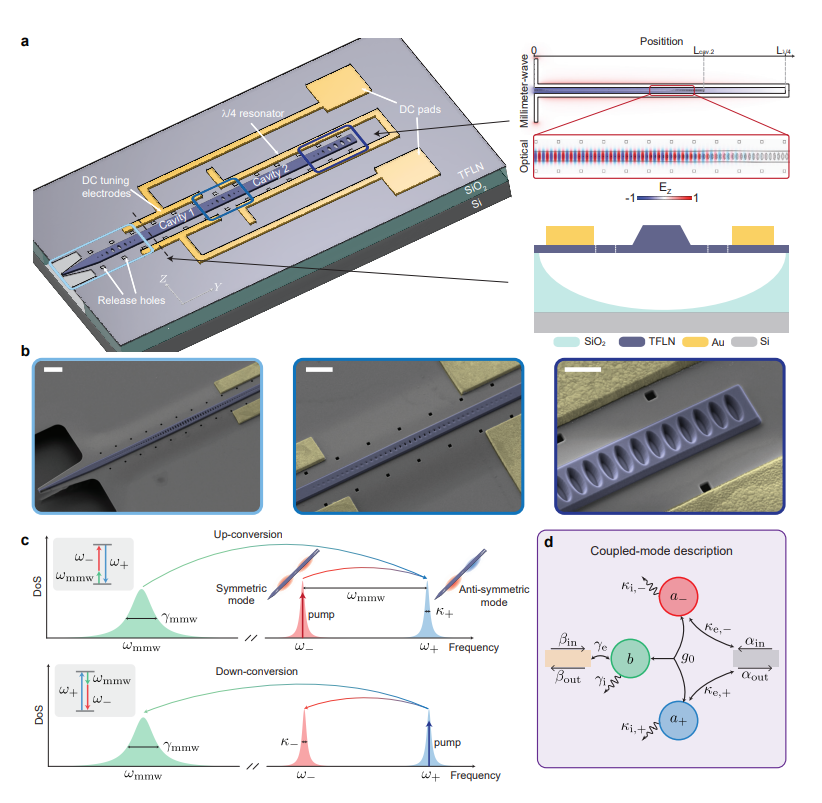
EPFL Demonstrates Millimeter-Wave-to-Optical Transducer with 67% Internal Efficiency
November 10, 2026
Why Quantum Hardware Needs Its Own Threat Model
November 9, 2026
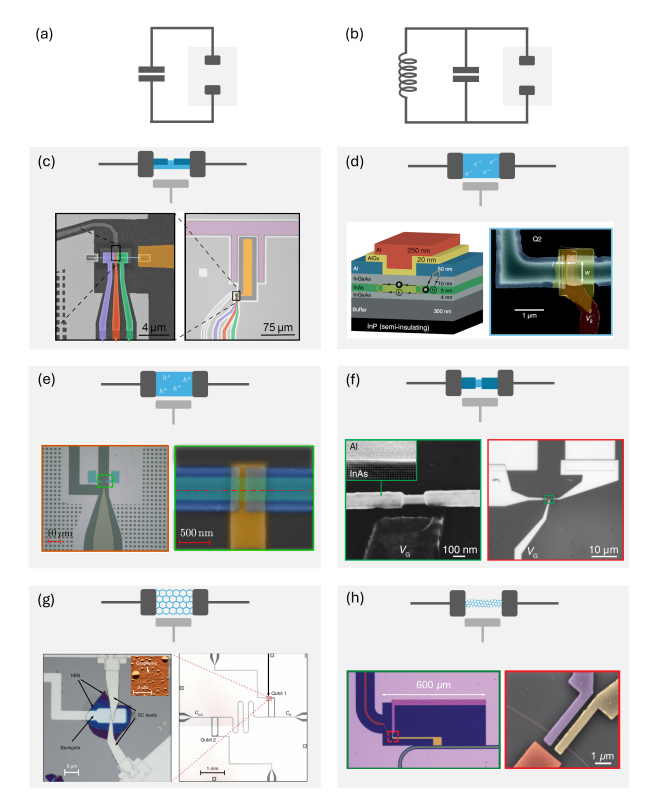
Physics Reports Analysis Evaluates Emergence of Hybrid Semiconductor–Superconducting Qubit Architectures
November 9, 2026
DLR Develops Scalable Unitary Data Encoding Beating Exponential State-Preparation Depth
November 9, 2026
IonQ and Classiq Outline Architectural Trade-Offs in Fault-Tolerant Resource Estimation
November 9, 2026