LUMI AI Factory Selects IQM to Deploy Superconducting Quantum Computer for Hybrid HPC-AI Acceleration
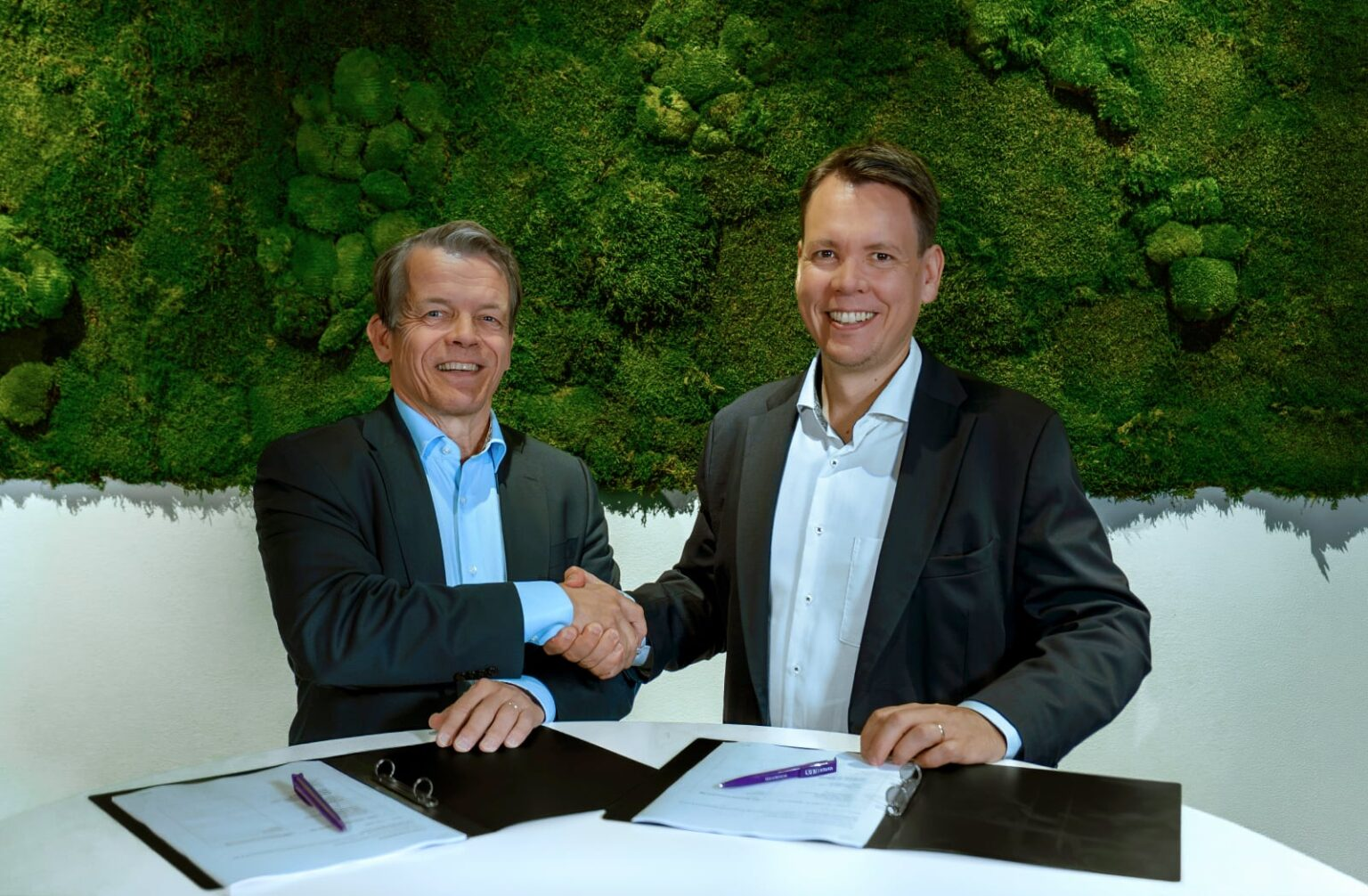
The LUMI AI Factory, coordinated by CSC – IT Center for Science, has selected hardware manufacturer IQM Quantum Computers (Nasdaq: IQMX) to deliver and integrate its IQM Halocene H4 superconducting quantum computer. Designated as LUMI-IQ, the system will be deployed at CSC’s data infrastructure center in Kajaani, Finland, with installation scheduled for 2027. The integration contract is jointly financed by the EuroHPC Joint Undertaking alongside the sovereign governments of Finland, Czechia, Norway, and Poland. Financially, the total contract value matches IQM’s full corporate revenue for the fiscal year ended December 31, 2025, as disclosed in the company's July 1, 2026 public prospectus.
                         [ LUMI-IQ System Integration Matrix ]
  Hardware Platform   ──► IQM Halocene H4 on-premises superconducting processing unit.
  Initial Capacity    ──► 150 qubits combining active error mitigation with NISQ operations.
  Facility Location   ──► CSC IT Center for Science data complex (Kajaani, Finland).
  Financing Syndicate ──► EuroHPC Joint Undertaking, Finland, Czechia, Norway, and Poland.
The procurement marks a structural shift toward full-stack on-premises quantum deployment within high-performance computing (HPC) ecosystems. Rather than operating as an isolated, cloud-accessible sandbox, the initial 150-qubit Halocene processing engine will sit directly adjacent to the pan-European LUMI supercomputer. The physical architecture integrates specialized Quantum Processing Units (QPUs) with automated, low-latency classical control infrastructure. This hardware arrangement enables European research and development teams to execute co-processing workflows, where computationally intensive machine learning loops and molecular calculations bounce seamlessly between high-density classical graphics nodes (GPUs) and quantum processors without routing delays.
The engineering roadmap managed by IQM CEO Jan Goetz and CSC Manager for Quantum Technologies Mikael Johansson outlines a phased scaling path. The 2027 baseline installation will serve as an active development floor for Quantum Error Correction (QEC) protocols. Subsequent technical upgrades will systematically expand the physical qubit footprint to generate steady lines of logical qubits, transitioning the platform from Noisy Intermediate-Scale Quantum (NISQ) behaviors toward complete fault tolerance. This dedicated computation ecosystem will provide academic and industrial innovators with dedicated code libraries and training tools designed to optimize quantum-accelerated AI models for materials discovery, pharmaceutical molecular mapping, and grid energy stabilization.
The official procurement disclosures, technical hardware timelines, and international financing breakdowns can be reviewed through the IQM Quantum Computers Press Room here. Regional infrastructure configurations, hardware-portable software libraries, and European research allocation parameters can be audited directly via the LUMI Consortium Portal here.
July 8, 2026
Related Intelligence

Test of USydney article with HTML.
MIT and IBM Project Quantum Unity Operators into Language Model Latent Spaces for Multimodal Circuit Synthesis
July 11, 2026

ETH Zurich Combines Superconducting Qubits with Mechanical Resonators to Build Vibrating Quantum RAM
July 11, 2026

Google and Fraunhofer Launch Global Calls for Early Fault-Tolerant Algorithms and Enterprise Use Cases
July 11, 2026

Who’s News: Strategic Appointments at Photonic, Aliro Quantum, Florida Atlantic University, QuSecure, Quantum Elements, and QAI Ventures
July 11, 2026
EeroQ Validates CMOS-Controlled Electron Shuttling on Superfluid Helium for All-to-All Qubit Routing
July 11, 2026