MerLin: Framework for Differentiable Photonic Quantum Machine Learning

MerLin 0.3 is an open-source framework developed by Quandela for the systematic exploration of photonic and hybrid quantum machine learning (QML). Built on the Perceval SDK, it utilizes Strong Linear Optical Simulation (SLOS) to perform exact quantum state computation within a PyTorch-native environment. The architecture is centered on the QuantumLayer, a torch.nn.Module that enables end-to-end differentiable training of linear-optical circuits. By precomputing sparse photon-number transition graphs, the framework accelerates gradient-based optimization of circuit parameters, such as phase shifters and beam-splitters, directly within standard classical AI pipelines.
The framework supports multiple data encoding methodologies, including angle encoding for Fourier-like feature mapping and amplitude encoding for state-vector initialization. A QuantumBridge abstraction allows for cross-paradigm architectural comparisons by mapping qubit-based gates into photonic dual-rail or QLOQ encodings. MerLin is designed for hardware-aware execution through the MerlinProcessor interface, which facilitates offloading hybrid model components to physical quantum processing units (QPUs), such as Quandela's Belenos system. It also integrates noise models and detector-specific semantics—including photon-number-resolving and threshold detectors—allowing researchers to simulate hardware constraints during the training phase.
To address reproducibility challenges in QML, MerLin includes a library of 18 reproduced state-of-the-art papers spanning quantum kernels, reservoir computing, and convolutional architectures. These modular experiments provide standardized baselines for comparing photonic and gate-based modalities under unified conditions. Technical insights from these reproductions indicate that expressivity in photonic variational quantum circuits (VQCs) scales linearly with the number of input photons without increasing circuit depth. This empirical approach is intended to transition QML from isolated demonstrations toward a disciplined engineering framework for evaluating quantum utility.
For more information, consult the MerLin technical paper here, the official blog explainer here, the MerLin GitHub repository here, or the framework documentation here.
February 21, 2026
Related Intelligence

Test of USydney article with HTML.
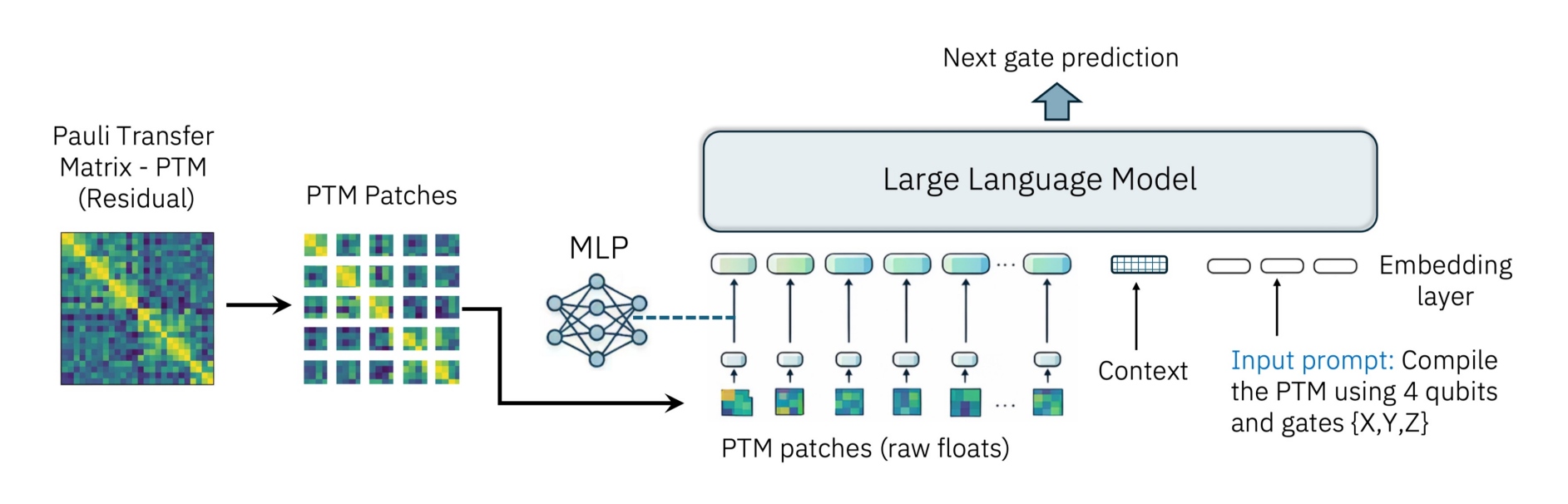
MIT and IBM Project Quantum Unity Operators into Language Model Latent Spaces for Multimodal Circuit Synthesis
July 11, 2026

ETH Zurich Combines Superconducting Qubits with Mechanical Resonators to Build Vibrating Quantum RAM
July 11, 2026

Google and Fraunhofer Launch Global Calls for Early Fault-Tolerant Algorithms and Enterprise Use Cases
July 11, 2026

Who’s News: Strategic Appointments at Photonic, Aliro Quantum, Florida Atlantic University, QuSecure, Quantum Elements, and QAI Ventures
July 11, 2026
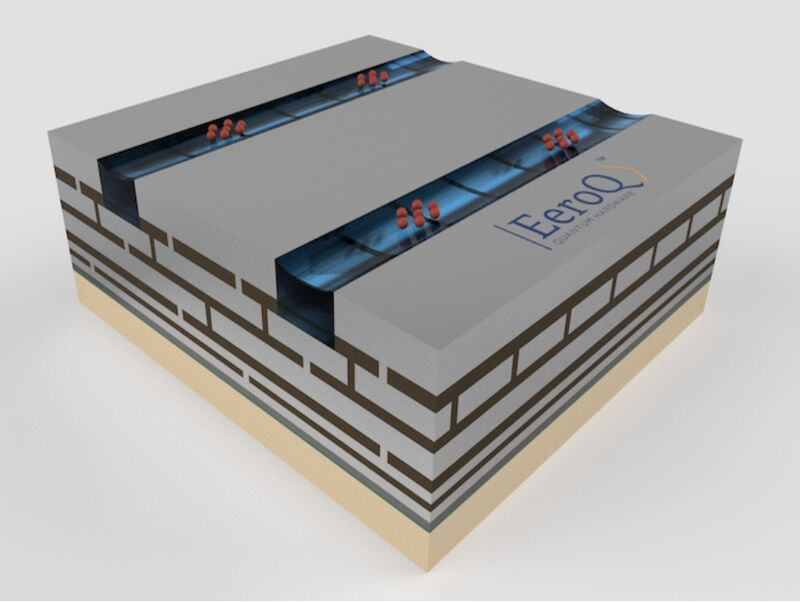
EeroQ Validates CMOS-Controlled Electron Shuttling on Superfluid Helium for All-to-All Qubit Routing
July 11, 2026