Messe Stuttgart Announces Winners of the Quantum Effects Award 2026 Across Four Hardware and Software Categories
Messe Stuttgart announced the winners of the Quantum Effects Award 2026 across four categories: C12 & Thales for Quantum Computing Hardware, Fraunhofer…
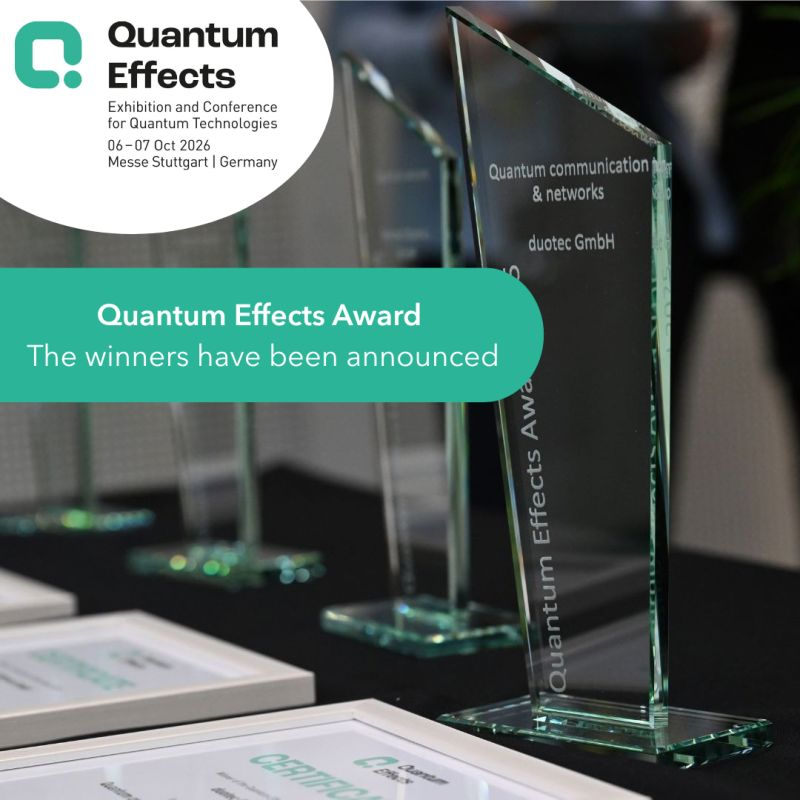
The jury for the international Quantum Effects 2026 conference and exhibition (Messe Stuttgart) has selected four winning projects for the Quantum Effects Award 2026. Evaluating submissions at Technology Readiness Level 5 (TRL 5) or higher across hardware, software, sensing, and networking, the awards highlight application-oriented technical developments featuring direct industry utility and commercial deployment pathways.
[ Quantum Effects Award 2026 Category Breakdown & Technical Capabilities ] | ||
Award Category | Winning Entity & System Platform | Core Technical Specifications & Operational Impact |
• Quantum Computing Hardware | • C12 & Thales • Project: QuantumTrack | • Solves Maximum Weighted Independent Set (MWIS) MHT radar algorithms • Uses carbon nanotube spin-cQED annealing with ~50 ms target latency |
• Quantum Computing Software | • Fraunhofer FOKUS • Project: Eclipse Qrisp | • Open-source Python quantum programming framework • Hardware-independent abstractions for gate-based quantum compilation |
• Quantum Sensing | • QSENSATO SRL • Project: CODA | • Compact OPM Diagnostic Array using atomic-photonic chips • Miniaturized laser-written vapor cells for optical magnetometry |
• Quantum Communication | • PicoQuant GmbH • Project: HydraHarp 500 L | • High-resolution (1 ps), 64+ channel TCSPC time-tagging unit • White Rabbit synchronization for distributed multi-node quantum networks |
The hardware category awarded C12 and Thales for QuantumTrack, which maps Multiple Hypothesis Tracking (MHT) radar data association onto a carbon nanotube spin circuit quantum electrodynamics (spin-cQED) annealing architecture. In the software category, Fraunhofer FOKUS won for Eclipse Qrisp, an open-source framework translating high-level Python constructs (variables, functions, loops) directly into gate-based quantum execution circuits across heterogeneous backends.
In sensing, Italian spinoff QSENSATO SRL was recognized for its Compact OPM Diagnostic Array (CODA), an integrated atomic-photonic chip platform combining laser-written alkali vapor cells for miniaturized optically pumped magnetometers (OPMs) and precision metrology. In quantum networking, photonics vendor PicoQuant GmbH won for the HydraHarp 500 L, a multichannel (64+ input channels) Time-Correlated Single Photon Counting (TCSPC) time-tagger featuring 1 ps resolution, ultra-short dead time (680 ps), and White Rabbit timing synchronization for distributed QKD networks.
Review the technical paper on arXiv:2604.15213 here, inspect corporate announcements via C12 Newsroom here, and explore award details on the Quantum Effects Award Portal here.
September 29, 2026
Related Intelligence

Test of USydney article with HTML.
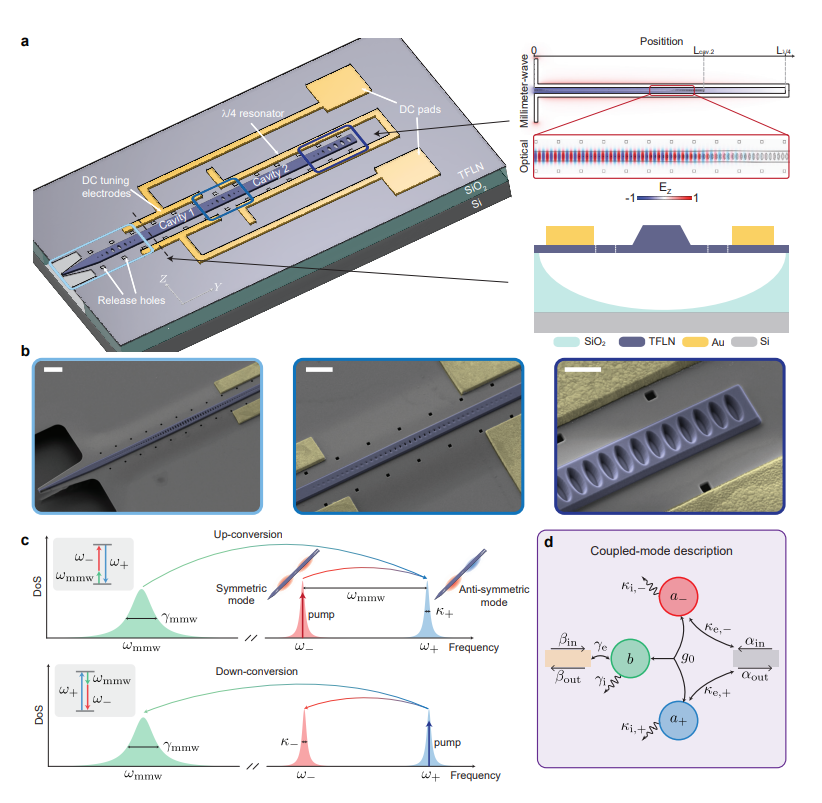
EPFL Demonstrates Millimeter-Wave-to-Optical Transducer with 67% Internal Efficiency
November 10, 2026

Why Quantum Hardware Needs Its Own Threat Model
November 9, 2026
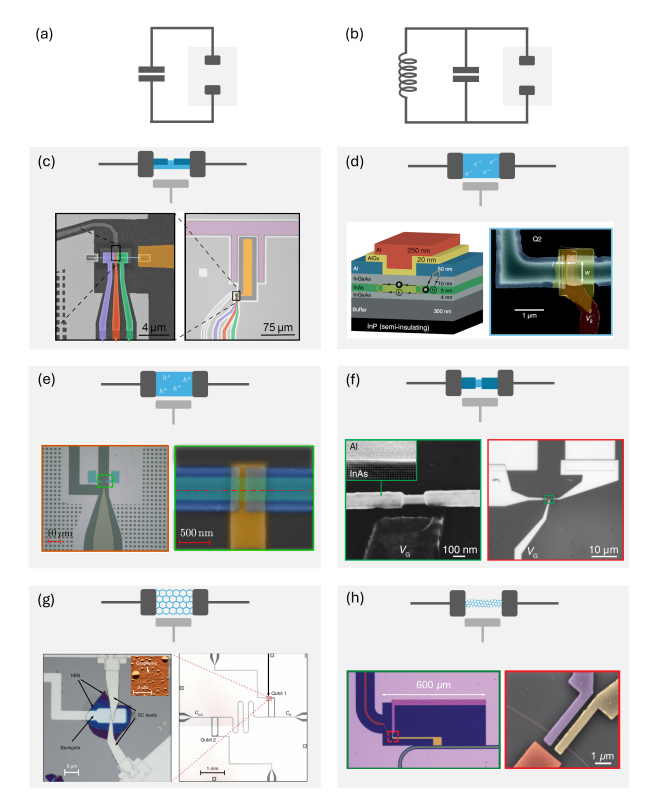
Physics Reports Analysis Evaluates Emergence of Hybrid Semiconductor–Superconducting Qubit Architectures
November 9, 2026
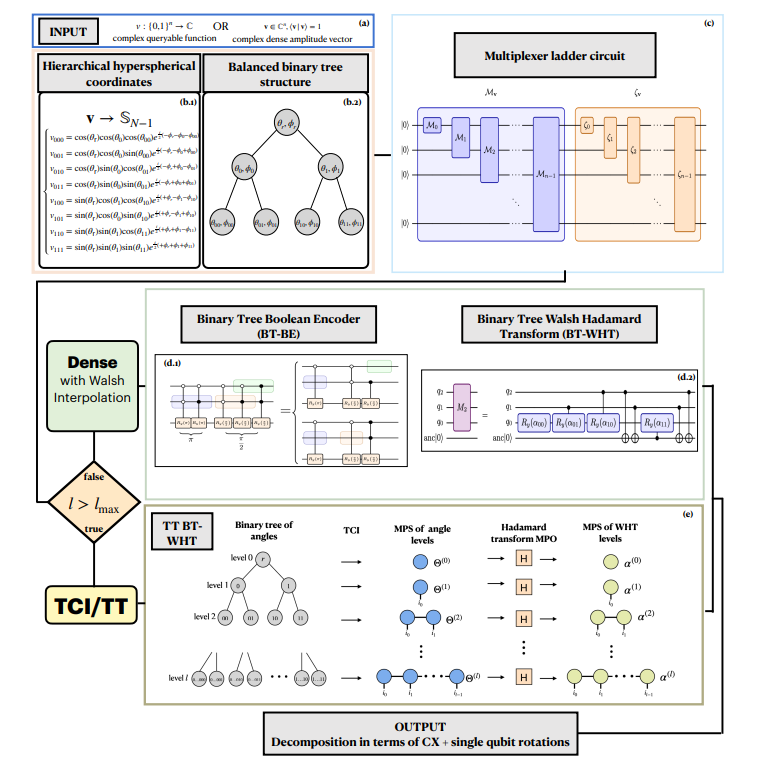
DLR Develops Scalable Unitary Data Encoding Beating Exponential State-Preparation Depth
November 9, 2026
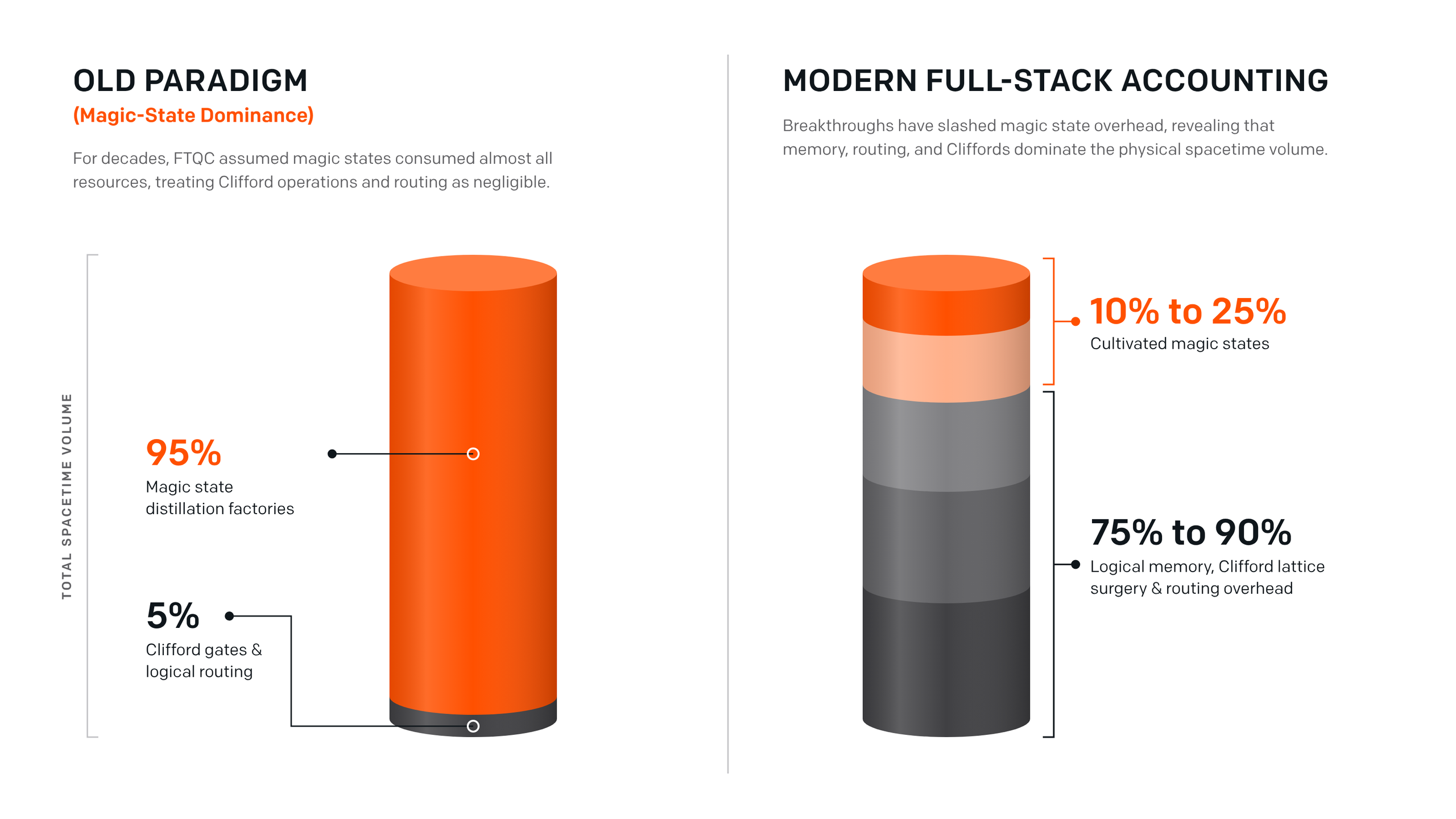
IonQ and Classiq Outline Architectural Trade-Offs in Fault-Tolerant Resource Estimation
November 9, 2026