NSF and UKRI Commit $10 Million in Joint Funding for Molecular Quantum Information Science
The NSF and UKRI have jointly committed $10 million to fund eight transatlantic research teams in molecular quantum information science. …
The U.S. National Science Foundation (NSF) and UK Research and Innovation (UKRI) have launched a joint $10 million (£7.4 million) research initiative supporting eight transatlantic research teams. Funded via $5 million from the NSF Directorate for Mathematical and Physical Sciences (MPS) and £3.7 million (~$5 million) from UKRI’s Engineering and Physical Sciences Research Council (EPSRC), the program targets foundational chemistry research to manipulate quantum coherence, entanglement, and superposition within complex molecular architectures.
The initiative represents the second $10 million phase of joint NSF-EPSRC quantum chemistry funding, expanding upon initial allocations announced in 2025. Technical objectives focus on synthesizing custom molecular systems designed to preserve fragile quantum states against environmental decoherence (such as thermal noise), engineering molecular-scale spin qubits, and modeling quantum information transfer in complex chemical reactions. The collaborative framework directly fulfills international research partnership directives outlined in the June 2026 Executive Order on Ushering in the Next Frontier of Quantum Innovation.
[ NSF / UKRI Joint Molecular Quantum Information Funding Profile ] | ||
Sponsoring Agencies | Capital Contribution | Core Research Focus |
• U.S. National Science Foundation (NSF MPS) • UK Research and Innovation (UKRI EPSRC) | • NSF: $5.0 Million USD • UKRI: £3.7 Million (~$5.0M USD) • Total: ~$10.0 Million USD across 8 Teams | • Custom Molecular Qubit Synthesis • Environmental Decoherence Shielding • Transatlantic Quantum Chemistry Labs |
In the U.S., the funding supports principal investigators across nine higher education institutions in nine states, including capacity-building awards under the NSF Established Program to Stimulate Competitive Research (NSF EPSCoR). The program pairs international laboratory capabilities to accelerate the design of molecular hardware for quantum sensing, memory, and information processing.
Review the official announcement via the NSF MPS Update Portal here, examine our prior coverage of the Phase 1 NSF/UKRI $10 Million Quantum Chemistry Program here, and read our analysis of the U.S.-UK Technology Prosperity Deal and Bilateral Quantum Framework here.
September 16, 2026
Related Intelligence

Test of USydney article with HTML.
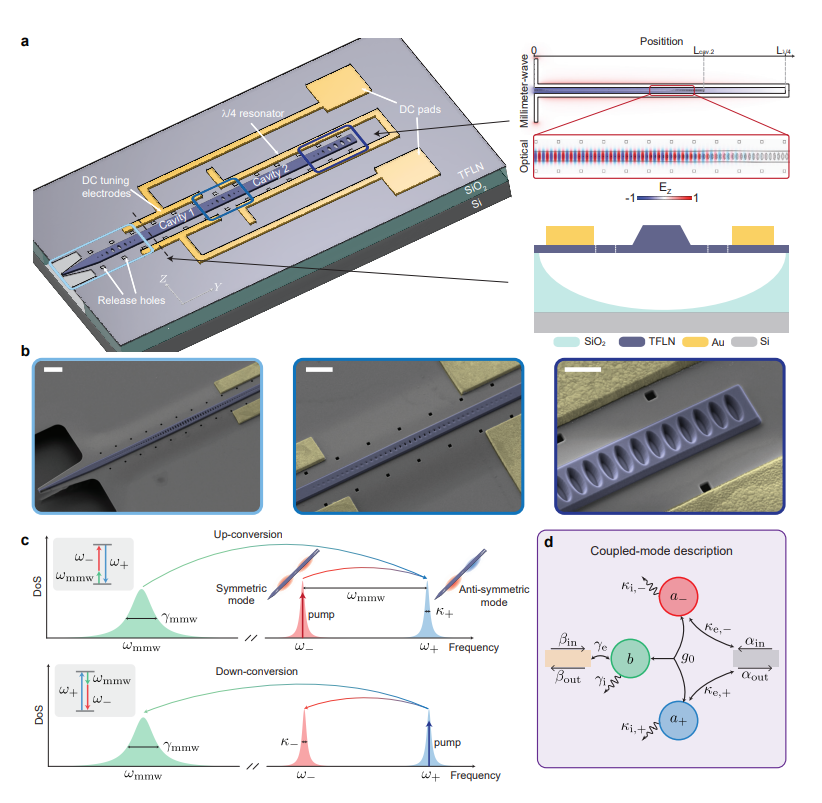
EPFL Demonstrates Millimeter-Wave-to-Optical Transducer with 67% Internal Efficiency
November 10, 2026

Why Quantum Hardware Needs Its Own Threat Model
November 9, 2026
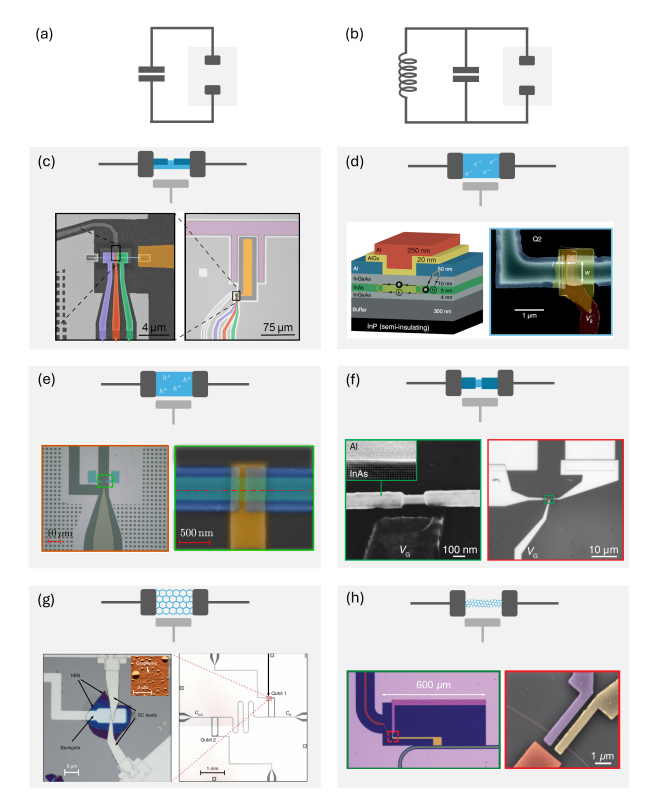
Physics Reports Analysis Evaluates Emergence of Hybrid Semiconductor–Superconducting Qubit Architectures
November 9, 2026
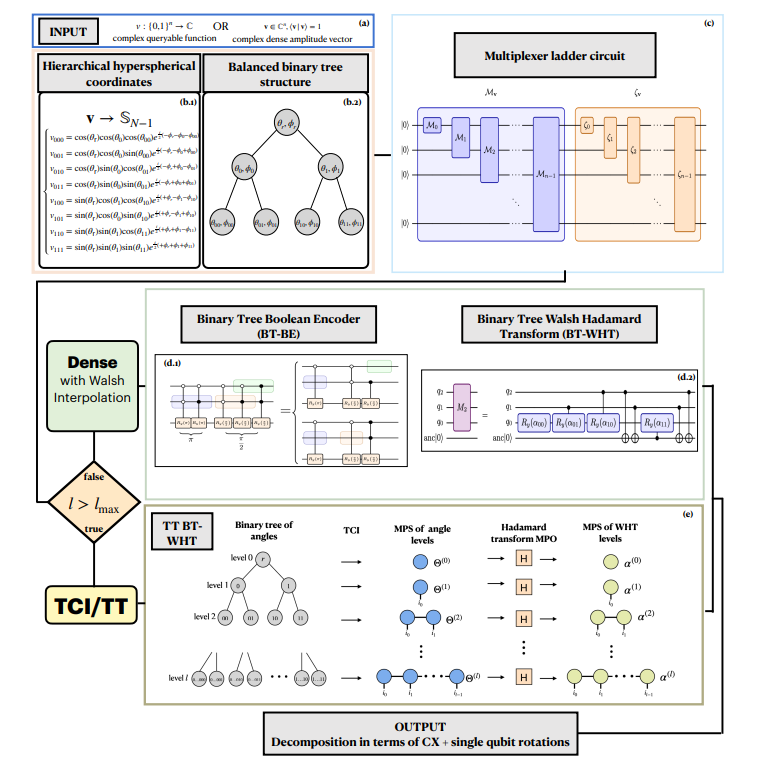
DLR Develops Scalable Unitary Data Encoding Beating Exponential State-Preparation Depth
November 9, 2026
IonQ and Classiq Outline Architectural Trade-Offs in Fault-Tolerant Resource Estimation
November 9, 2026