Oxford Quantum Circuits Releases Erado: An Open-Source Qiskit Simulator for Erasure Noise and Post-Selection
Oxford Quantum Circuits (OQC) has launched Erado, an open-source Qiskit simulator for erasure noise and post-selection, integrated into their QCaaS SDK. …
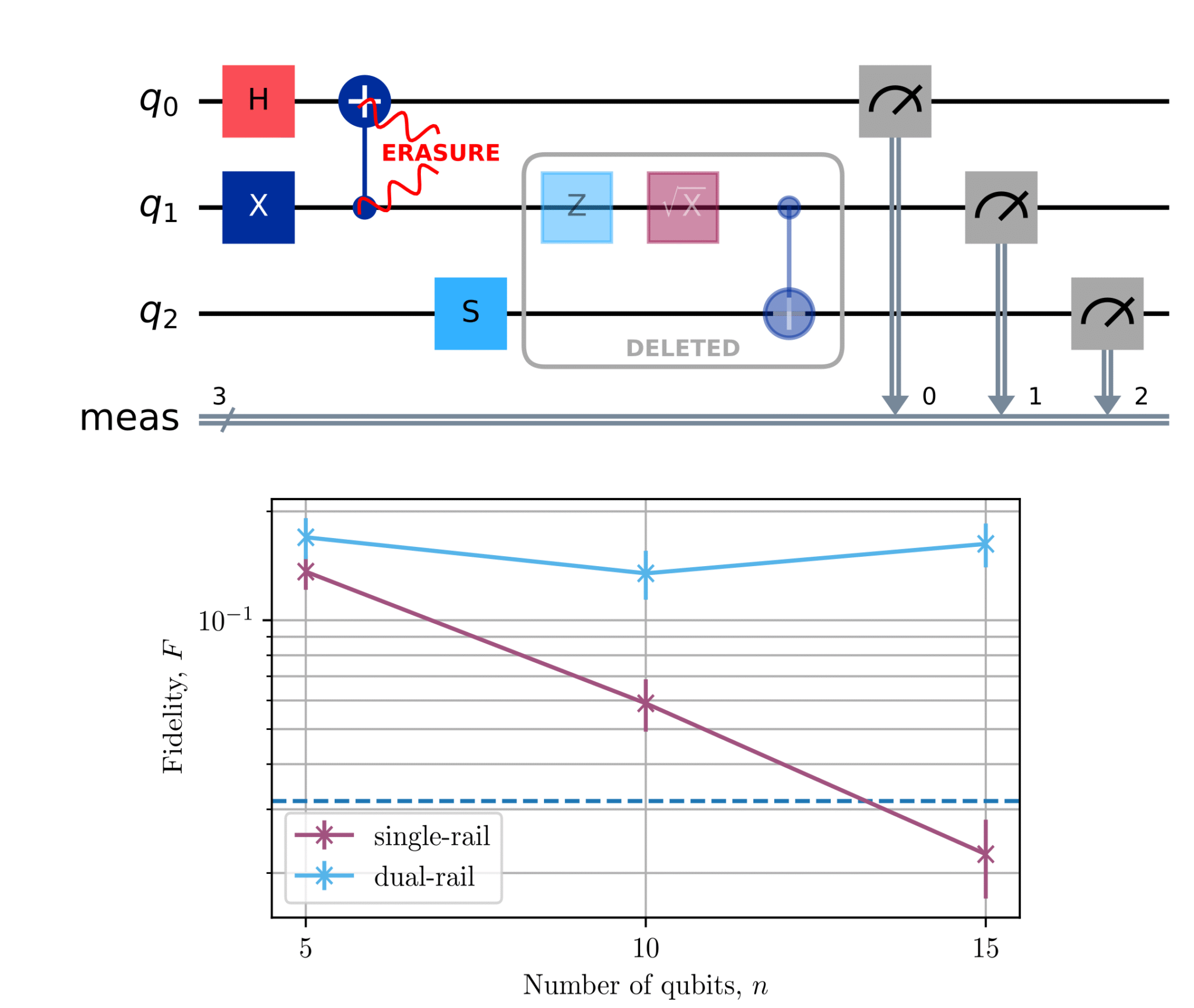
Superconducting quantum computing hardware provider Oxford Quantum Circuits (OQC) has released erado, an open-source Python library designed to simulate erasure noise, dual-rail qubit encodings, and post-selection strategies on arbitrary Qiskit circuits. Integrated directly into OQC’s Quantum Computing as a Service (QCaaS) SDK as a 16-qubit AerSimulator backend, the tool allows algorithm developers and researchers to benchmark erasure-aware noise models and evaluate quantum error mitigation techniques ahead of physical execution.
The release is accompanied by a companion research paper titled "The limits of erasure-based postselection for quantum error mitigation" (Griffiths et al., arXiv:2606.31428). The study demonstrates that postselection can fully mitigate the erasure channel when erasure check error rates remain below 3.0%. Crucially, the authors show that a postselected dual-rail system can surpass the fundamental noise floor at the kiloquop (1,000 quantum operations) scale where a comparable single-rail architecture fails, justifying the approach for Noisy Intermediate-Scale Quantum (NISQ) algorithms prior to full Quantum Error Correction (QEC). Beyond OQC, erasure-detection methodologies and dual-rail architectures are being actively pursued across the ecosystem, including by D-Wave Systems (following its acquisition of Quantum Circuits Inc.) and Q-CTRL.
[ OQC Erado Simulator Architectural & Configuration Parameters ] | ||
Parameter / Flag | Functional Specification | Simulation Mechanics & Impact |
| Per-gate erasure probability (0.0 to 1.0) | Triggers non-computational state transition; compounds with total erasable gate count. |
| Boolean filter flag (Default: | When enabled, discards detected erasure shots and automatically retries until target shot count is met. |
| Detector inaccuracy probability (0.0 to 1.0) | Models missed erasures, allowing corrupted state measurements to leak into final results. |
| Idle period padding via | Inserts idle gates into circuit layers to model environment-induced decoherence during idle states. |
The library provides two primary simulation modes: CIRCUIT_SAMPLER for exact statevector sampling and TRANSPILER_PASS for memory-efficient execution on larger circuit widths. By providing precise parameter controls over false-positive and false-negative detector rates, erado enables researchers to quantify the exact trade-off boundary where the shot-rejection overhead of post-selection remains computationally profitable compared to standard noisy sampling.
Review the technical deep-dive on OQC Technical Blog here, read the research paper on arXiv (arXiv:2606.31428) here, access the open-source repository on GitHub here, inspect package releases via PyPI here, and view developer documentation on OQC QCaaS SDK Docs here.
September 17, 2026
Related Intelligence

Test of USydney article with HTML.
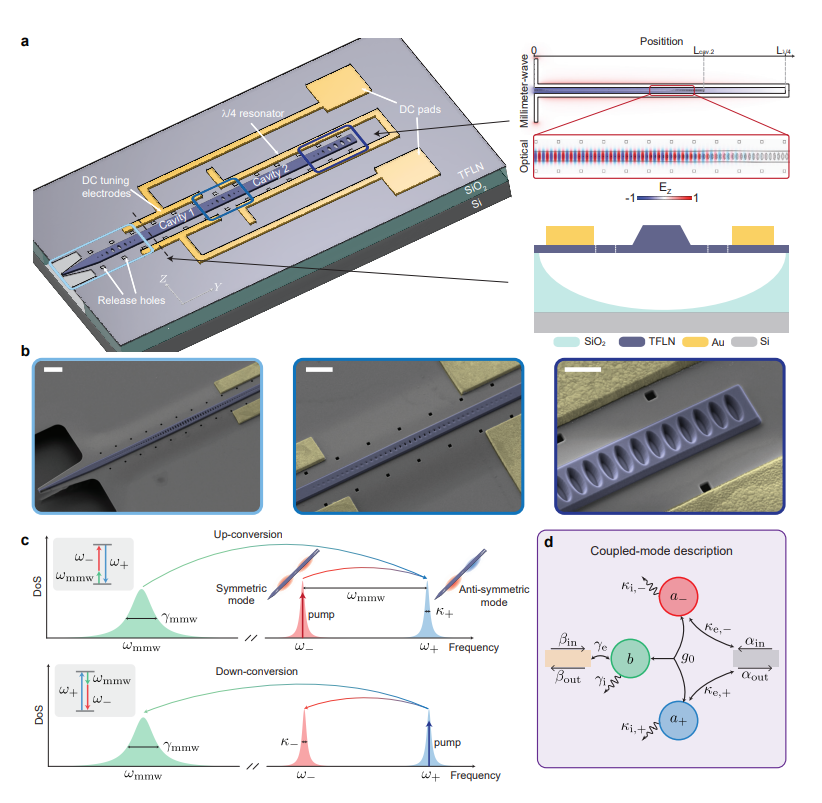
EPFL Demonstrates Millimeter-Wave-to-Optical Transducer with 67% Internal Efficiency
November 10, 2026

Why Quantum Hardware Needs Its Own Threat Model
November 9, 2026
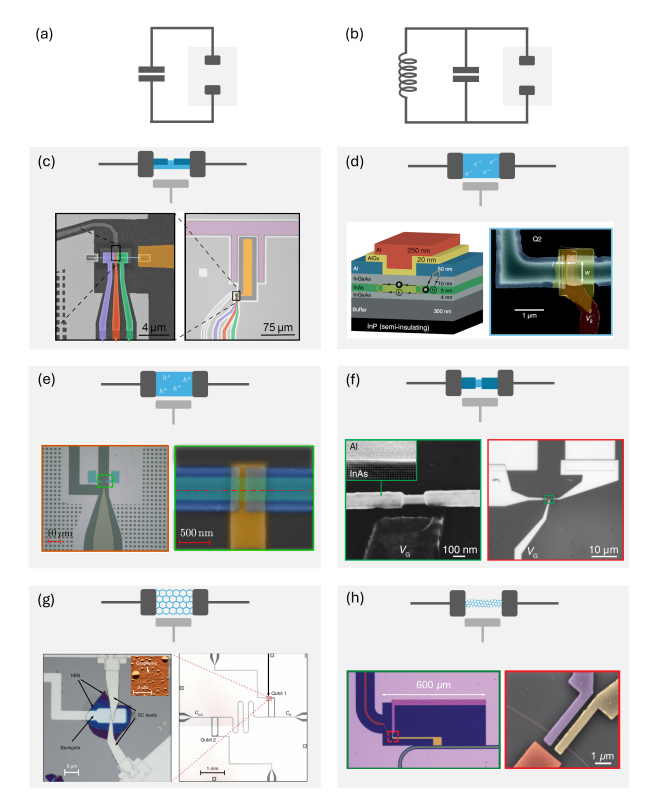
Physics Reports Analysis Evaluates Emergence of Hybrid Semiconductor–Superconducting Qubit Architectures
November 9, 2026
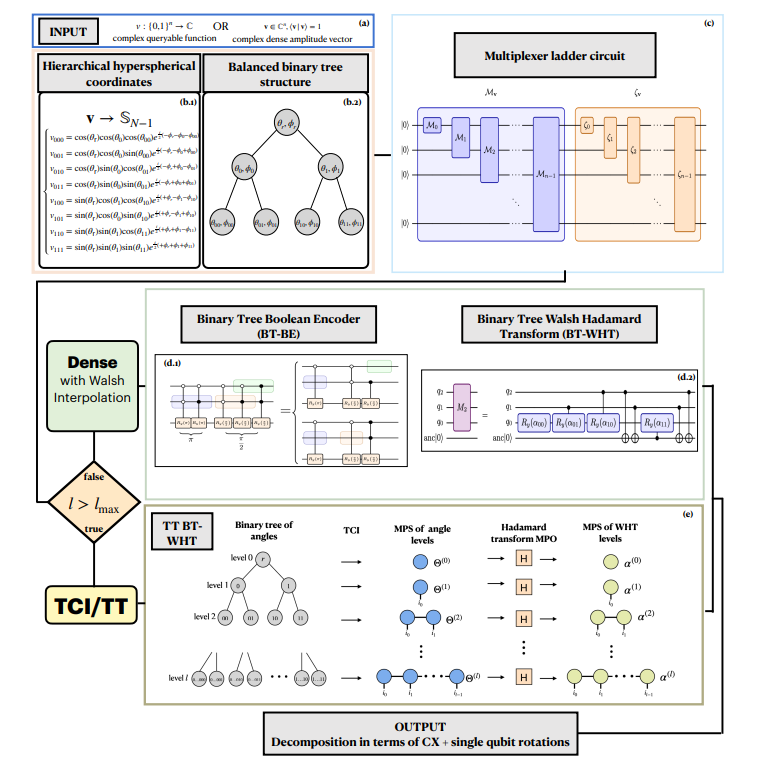
DLR Develops Scalable Unitary Data Encoding Beating Exponential State-Preparation Depth
November 9, 2026
IonQ and Classiq Outline Architectural Trade-Offs in Fault-Tolerant Resource Estimation
November 9, 2026