ParityQC and University of Innsbruck Propose Distillation Architecture to Reduce FTQC Overhead

Physicists from ParityQC and the University of Innsbruck have introduced the Parity-Unfolded Distillation Architecture, a fault-tolerant quantum computing (FTQC) scheme designed to lower the resource overhead required for non-Clifford gates. Detailed in the preprint "Parity-unfolded distillation architecture for noise-biased platforms," the research provides a framework for distilling rotation gates from any level of the Clifford hierarchy. This approach allows for the direct preparation and teleportation of small-angle rotations rather than approximating them through a long sequence of conventional discrete gates, which typically increases the risk of error.
The architecture is specifically optimized for noise-biased platforms, such as those where dephasing errors are significantly more frequent than other types of noise. While standard protocols often require complex, higher-dimensional qubit connectivity to protect sensitive quantum operations, the team’s "parity-unfolding" procedure enables these gates to be implemented on standard two-dimensional planar chips with nearest-neighbor interactions. By adapting the gate distillation process to the physical constraints of the hardware, the architecture bypasses traditional connectivity bottlenecks while maintaining fault-tolerant protection.
Efficiency Gains in Gate Synthesis
The primary technical advantage of this architecture is the significant reduction in the total number of physical qubits and operations needed for complex algorithms like the Quantum Fourier Transform (QFT). When synthesizing the precise rotations required for these algorithms, the distillation of higher-level gates was shown to reduce the physical qubit footprint by 26% compared to standard methods. Furthermore, this streamlined approach cut the logical error rate by 43%, demonstrating that more direct gate preparation can improve both the scalability and the reliability of universal fault-tolerant quantum processors.
You can find the official announcement regarding the Parity-Unfolded Distillation Architecture here and access the technical study on arXiv here.
May 7, 2026
Related Intelligence
Test of USydney article with HTML.
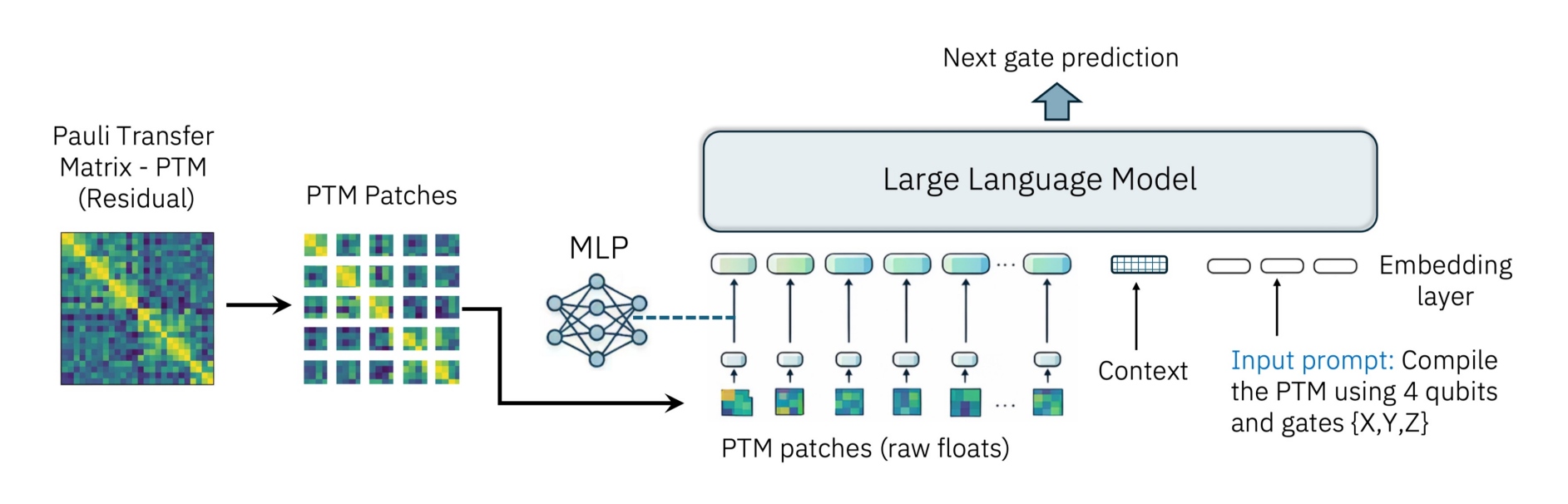
MIT and IBM Project Quantum Unity Operators into Language Model Latent Spaces for Multimodal Circuit Synthesis
July 11, 2026

ETH Zurich Combines Superconducting Qubits with Mechanical Resonators to Build Vibrating Quantum RAM
July 11, 2026

Google and Fraunhofer Launch Global Calls for Early Fault-Tolerant Algorithms and Enterprise Use Cases
July 11, 2026

Who’s News: Strategic Appointments at Photonic, Aliro Quantum, Florida Atlantic University, QuSecure, Quantum Elements, and QAI Ventures
July 11, 2026
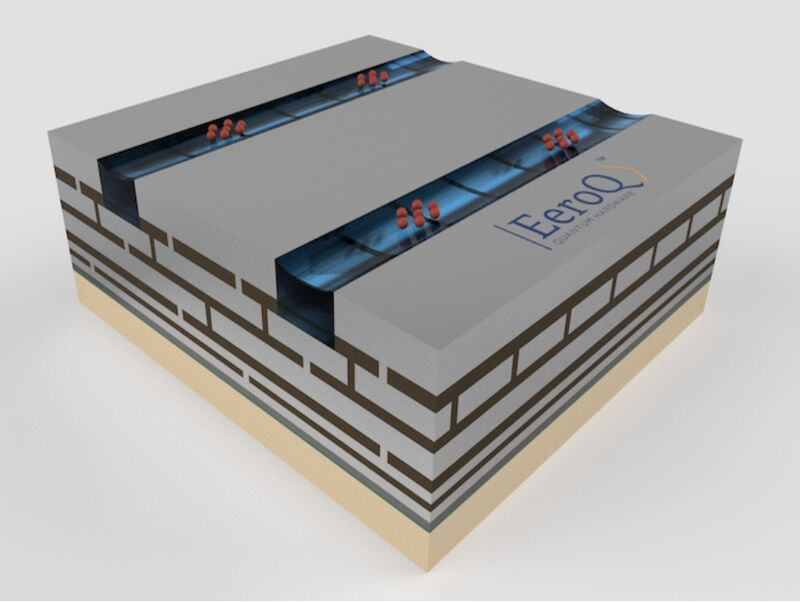
EeroQ Validates CMOS-Controlled Electron Shuttling on Superfluid Helium for All-to-All Qubit Routing
July 11, 2026