Phasecraft and NVIDIA Benchmark 3,000+ VQE Molecular Emulations Under Wellcome Leap Q4Bio Program
Phasecraft and NVIDIA have collaborated under the Wellcome Leap Q4Bio program to create the largest-known Variational Quantum Eigensolver (VQE) emulated…

Quantum algorithm developer Phasecraft has partnered with NVIDIA to construct the largest-known Variational Quantum Eigensolver (VQE) emulated molecular database, leveraging accelerated computing infrastructure under the Wellcome Leap Quantum for Bio (Q4Bio) program. Hosted on an NVIDIA Hopper architecture cluster at the University of Nottingham, the initiative benchmarked over 3,000 unique VQE circuit emulations across 13 distinct molecular systems relevant to biological and materials science applications.
The technical integration paired Phasecraft's hardware-adaptive quantum algorithms with the NVIDIA cuQuantum software development kit (SDK) to execute large-scale classical-quantum hybrid simulations spanning 4 to 32 qubits, with primary circuit density concentrated in the 24-to-28 qubit regime. By coupling cuQuantum-accelerated state-vector and tensor-network emulations with Phasecraft's proprietary quantum-enhanced Density Functional Theory (DFT) functionals, the combined computing framework achieved a 15-fold execution speedup over prior electronic structure baseline models.
[ Phasecraft & NVIDIA VQE Emulation Performance & Technical Scope ] | ||
Program Framework | Compute & Simulation Infrastructure | Algorithmic & Benchmark Outputs |
• Wellcome Leap Q4Bio Program | • NVIDIA Hopper GPU Cluster (Univ. of Nottingham) | • 3,000+ Unique VQE Emulated Circuits |
• Life Sciences & Health Focus | • NVIDIA cuQuantum SDK Parallelization | • 13 Molecular Systems Modeled |
• Target: DFT Functional Training | • Qubit Emulation Scale: 4 to 32 Qubits (Core: 24–28Q) | • 15x Execution Speedup vs. Prior Baselines |
The resulting dataset provides a computational baseline to train quantum-enhanced DFT functionals, improving electronic ground-state calculation accuracy for many-body biological systems. Under CEO Ashley Montanaro and NVIDIA Director of Quantum Product Sam Stanwyck, the collaboration demonstrates how accelerated classical GPU infrastructure is being deployed to optimize NISQ-era variational algorithms for downstream execution on physical quantum processors.
Review the official news release via Phasecraft here.
September 14, 2026
Related Intelligence

Test of USydney article with HTML.
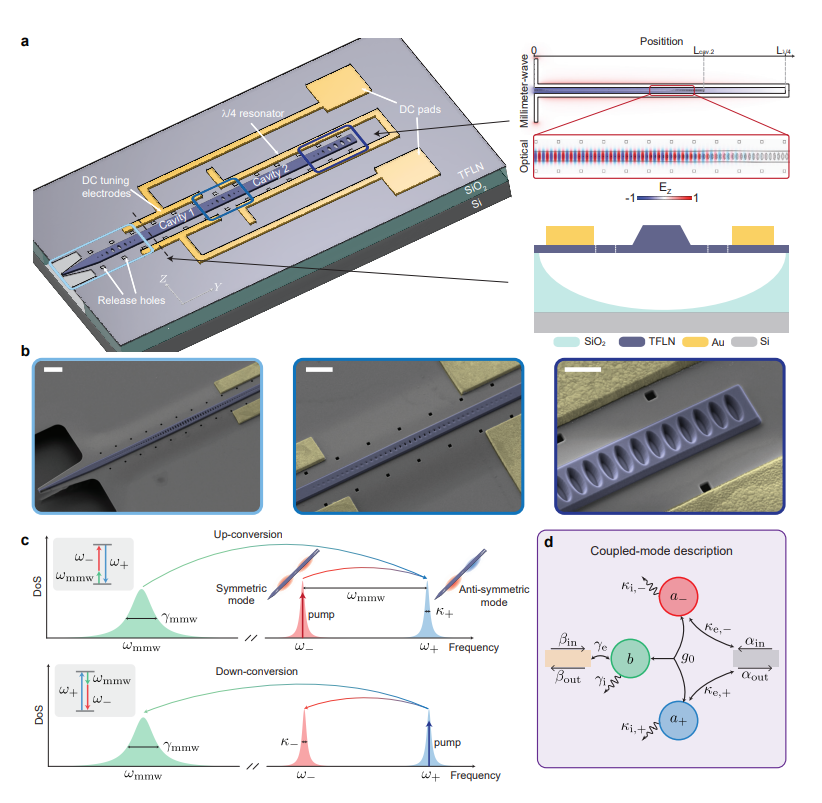
EPFL Demonstrates Millimeter-Wave-to-Optical Transducer with 67% Internal Efficiency
November 10, 2026
Why Quantum Hardware Needs Its Own Threat Model
November 9, 2026
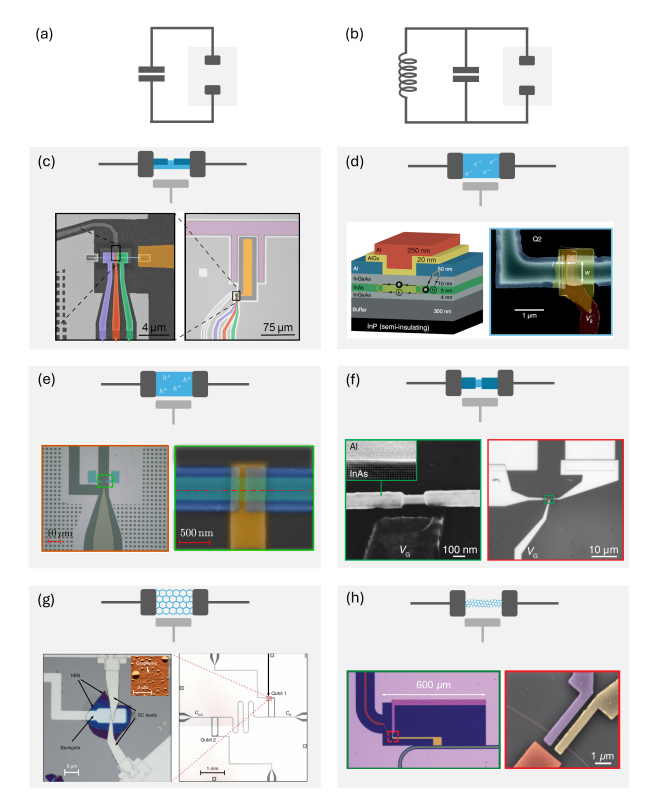
Physics Reports Analysis Evaluates Emergence of Hybrid Semiconductor–Superconducting Qubit Architectures
November 9, 2026
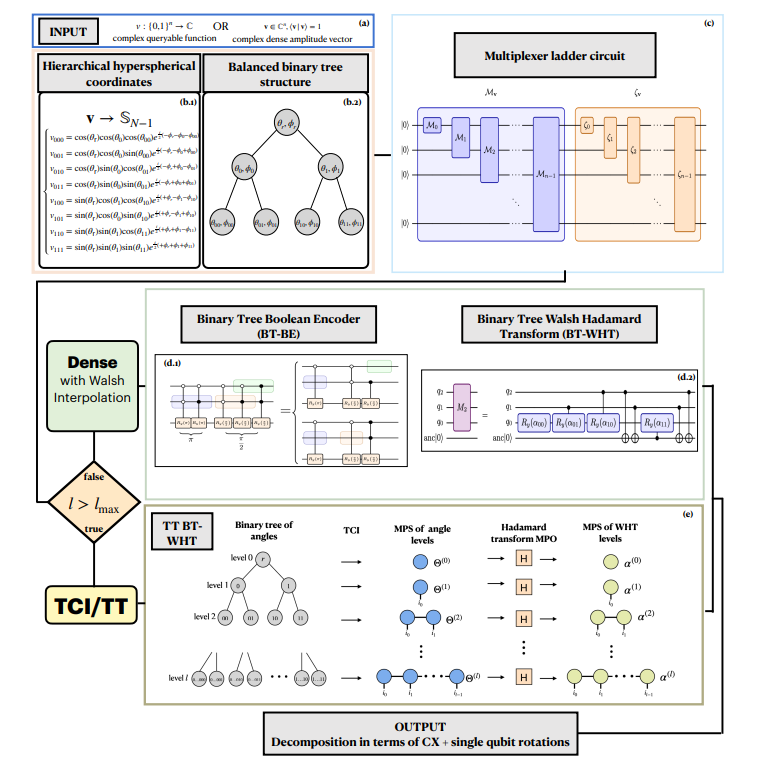
DLR Develops Scalable Unitary Data Encoding Beating Exponential State-Preparation Depth
November 9, 2026
IonQ and Classiq Outline Architectural Trade-Offs in Fault-Tolerant Resource Estimation
November 9, 2026