QCentroid Unveils "Missions" on NVIDIA CUDA-Q to Benchmark Classical, Quantum-Inspired, and QPU Workloads
QCentroid launched "Missions," a new platform integrated with NVIDIA CUDA-Q, to evaluate the best solutions for enterprise computational challenges. …
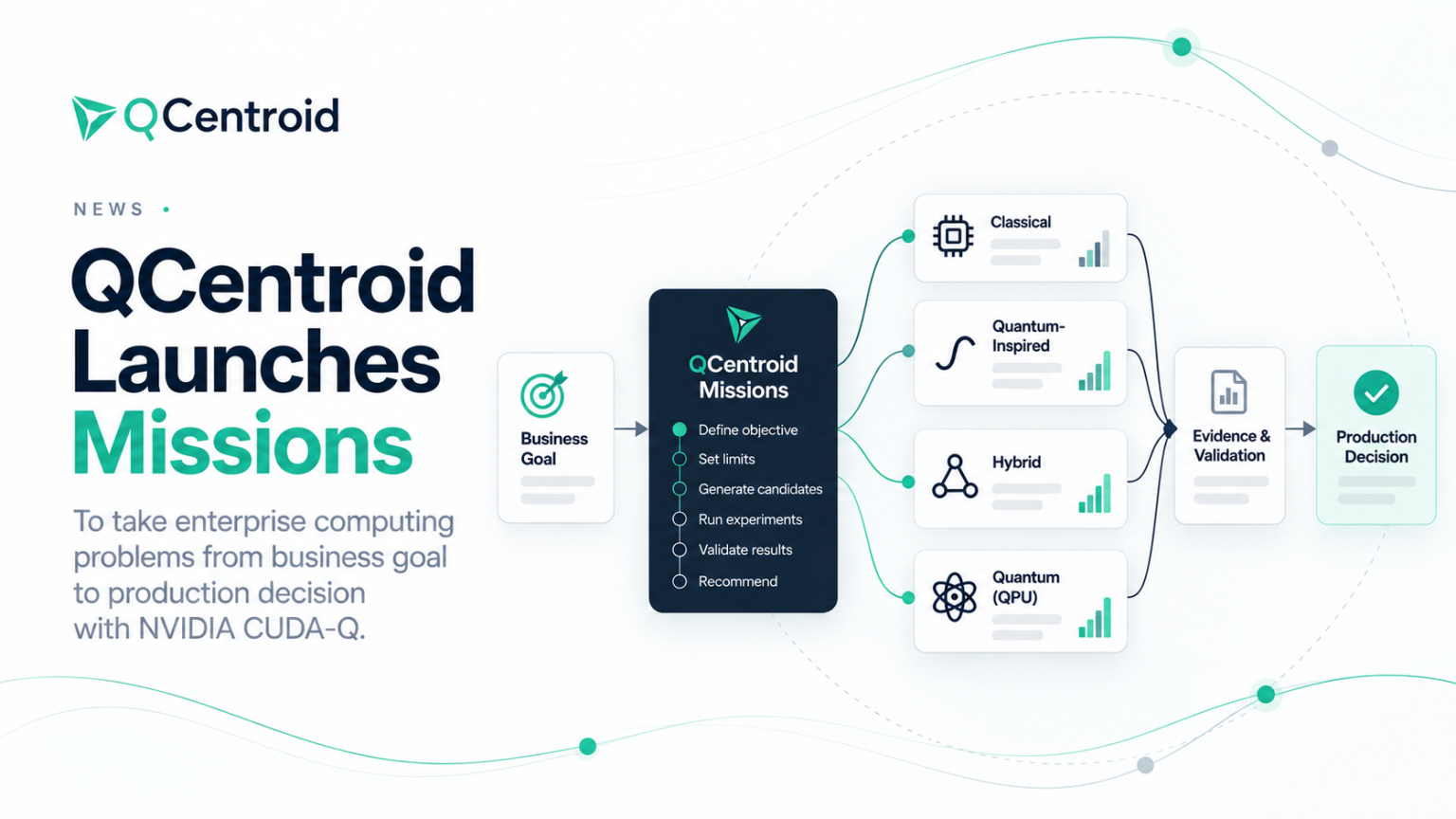
Enterprise quantum operations platform provider QCentroid has officially launched Missions, a goal-driven solver evaluation layer integrated into its QuantumOps framework and powered by NVIDIA CUDA-Q. Unveiled during NVIDIA GTC Berlin, the platform deploys autonomous AI agents to evaluate whether enterprise computational bottlenecks are best solved using existing classical heuristics, GPU-accelerated quantum-inspired algorithms, or physical quantum processing units (QPUs).
Rather than presuming a quantum advantage, the Missions framework starts with a defined business baseline and objective—such as decreasing run time, improving solution feasibility under hard time bounds, or lowering compute expenditures. The system sets operational constraints (GPU hours, iteration budgets, authorized data stores) and enforces human validation gates before testing and reporting results.
[ QCentroid Missions Operational Architecture ] | ||
Workflow Stage | System Component & Execution Layer | Operational Function |
• Constraint Boundary | • Operational Budgets & Human Validation Gates | • Defines GPU run-time caps, permitted repositories, and required checkpoints prior to code execution. |
• Agentic Solver Search | • Autonomous QuantumOps AI Agents | • Analyzes problem structure; synthesizes and runs classical, quantum-inspired, and gate-level formulations. |
• Compute Acceleration | • NVIDIA CUDA-Q via QCentroid Launchpad | • GPU-accelerated state-vector and tensor-network simulation of parameterized circuits (such as QAOA). |
• Evidence & Verification | • Independent Validation & Correction Engine | • Audits claimed performance improvements to prevent overstatement; recommends production architecture. |
Evidence-Based Validation Across Financial and Logistical Benchmarks
In pilot benchmark runs highlighted by QCentroid—such as a treasury collateral-allocation problem involving 150 assets across 20 counterparties—classical exact solvers timed out without finding a feasible allocation at scale. In contrast, simulated quantum-inspired annealing and Quantum Approximate Optimization Algorithm (QAOA) solvers built through CUDA-Q delivered feasible allocations within 0.05% objective agreement.
Critically, the platform incorporates an adversarial validation step designed to recalculate reported gains and reject overstated speedups. If benchmark data indicates that an existing classical algorithm remains the most cost-effective path, the system formally recommends retaining the legacy classical architecture rather than forcing a QPU migration.
QCentroid Missions will roll out to enterprise customers on the QCentroid Platform starting in Q4 2026.
Review the launch announcement on the QCentroid Newsroom here and examine the technical architecture via the QCentroid Technical Deep-Dive here.
October 23, 2026
Related Intelligence

Test of USydney article with HTML.
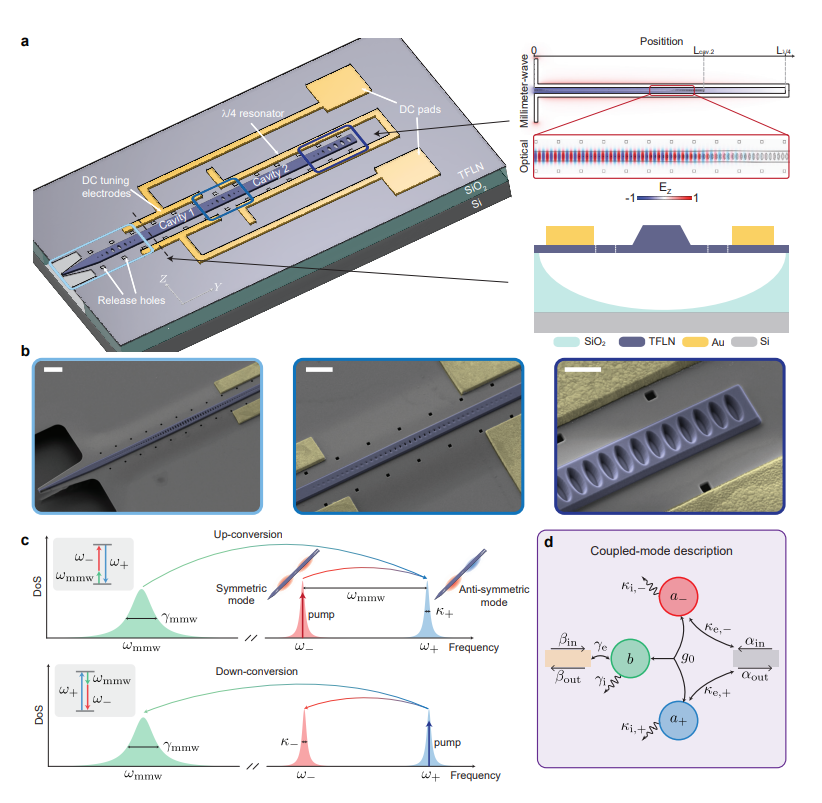
EPFL Demonstrates Millimeter-Wave-to-Optical Transducer with 67% Internal Efficiency
November 10, 2026

Why Quantum Hardware Needs Its Own Threat Model
November 9, 2026
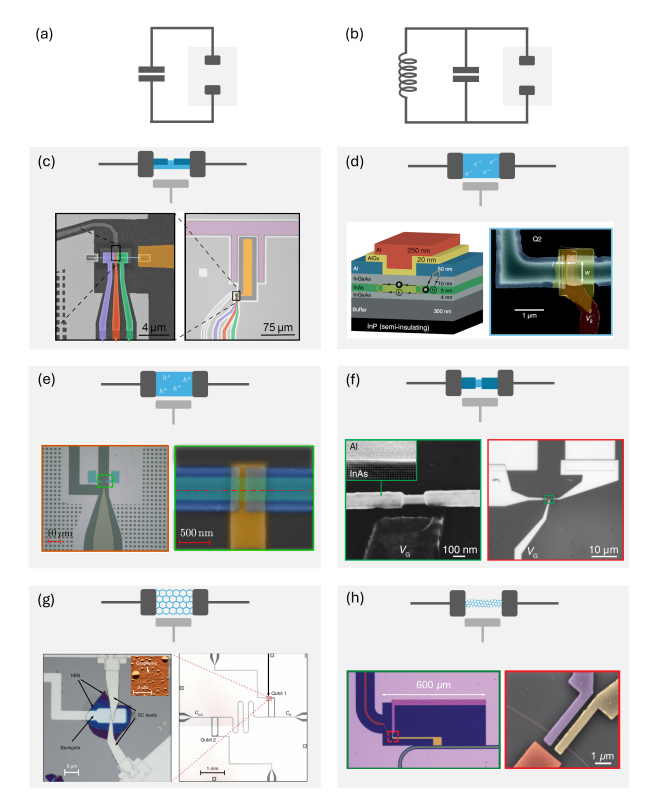
Physics Reports Analysis Evaluates Emergence of Hybrid Semiconductor–Superconducting Qubit Architectures
November 9, 2026
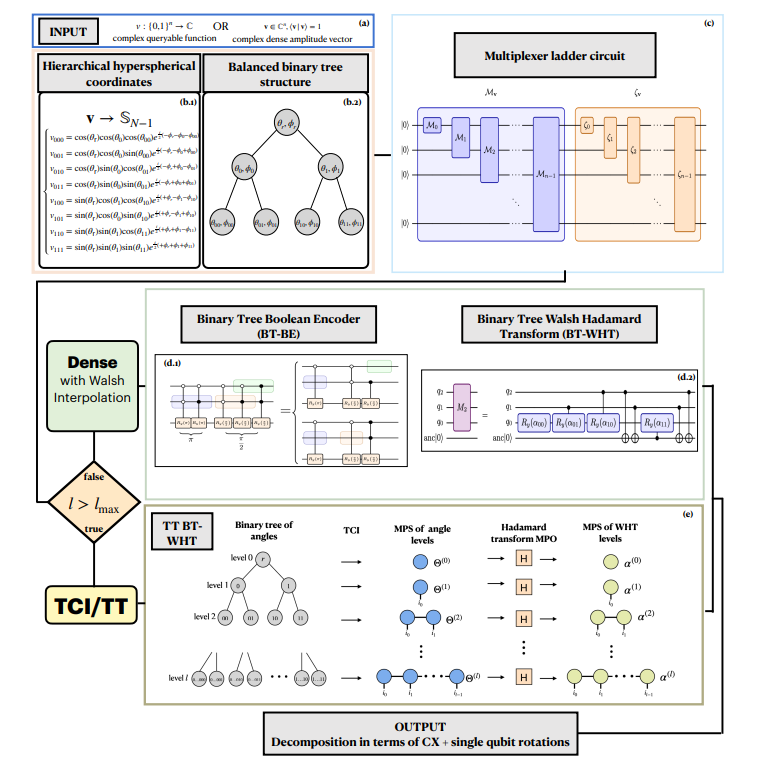
DLR Develops Scalable Unitary Data Encoding Beating Exponential State-Preparation Depth
November 9, 2026
IonQ and Classiq Outline Architectural Trade-Offs in Fault-Tolerant Resource Estimation
November 9, 2026