Quantinuum and BMW Group Expand Collaboration with Multi-Year Partnership
Quantinuum and the BMW Group have formally expanded their ongoing collaboration into a multi-year partnership focused on accelerating future mobility through quantum-enhanced materials science. Since 2021, the two companies have worked on industrial chemistry challenges, specifically focusing on electrochemical processes that are critical for high-efficiency fuel cells and battery technologies. This renewal positions the alliance as one of the longest-sustained commitments between a global automotive manufacturer and a quantum computing provider.
The collaboration utilizes Quantinuum’s trapped-ion architecture to simulate complex molecular systems that are currently beyond the reach of classical supercomputers. A primary area of research involves modeling the oxygen reduction reaction (ORR) at platinum catalysts. By achieving high-fidelity simulations of these reactions, BMW aims to identify alternative materials that could lower production costs and improve the energy density of fuel cell engines. In 2024, the partnership reached a technical milestone by becoming the first to simulate catalytic performance on a quantum computer, with the results published in Nature.
Under the new agreement, BMW Group will gain access to successive generations of Quantinuum’s quantum hardware. This roadmap allows BMW to scale its research alongside hardware advancements:
Helios (Current): A 96-qubit system designed to surpass classical simulation limits for specific scientific tasks.
Sol (2027): Planned as the first commercially available 2D-grid-based system, offering hundreds of qubits and 2x faster operations.
Apollo (2029): Planned as a fully fault-tolerant system capable of executing millions of gates to achieve a "commercial tipping point" in materials discovery.
The partnership reflects a broader industry shift toward "quantum-centric" R&D, where quantum processors are integrated into existing industrial workflows. By combining Quantinuum’s high-precision gate operations with BMW’s expertise in vehicle engineering, the collaboration aims to decrease reliance on expensive laboratory prototypes. Dr. Martin Tietze, Vice President of New Technologies at BMW Group, noted that the integration of quantum hardware into the materials optimization process is essential for the development of future vehicle generations, including sustainable alternatives like hydrogen-powered engines.
You can find the official announcement regarding the Quantinuum and BMW Group partnership here. For more on the technical roadmap toward fault-tolerant systems like Apollo, visit Quantinuum’s technical perspective here.
May 5, 2026
Related Intelligence
Test of USydney article with HTML.
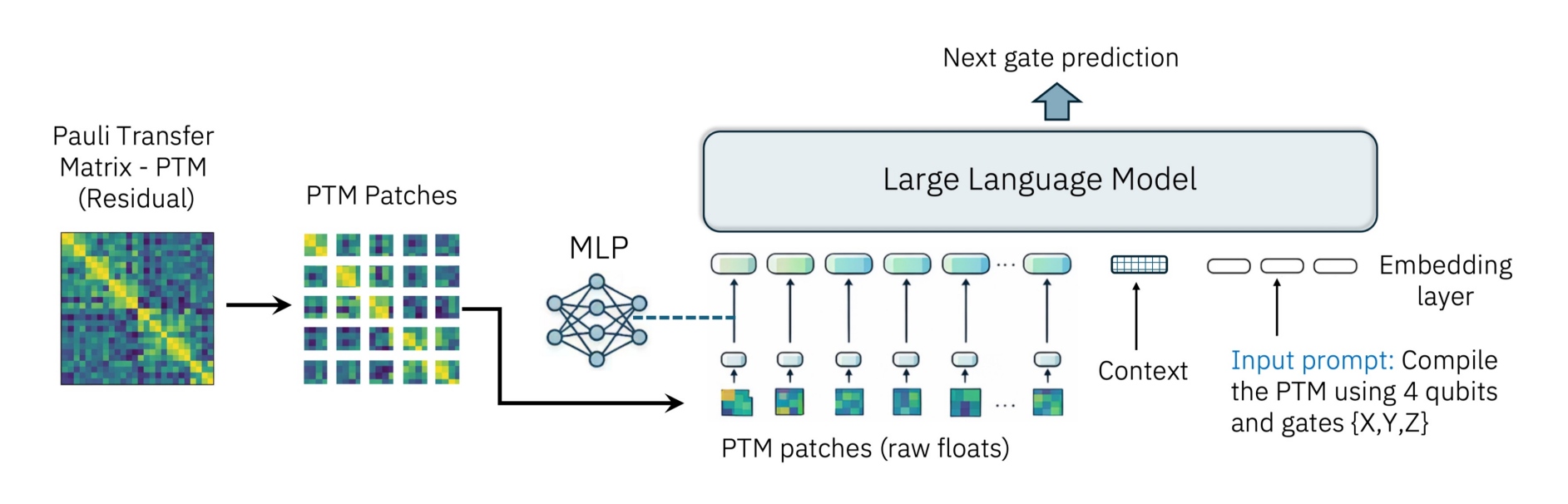
MIT and IBM Project Quantum Unity Operators into Language Model Latent Spaces for Multimodal Circuit Synthesis
July 11, 2026

ETH Zurich Combines Superconducting Qubits with Mechanical Resonators to Build Vibrating Quantum RAM
July 11, 2026
Google and Fraunhofer Launch Global Calls for Early Fault-Tolerant Algorithms and Enterprise Use Cases
July 11, 2026

Who’s News: Strategic Appointments at Photonic, Aliro Quantum, Florida Atlantic University, QuSecure, Quantum Elements, and QAI Ventures
July 11, 2026

EeroQ Validates CMOS-Controlled Electron Shuttling on Superfluid Helium for All-to-All Qubit Routing
July 11, 2026