Quantinuum and GE Vernova Target High-Temperature Superconductivity Using Helios Trapped-Ion Hardware
Quantinuum and GE Vernova are collaborating to model high-temperature superconductivity (HTS) using Quantinuum's Helios quantum computer. …
Trapped-ion developer Quantinuum and GE Vernova’s Advanced Research Center (ARC) have launched a joint research collaboration to model the physical mechanisms underlying high-temperature superconductivity (HTS). The joint program will execute Fermi–Hubbard simulations directly on Quantinuum’s flagship Helios commercial quantum computer via its cloud-based Nexus development environment, combining quantum state preparation with GE Vernova’s domain expertise in materials physics and grid-scale power equipment.
The collaboration marks an operational expansion in GE Vernova’s computational chemistry strategy. While GE Vernova researchers previously benchmarked variational quantum algorithms for carbon-capture materials using GPU-accelerated state-vector simulators, this initiative deploys physical QPU hardware to tackle strongly correlated electronic structures that remain intractable for classical Density Functional Theory (DFT) and mean-field approximations.
[ Quantinuum & GE Vernova: HTS Simulation Platform Profile ] | ||
Project Dimension | Technical Implementation | Industrial & Scientific Objective |
• Physical Hardware | • Quantinuum Helios QPU | • Utilizes high two-qubit gate fidelities (>99.9%) to run deep coherent circuits without immediate error-mitigation breakdown. |
• Software & Access Layer | • Quantinuum Nexus Platform | • Cloud-managed hybrid compilation, automated workflow scheduling, and circuit execution interface. |
• Physical Hamiltonian | • 2D Fermi–Hubbard Model | • Probes strongly interacting electron lattices to evaluate pseudogap phenomena, charge-density waves, and pairing symmetries. |
• Validated Precedents | • s-wave and d-wave pairing measurements | • Builds on Quantinuum’s experimental characterization of superconducting order parameters on native hardware. |
• Grid & Industrial Scope | • GE Vernova Advanced Research Center | • Translates microscopic pairing metrics into practical material targets for compact wind generators, marine propulsion, and fault current limiters. |
Bypassing the Limits of Classical Electronic Structure Solvers
High-temperature superconductors—materials capable of conducting electrical current with zero resistance at temperatures accessible via liquid nitrogen (above 77 K)—derive their properties from strongly correlated electron interactions. Conventional computational approaches such as Density Functional Theory (DFT) fail to predict these macroscopic phases because mean-field approximations cannot resolve the intense electron-electron repulsion and quantum phase transitions governing the lattice.
The Fermi–Hubbard model serves as the fundamental theoretical framework for studying these strongly correlated systems. Although mathematically straightforward, classical simulation of 2D Fermi–Hubbard lattices scales exponentially with system size due to the fermionic sign problem in quantum Monte Carlo methods. Quantinuum has previously demonstrated the ability to prepare coherent states on Helios and measure both s-wave and d-wave pairing correlations—the primary order parameters associated with high-temperature superconducting phases.
By pairing Helios with GE Vernova’s computational physics teams, the project focuses on mapping whether these quantum-simulated pairing states can inform the discovery of novel chemical compositions that operate under less restrictive cryogenic cooling thresholds.
Industrial Implications for Grid Infrastructure and Propulsion
For GE Vernova, commercial advancements in superconducting material performance translate directly to the power generation and transmission sectors. Conventional copper and aluminum conductors introduce thermal limits, weight penalties, and resistive line losses across utility-scale equipment.
Accelerating the discovery of workable HTS materials introduces three primary commercial avenues:
Compact Wind and Marine Generators: Superconducting field windings dramatically increase magnetic flux densities, reducing the physical nacelle weight of multi-megawatt offshore wind turbines and high-torque ship propulsion drives.
High-Capacity Transmission Cables: HTS underground conduits carry up to five times the electrical current of conventional lines with zero DC resistance, easing right-of-way congestion in metropolitan grids.
Superconducting Fault Current Limiters (SFCL): Deploying the instantaneous loss of the superconducting state during a short-circuit to rapidly limit fault currents, protecting grid transformers from catastrophic failure.
The initiative builds directly upon GE Vernova’s broader quantum algorithm roadmap. Earlier this year, GE Vernova ARC researchers published benchmarks in AIP Advances exploring adaptive VQE algorithms for carbon-capture sorbents (amine-functionalized MOFs) using GPU-accelerated state-vector simulators. The Quantinuum collaboration shifts the company from algorithmic emulation on classical supercomputers to production experiments on physical trapped-ion processors.
Review the collaboration details via the Quantinuum Corporate Portal here, and examine GE Vernova ARC’s baseline computational work via AIP Advances here.
October 27, 2026
Related Intelligence

Test of USydney article with HTML.
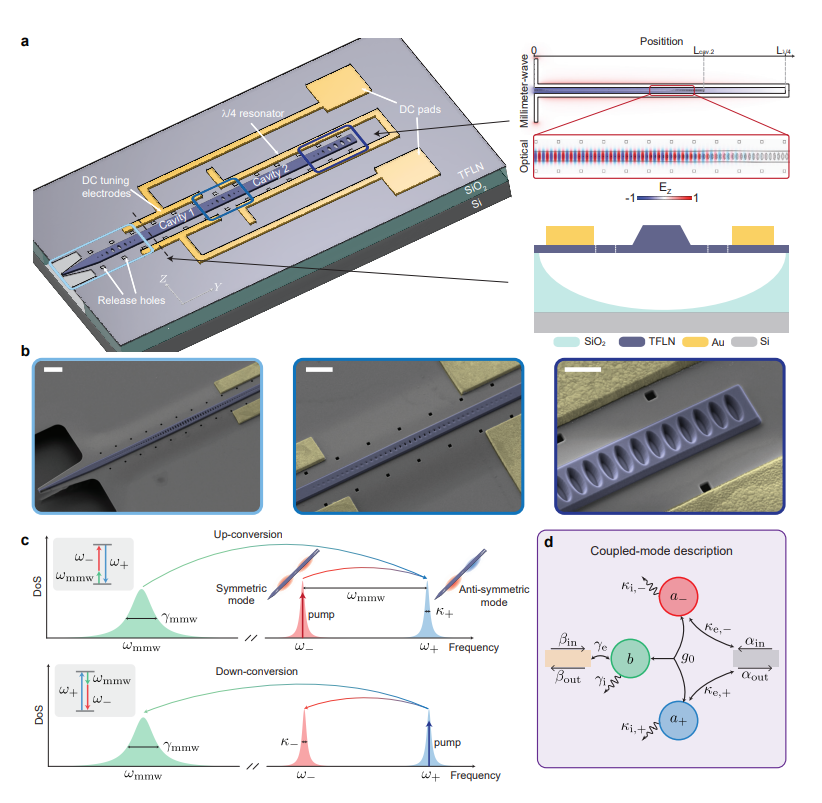
EPFL Demonstrates Millimeter-Wave-to-Optical Transducer with 67% Internal Efficiency
November 10, 2026
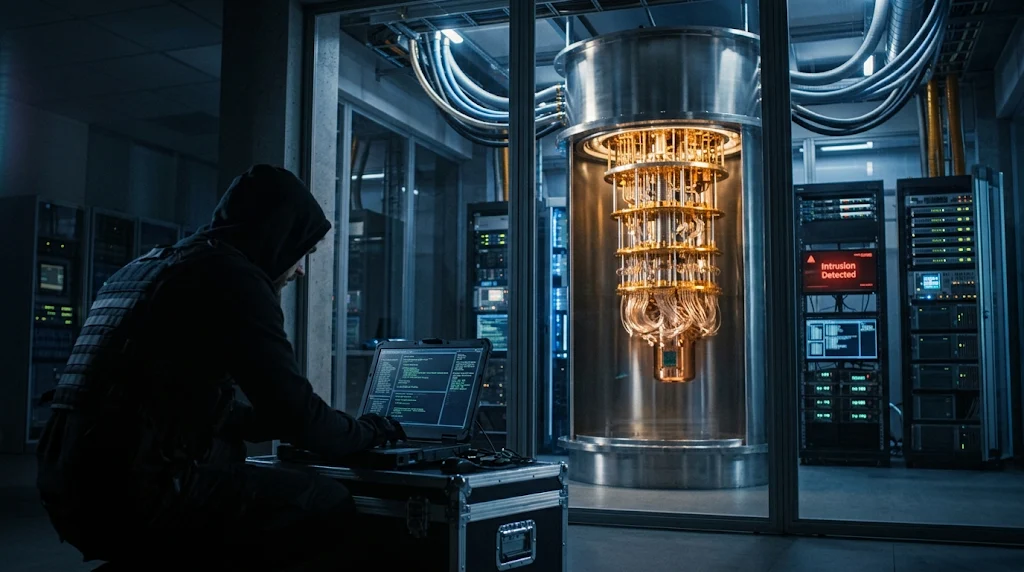
Why Quantum Hardware Needs Its Own Threat Model
November 9, 2026
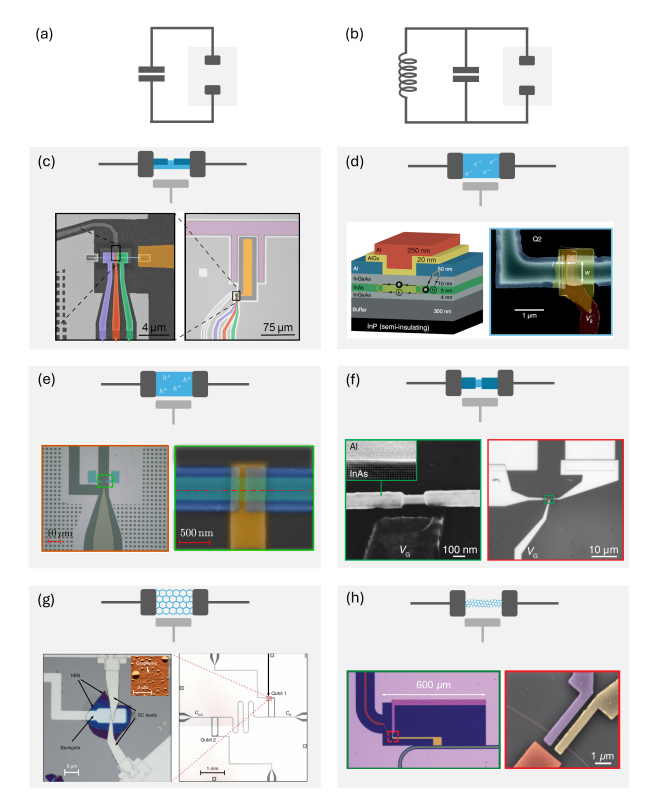
Physics Reports Analysis Evaluates Emergence of Hybrid Semiconductor–Superconducting Qubit Architectures
November 9, 2026
DLR Develops Scalable Unitary Data Encoding Beating Exponential State-Preparation Depth
November 9, 2026
IonQ and Classiq Outline Architectural Trade-Offs in Fault-Tolerant Resource Estimation
November 9, 2026