Quantinuum and HQS Simulate 21-Spin NMR Spectrum on 42 Qubits With 1,400+ Two-Qubit Gate Circuits
Quantinuum and HQS Quantum Simulations successfully simulated a 21-spin NMR spectrum on Quantinuum's 42-qubit quantum computer, the H2-1. …

Quantum hardware developer Quantinuum, in partnership with German software vendor HQS Quantum Simulations, has demonstrated an end-to-end digital Nuclear Magnetic Resonance (NMR) spectroscopy simulation on the Quantinuum System Model H2-1 trapped-ion quantum computer. The benchmark modeled the liquid-state proton NMR spectrum of 1,2-di-tert-butyl-diphosphane, a classically challenging 22-spin heteronuclear molecule containing two 31P nuclei and twenty 1H nuclei.
To map the molecular spin network onto trapped-ion hardware, the joint team applied a hardware-efficient projection of the two-phosphorus subsystem into its singlet-triplet (|S⟩, |T0⟩) subspace. This reduced the system from 22 physical spins to a 21-spin effective Hamiltonian, reducing two-qubit gate requirements per Trotter step from 69 to 20 native ZZPhase gates.
[ Quantinuum H2-1 NMR Simulation Technical Parameters ] | ||
Parameter / Domain | Hardware Execution Metric | Operational & Circuit Function |
• Qubit Allocation | • 42 Qubits total (21 system + 21 ancilla) | • Ancillas dedicated to mid-circuit leakage detection gadgets. |
• Trotterized Time Evolution | • 70 Trotter steps (discrete time step Δt = 0.42 ms) | • Total physical evolution time: 29.4 ms. |
• Circuit Depth & Gate Metrics | • Maximum 2-qubit gate depth: 1,442 gates | • Native gateset: |
• Error Suppression Stack | • Echo compiling, DD, & leakage filtering | • Full-Trotter step Pauli twirling, server-side dynamical decoupling, and ancilla-assisted leakage post-selection. |
Previous 22-qubit hardware experiments on superconducting and trapped-ion systems struggled to resolve the 3.9–4.3 ppm region of diphosphane, which contains a subtle double-peak structure requiring up to fourth-order coupled-spin correlation tracking. By maintaining high gate fidelity across all-to-all connected ionic channels and mitigating idle memory errors, the H2-1 hardware run successfully reproduced the double-peak structure with a spectral resolution of approximately 0.07 ppm.
While the authors note that classical solvers like Spinach remain more computationally efficient for routine high-field liquid-state spectroscopy today, the result validates the viability of deep digital Hamiltonian simulation workflows for zero- to ultralow-field (ZULF) NMR and solid-state materials characterization.
Review the full pre-print manuscript on arXiv here and examine vendor performance analysis in the Quantinuum Blog here.
October 9, 2026
Related Intelligence

Test of USydney article with HTML.
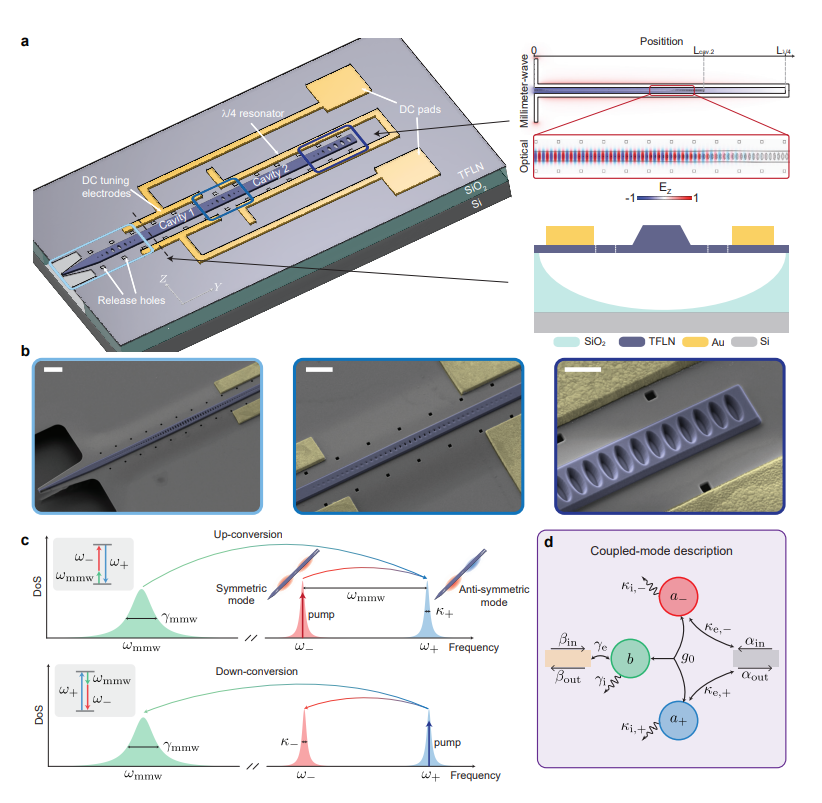
EPFL Demonstrates Millimeter-Wave-to-Optical Transducer with 67% Internal Efficiency
November 10, 2026
Why Quantum Hardware Needs Its Own Threat Model
November 9, 2026
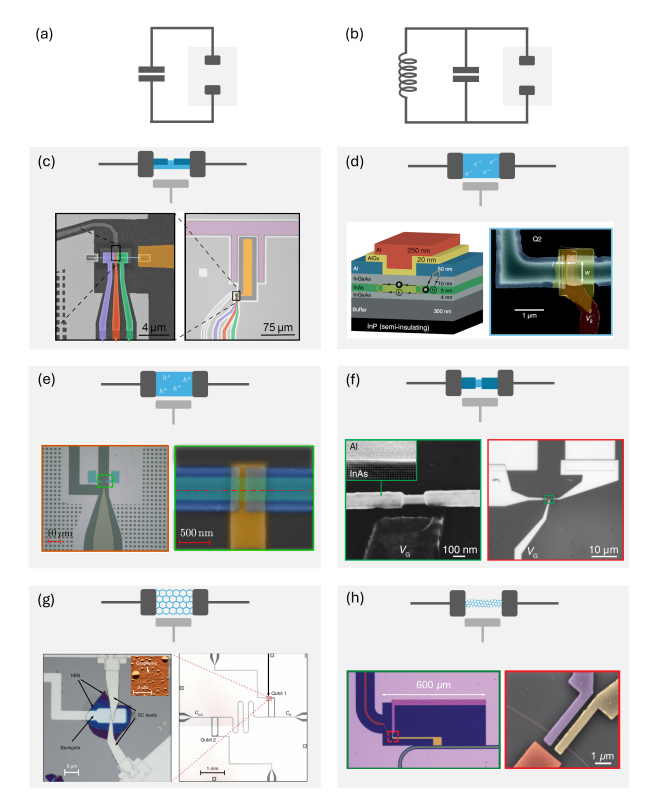
Physics Reports Analysis Evaluates Emergence of Hybrid Semiconductor–Superconducting Qubit Architectures
November 9, 2026
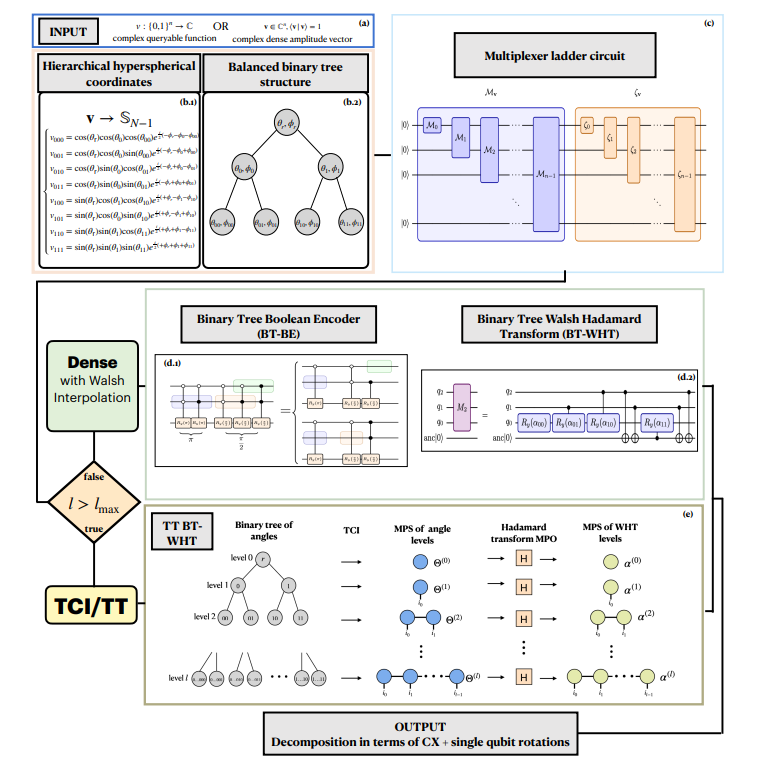
DLR Develops Scalable Unitary Data Encoding Beating Exponential State-Preparation Depth
November 9, 2026
IonQ and Classiq Outline Architectural Trade-Offs in Fault-Tolerant Resource Estimation
November 9, 2026