Quantum X Labs Demonstrates Fractional Frequency Stability in Ramsey-CPT Atomic Clock Platform

Quantum hardware developer Quantum X Labs Inc. Ltd. (Nasdaq: QXL) has announced the successful laboratory demonstration of a high-sensitivity atomic clock through its wholly-owned subsidiary, Quantum X Labs Ltd. Built upon the company’s Ramsey Coherent Population Trapping (Ramsey-CPT) interrogation platform, the system achieved a short-term fractional frequency stability metric of 1×10⁻¹³ at an interval of one second. The development track aims to establish a scalable physical architecture for compact, chip-scale atomic clocks (CSACs) targeted at infrastructure operating independently of external timing signals.
                         [ Quantum X Labs Atomic Clock Metrics ]
  Interrogation Scheme──► Ramsey Coherent Population Trapping (Ramsey-CPT) light modulation.
  Stability Performance──► Short-term fractional frequency stability of 1 × 10⁻¹³ at 1 second.
  Primary Applications──► Resilient PNT, optical gyroscopes, and inertial measurement units (IMUs).
The refinement of chip-scale atomic timing addresses an engineering vulnerability in positioning, navigation, and timing (PNT) frameworks: the reliance on global navigation satellite systems (GNSS/GPS), which are vulnerable to localized radio jamming, spoofing, and atmospheric disruptions. Traditional vapor-cell clocks frequently face performance limits due to microwave cavity shifts and systemic frequency drifts. Quantum X Labs' Ramsey-CPT platform implements an alternative light-modulation scheme that enables extended atom-light coherence intervals, allowing the hardware to lock electronic local oscillators directly to rubidium ground-state hyperfine transitions without requiring complex microwave cavities.
The development of the Ramsey-CPT system aligns with the company's multi-domain quantum sensing pipeline, which includes concurrent research into all-optical hemispherical resonator quantum gyroscopes. Supervised by Chief Scientist Prof. Nir Sharon, the engineering unit plans to advance the atomic platform through system miniaturization, power reduction, and environmental stabilization cycles. The long-term product roadmap focuses on integrating these atomic timing nodes into deployable inertial measurement units (IMUs), secure communication networks, and localized data center infrastructure to maintain microsecond synchronization inside contested or isolated operating environments.
The official corporate milestone disclosures, technical timing data, and forward-looking system integration roadmaps can be reviewed through the GlobeNewswire Newsroom here.
July 7, 2026
Related Intelligence

Test of USydney article with HTML.
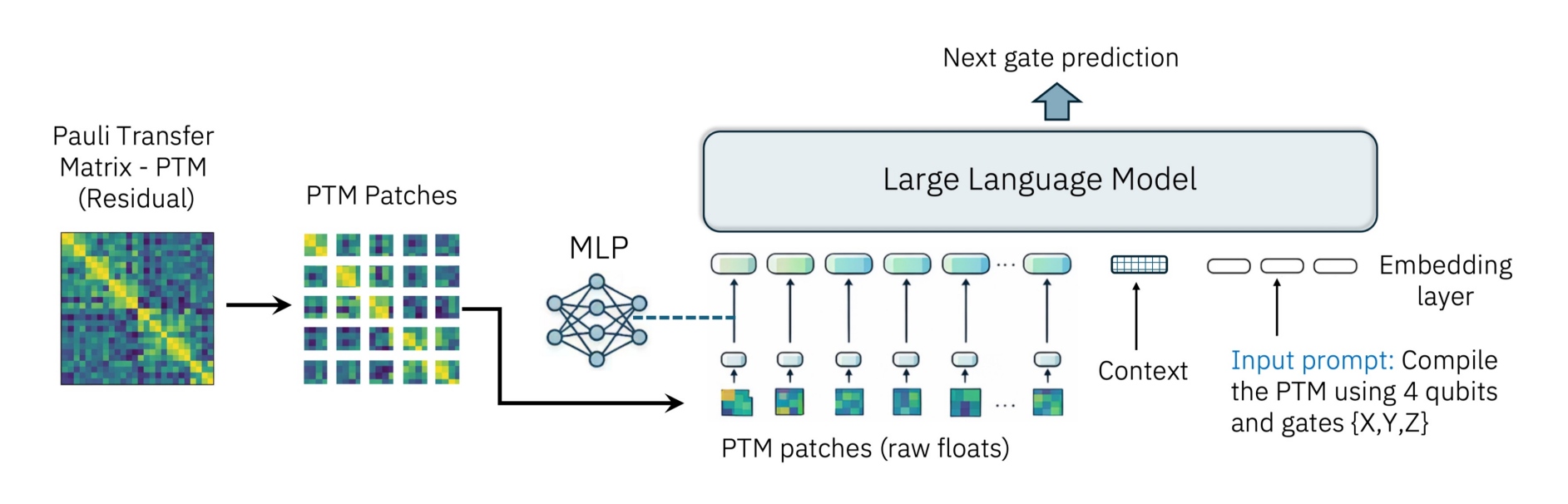
MIT and IBM Project Quantum Unity Operators into Language Model Latent Spaces for Multimodal Circuit Synthesis
July 11, 2026

ETH Zurich Combines Superconducting Qubits with Mechanical Resonators to Build Vibrating Quantum RAM
July 11, 2026

Google and Fraunhofer Launch Global Calls for Early Fault-Tolerant Algorithms and Enterprise Use Cases
July 11, 2026

Who’s News: Strategic Appointments at Photonic, Aliro Quantum, Florida Atlantic University, QuSecure, Quantum Elements, and QAI Ventures
July 11, 2026
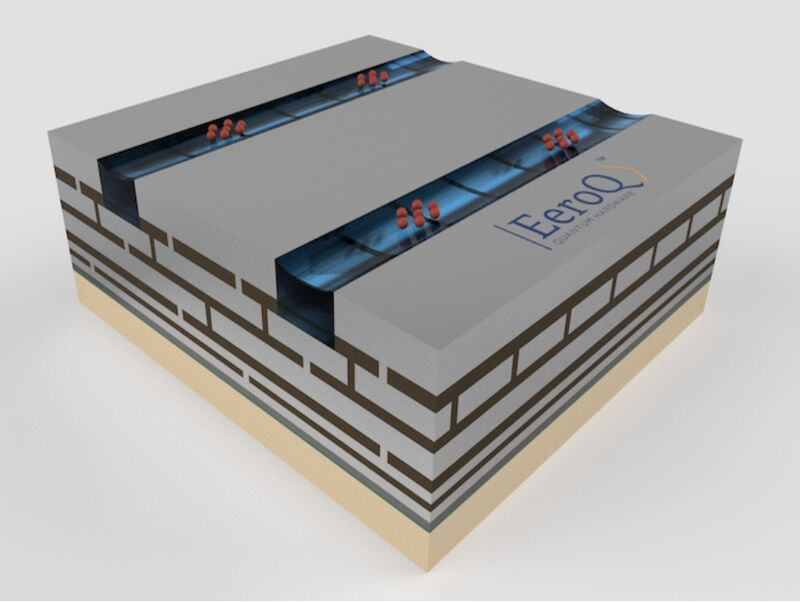
EeroQ Validates CMOS-Controlled Electron Shuttling on Superfluid Helium for All-to-All Qubit Routing
July 11, 2026