QuDef Launches SQOUT Threat Intelligence Platform for Quantum Communication Networks

Delft-based cybersecurity firm QuDef has announced the commercial availability of SQOUT®, a dedicated quantum threat intelligence and security assessment software platform. Developed to secure Quantum Key Distribution (QKD) and post-quantum network layers, the tool provides chief information security officers (CISOs), risk managers, and red/blue security teams with an environment to model, assess, and mitigate hardware and protocol-specific vulnerabilities. The platform addresses implementation gaps emerging as quantum communication networks transition from isolated laboratories into operational aerospace, defense, and national critical infrastructure systems.
Technical Architecture & Vulnerability Analysis
While QKD methodologies—including BB84, BBM92, Continuous-Variable (CV-QKD), and Measurement-Device-Independent (MDI-QKD) protocols—maintain mathematical proofs of security under ideal parameters, physical implementations introduce distinct hardware attack vectors. Real-world networks are exposed to physical side-channel compromises, detector blinding, Trojan-horse optical reflection probing, and phase-remapping defects. SQOUT organizes these threat vectors into sequential kill chains using a structured Tactics, Techniques, and Procedures (TTP) matrix that correlates 114+ attack techniques with 119+ hardware-level countermeasures.
The software framework operates via four core evaluation modules:
QBuilder: An interactive system-modeling layout that maps out the physical, electronic, and protocol-level properties of a network's components, such as single-photon detectors and interferometers. QuDef
QAnalyser: A vulnerability scanning engine that reviews the architectural layouts created in QBuilder, identifying unmitigated side channels and protocol violations. QuDef
QKill: An attack-scenario simulator used to model multi-stage hacking paths and calculate risk indices using specialized geometric-mean probability aggregation. QuDef
QNetwork: A planning module designed to extend threat evaluations across larger, distributed multi-node quantum network topologies.
Deployment Modalities & Operational Assurances
The platform is available under multiple infrastructure deployment models to accommodate varying commercial and classified security parameters. Organizations can access the software via a managed Software-as-a-Service (SaaS) web architecture, deploy it locally as an on-premises virtual machine inside air-gapped sovereign networks, or procure it via SQOUT-as-a-Service for directed auditing engagements. By mapping complex optical and physical attack paths directly to actionable engineering mitigations, the platform provides national testing authorities, systems integrators, and network operators—such as those managing the European Quantum Communication Infrastructure (EuroQCI) or the Eagle-1 satellite constellation—with an empirical auditing tool to establish verifiable, risk-compliant quantum security frameworks.
You can review the official product launch brief via the QuDef newsroom here. For an expanded technical breakdown of the mathematical risk models and multi-stage attack scenarios utilized by the threat engine, access the underlying peer-reviewed framework documentation here.
June 2, 2026
Related Intelligence

Test of USydney article with HTML.
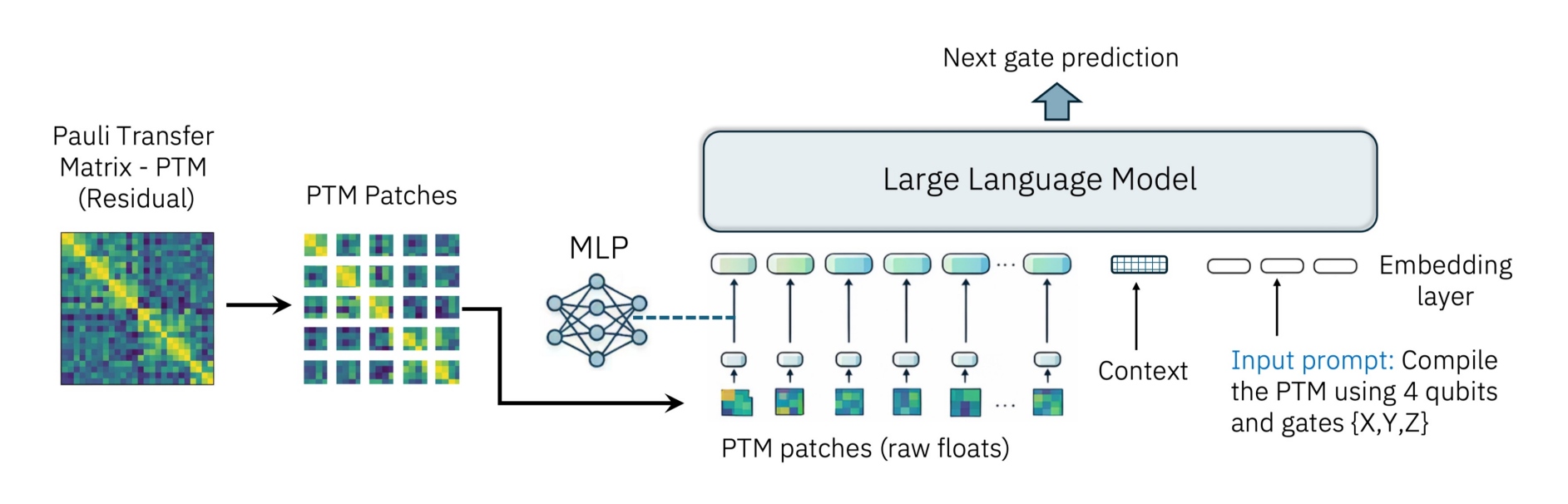
MIT and IBM Project Quantum Unity Operators into Language Model Latent Spaces for Multimodal Circuit Synthesis
July 11, 2026

ETH Zurich Combines Superconducting Qubits with Mechanical Resonators to Build Vibrating Quantum RAM
July 11, 2026
Google and Fraunhofer Launch Global Calls for Early Fault-Tolerant Algorithms and Enterprise Use Cases
July 11, 2026

Who’s News: Strategic Appointments at Photonic, Aliro Quantum, Florida Atlantic University, QuSecure, Quantum Elements, and QAI Ventures
July 11, 2026

EeroQ Validates CMOS-Controlled Electron Shuttling on Superfluid Helium for All-to-All Qubit Routing
July 11, 2026