QuiX Quantum and Dutch Photonics Consortium Form National Mission for 100+ Qubit Computer
QuiX Quantum is leading a Dutch national initiative to build a 100+ qubit universal quantum processor by December 2028. …

European photonic quantum developer QuiX Quantum is leading a three-year national initiative under Phase II of the PhotonDelta National Growth Fund (NGF) Integrated Photonics Programme to build the manufacturing and architectural foundations for a 100+ qubit universal quantum processor. Running through December 2028, the mission coordinates eight Dutch academic and industrial partners across twelve system deliverables, addressing loss, detection, and high-speed control across the photonic quantum stack.
Dutch National Photonic Quantum Computing Mission: Stack & Partner Allocations | ||
Layer in Photonic Stack | Lead Partner(s) | Technical Benchmark & Operational Objective |
System Integration & Architecture | QuiX Quantum (Consortium Lead) | Whole-system assembly, verification against shared KPIs, and multi-wafer manufacturing strategy for 100+ qubit systems. |
Waveguides & Modulation | imec | Ultra-low-loss silicon nitride (Si3N4) photonic integrated circuits and high-speed electro-optic modulators. |
Fibre-to-Chip Packaging | PHIX & MicroAlign | Automated optical alignment and packaging targeting 0.1 dB per facet coupling losses. |
Photon Generation & Distillation | University of Twente & Eindhoven University of Technology | Quasi-deterministic single-photon emitters and resource-state generation below fault-tolerant thresholds. |
Integrated Detection | Leiden University & Eindhoven University of Technology | Waveguide-integrated photon-number-resolving (PNR) detectors and single-photon avalanche diode (SPAD) arrays. |
Feed-Forward Electronics | Bruco-IC | Flip-chip control ASICs targeting active feed-forward latencies below 10 ns (reduced from current 150 ns baselines). |
Yield & Process Tolerances | Eindhoven University of Technology | Inverse design algorithms and post-fabrication optical trimming to mitigate manufacturing variations across wafer runs. |
Measurement-based photonic quantum architectures face compounding physical bottlenecks: optical losses across passive routing, non-deterministic photon emission, detector efficiency limits, and electronic latency during active feed-forward switching. Rather than funding isolated component research, the Dutch mission coordinates developers to optimize sub-assemblies against a common error budget necessary for fault-tolerant scaling.
Optical interconnects and control timing represent primary technical hurdles in flight. Minimizing optical loss at the chip boundary is critical to prevent quantum state degradation before photons enter the processing core. Concurrently, reducing control latency ensures that feed-forward logic can dynamically reconfigure phase shifters and optical switches in real time before traveling photons reach subsequent interferometric stages.
The national mission aligns with concurrent international supply-chain initiatives backed by PhotonDelta. Under the recent Netherlands–Taiwan TechBridge framework, QuiX Quantum partnered with Brillink to develop high-efficiency SPAD arrays, while consortium partner MicroAlign teamed with Largan to engineer mass-producible, ultra-low-loss fiber-array connections. The coordinated programs bridge QuiX Quantum's delivery of universal hardware to the German Aerospace Center (DLR QCI) and inform the company's loss-tolerant Dedalo architecture, targeting logical-qubit demonstrations between 2028 and 2030.
Official release details are available from QuiX Quantum here, its wire release here, PhotonDelta's Future Solutions program overview here, and the Netherlands–Taiwan TechBridge announcement here. Related QCR coverage of photonic hardware deployments and architectures includes QuiX Quantum's delivery of the Carina core hardware to DLR QCI here, and the technical blueprint for the loss-tolerant Dedalo architecture here.
November 10, 2026
Related Intelligence

Test of USydney article with HTML.

Colorado Partners with IBM to Deploy AI-Driven Quantum Ecosystem Mapping and Workforce Tools
November 11, 2026

Carahsoft Builds Federal Quantum Catalog with IonQ and PQSecure Partnerships
November 11, 2026
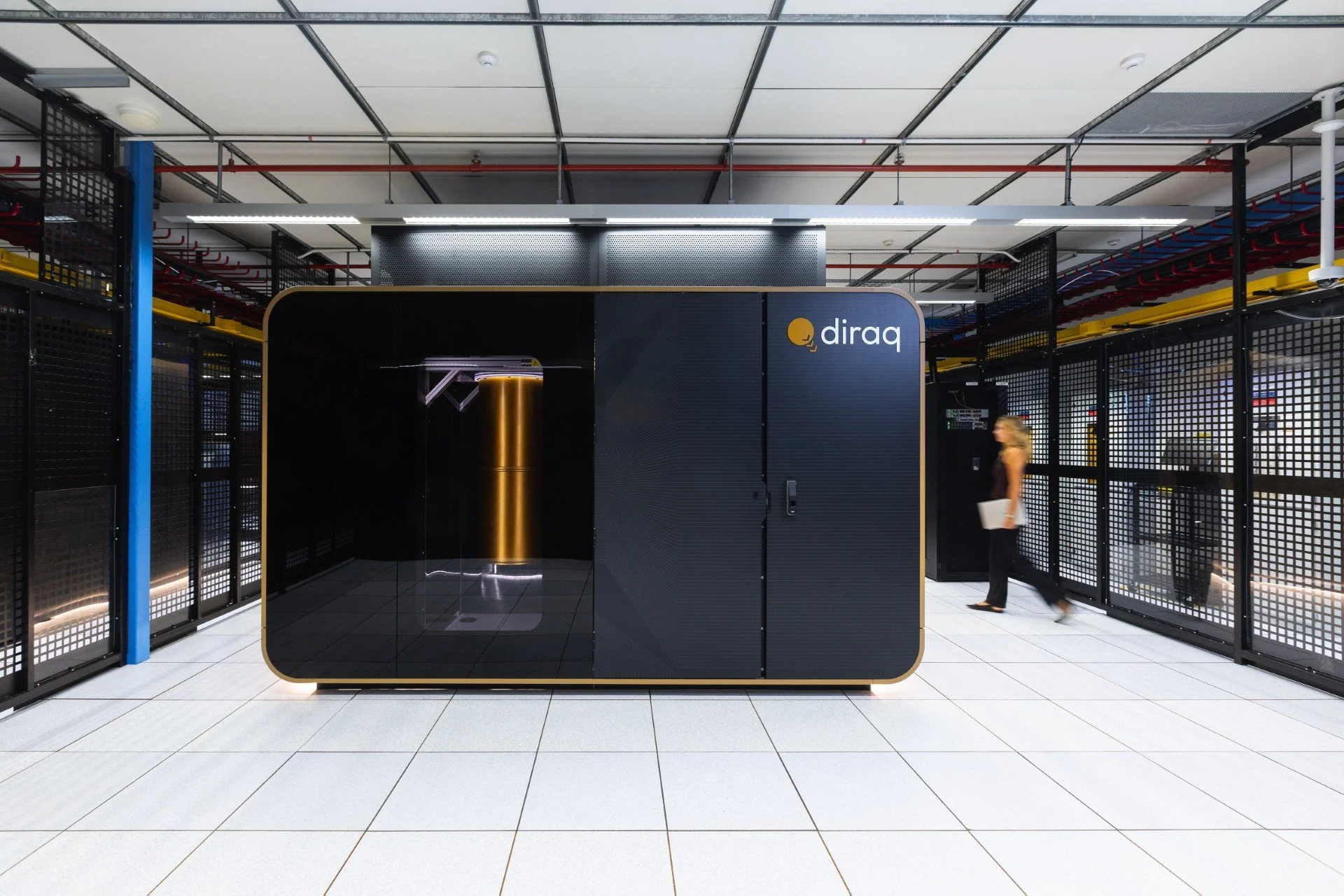
Diraq Installs Silicon Spin Quantum Computer in Equinix Commercial Data Center
November 11, 2026
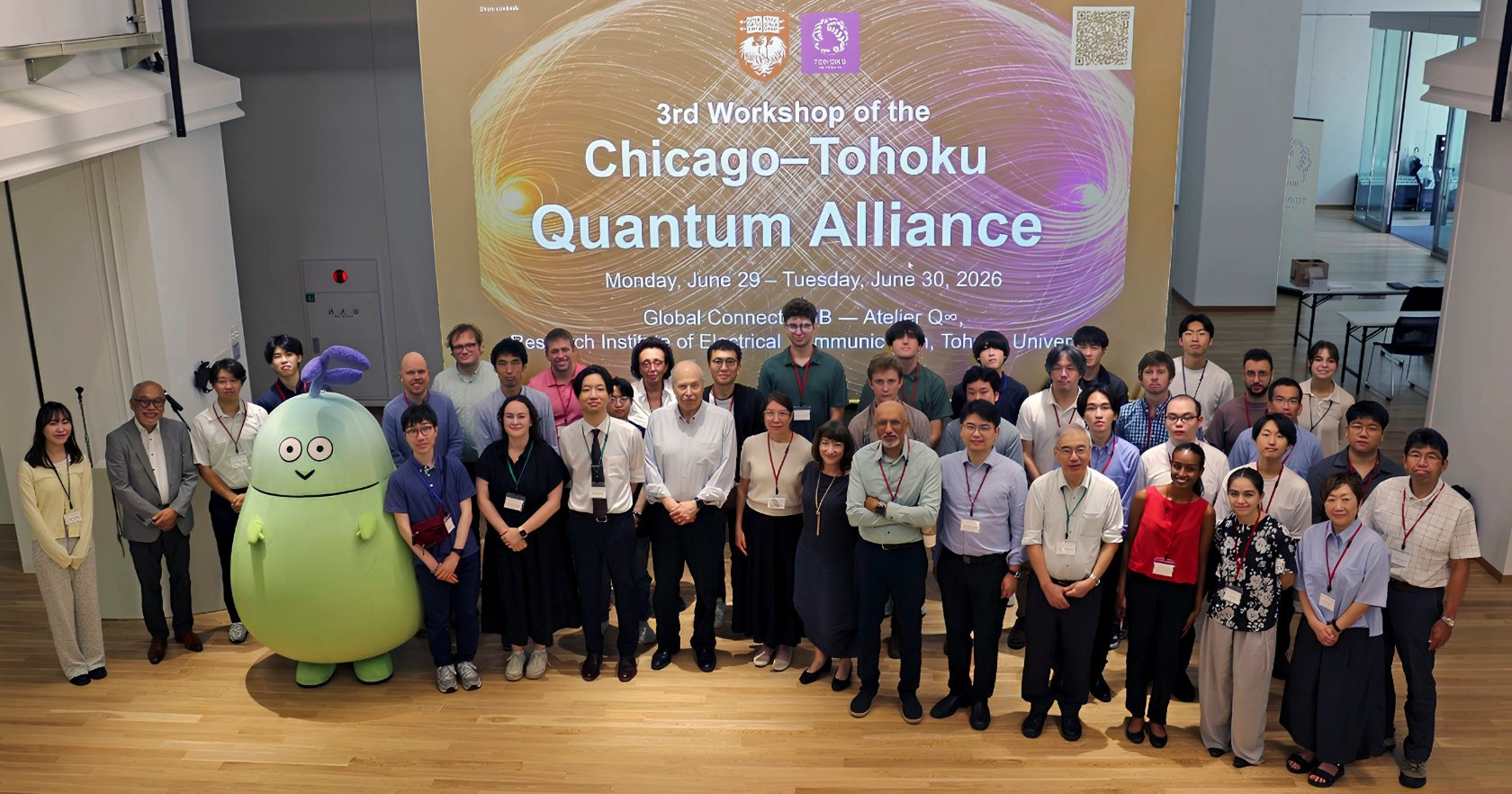
University of Chicago and Tohoku University Establish Joint Quantum Materials Hub in Japan
November 11, 2026
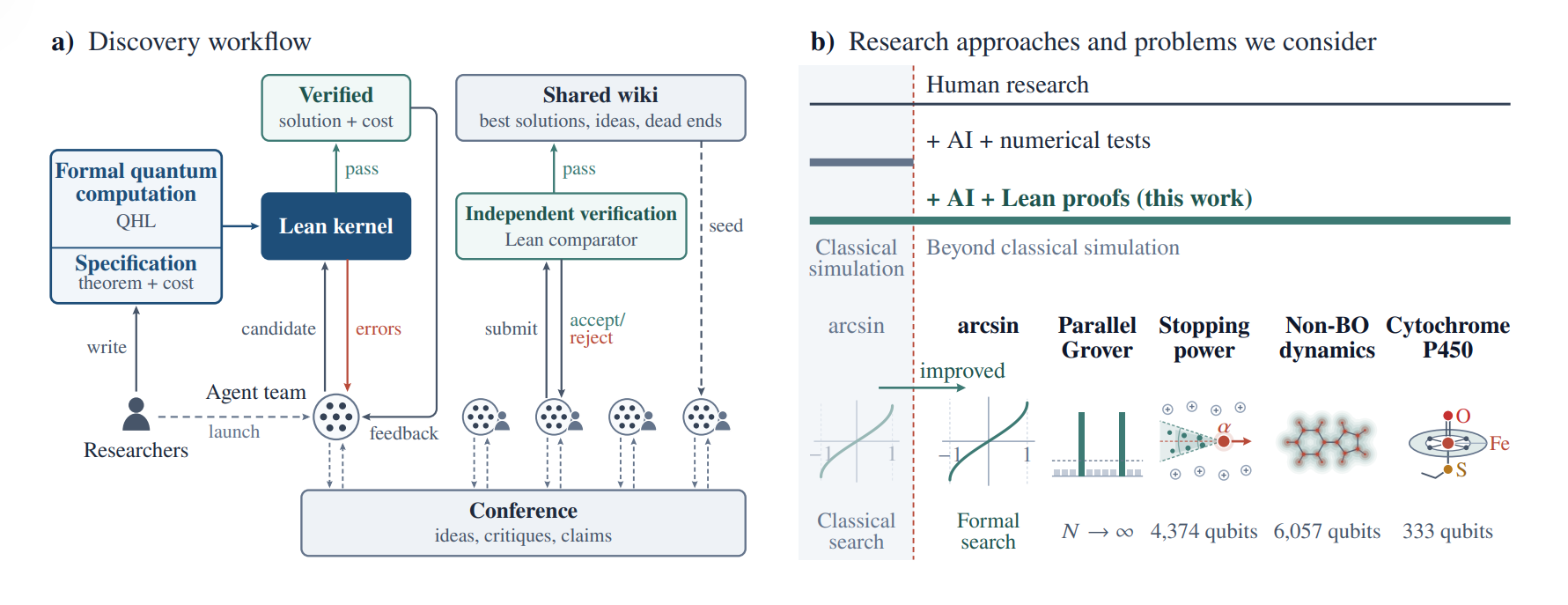
Google DeepMind and Google Quantum AI Use Lean 4 to Discover Formally Verified Quantum Algorithms
November 10, 2026