QuiX Quantum Launches PACU Control Unit Standardizing Photonic Hardware Layer

QuiX Quantum has introduced PACU (Photonic Assembly Control Unit), a rack-mountable control system designed to provide a scaled, standardized control layer across its line of photonic hardware. Deployed as a 3U, 19-inch air-cooled chassis, the specialized instrumentation resolves a primary architectural bottleneck in measurement-based photonic quantum computing: regulating large physical arrays of tunable optical components within enterprise server settings. By moving beyond bespoke, handcrafted laboratory setups toward repeatable infrastructure, the development underpins the QuiX Quantum long-term technical roadmap to construct modular, data-center-compatible universal quantum computers.
Technical Architecture & Specifications / Operational Implementation
The operational chassis is engineered to host integrated silicon nitride (Si3N4) photonic chips containing up to 1,000 low-speed phase shifters and up to 32 high-speed phase shifters. PACU features dedicated internal circuitry capable of driving and updating every individual tunable element simultaneously with a response latency of under 2 milliseconds. External multi-hop synchronization loops are handled via 32 specialized high-speed optical connectors designed to interface with external high-speed control planes—a critical requirement for steering measurement configurations within cluster-state architectures. To improve mechanical reliability and mean time to repair (MTTR) inside high-performance computing (HPC) environments, the unit replaces traditional flat ribbon cabling with rugged board-to-board interconnect interposers, enabling resilient electrical contacts and supporting hot-swappable module replacement workflows. Local condition monitoring telemetry routes aggregate temperature and performance variables directly to the core logic engine to provide automated overhead protection.
Strategic Positioning & Ecosystem Integration
The launch transitions QuiX Quantum from a component manufacturer toward a full-stack, fabless system vendor capable of isolating abstract algorithm applications from baseline physical tuning friction. The hardware deployment is structured to operate seamlessly within classical HPC supercomputing platforms, utilizing onboard Ethernet and USB protocols to function as a co-processor subroutine layer. Founded in Enschede, the Netherlands, in 2019, the firm utilizes its presence in the Netherlands and Germany to secure sovereign semiconductor pilot contracts, including a notable focus on ultra-low-loss silicon nitride platforms. By standardizing the system's electrical and optical input/output (I/O) layer, the platform lowers operational overhead costs for enterprise clients and research facilities exploring general-purpose, non-lattice quantum advantages across multi-tenant networks.
You can review the official press announcement regarding the PACU platform launch here.
May 21, 2026
Related Intelligence

Test of USydney article with HTML.
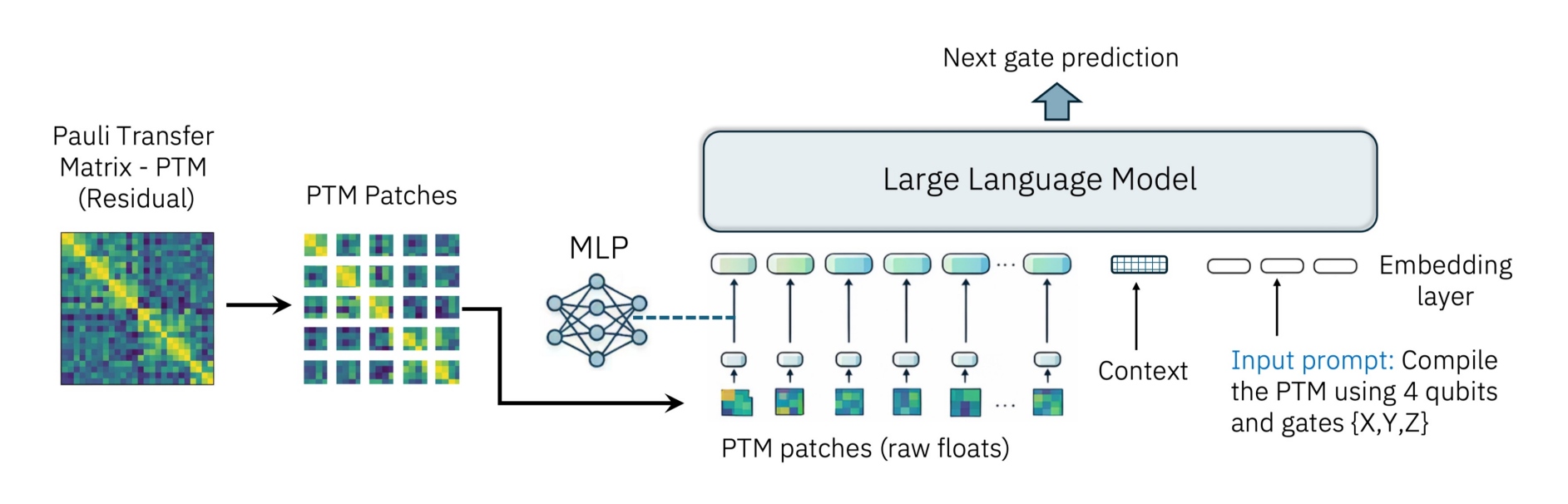
MIT and IBM Project Quantum Unity Operators into Language Model Latent Spaces for Multimodal Circuit Synthesis
July 11, 2026

ETH Zurich Combines Superconducting Qubits with Mechanical Resonators to Build Vibrating Quantum RAM
July 11, 2026

Google and Fraunhofer Launch Global Calls for Early Fault-Tolerant Algorithms and Enterprise Use Cases
July 11, 2026

Who’s News: Strategic Appointments at Photonic, Aliro Quantum, Florida Atlantic University, QuSecure, Quantum Elements, and QAI Ventures
July 11, 2026
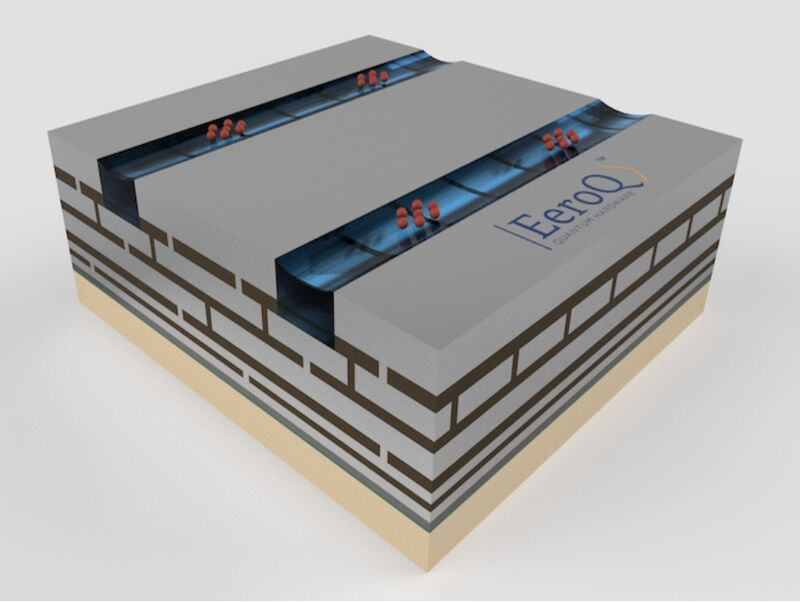
EeroQ Validates CMOS-Controlled Electron Shuttling on Superfluid Helium for All-to-All Qubit Routing
July 11, 2026