Rigetti Simulates Plasma Wave Dispersion on Superconducting Ankaa-3 Processor Using Specialized Error Mitigation
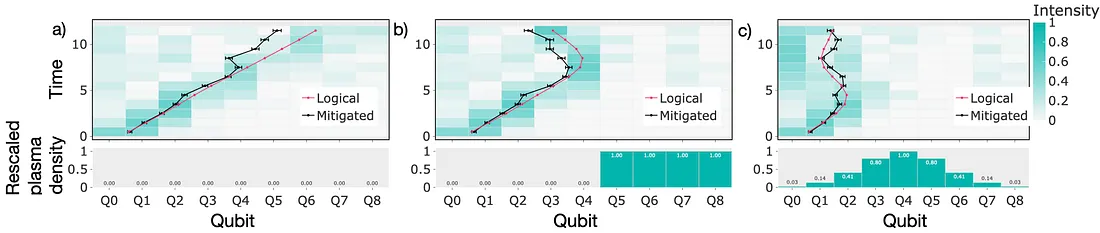
Rigetti Computing, in collaboration with Lawrence Livermore National Laboratory and the University of Colorado, Boulder, has executed a noiseless surrogate "spin" model simulation tracking linear plasma wave propagation and scattering profiles. Published in Physical Review Applied, the research was conducted using a nine-qubit cluster on Rigetti's 84-qubit Ankaa-3 superconducting quantum computer. By employing dual error mitigation routines to suppress phase and gate noise, the experiment successfully mapped electromagnetic wave dispersion and reflection signatures across spatially varying plasma densities, establishing a framework to explore non-equilibrium, non-linear quantum plasma dynamics.
Technical Architecture and Error Mitigation Protocols
The simulation addresses the limitations of classical supercomputers when modeling highly energetic or dense plasmas where quantum mechanics dictate particle interactions. Rather than utilizing high-gate-count algorithms reserved for fault-tolerant processors or relying on linearized approximations that mask quantum characteristics, the team mapped plasma wave equations onto a local, hardware-efficient spin lattice. The compilation converted the plasma's density profile into tunable microwave pulse variables across the Ankaa-3 transmon lattice, allowing researchers to scale the simulated plasma frequency from empty space configurations up to overdense reflection thresholds.
To resolve the wave-packet phase evolution through the hardware's native background noise, the team deployed a two-part error mitigation pipeline at the circuit compilation layer. First, randomized compilation was implemented across the two-qubit gate sequences, converting systematic, coherent hardware errors into uniform stochastic Pauli channels. Second, the team applied a linear regression error model trained on a benchmark set of easily verifiable reference circuits. This dual approach calculated the precise rate of stochastic noise distortion across the transmon couplings, enabling researchers to systematically rescale exponentially decaying probability amplitudes and extract clean data signatures for wave packets propagating through inhomogeneous plasma profiles.
You can review the detailed technical announcement via the Rigetti Computing newsroom here. For the primary peer-reviewed mathematics and benchmarking data isolating local spin model gate metrics, access the formal Physical Review Applied publication registry here.
May 29, 2026
Related Intelligence
Test of USydney article with HTML.
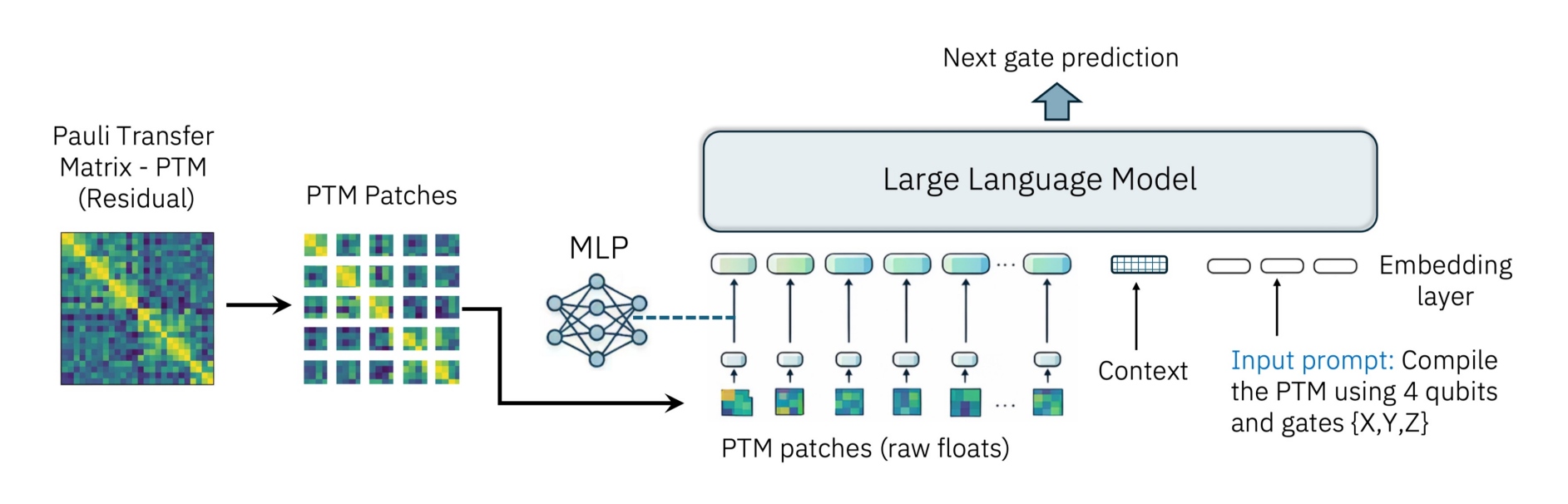
MIT and IBM Project Quantum Unity Operators into Language Model Latent Spaces for Multimodal Circuit Synthesis
July 11, 2026

ETH Zurich Combines Superconducting Qubits with Mechanical Resonators to Build Vibrating Quantum RAM
July 11, 2026

Google and Fraunhofer Launch Global Calls for Early Fault-Tolerant Algorithms and Enterprise Use Cases
July 11, 2026

Who’s News: Strategic Appointments at Photonic, Aliro Quantum, Florida Atlantic University, QuSecure, Quantum Elements, and QAI Ventures
July 11, 2026
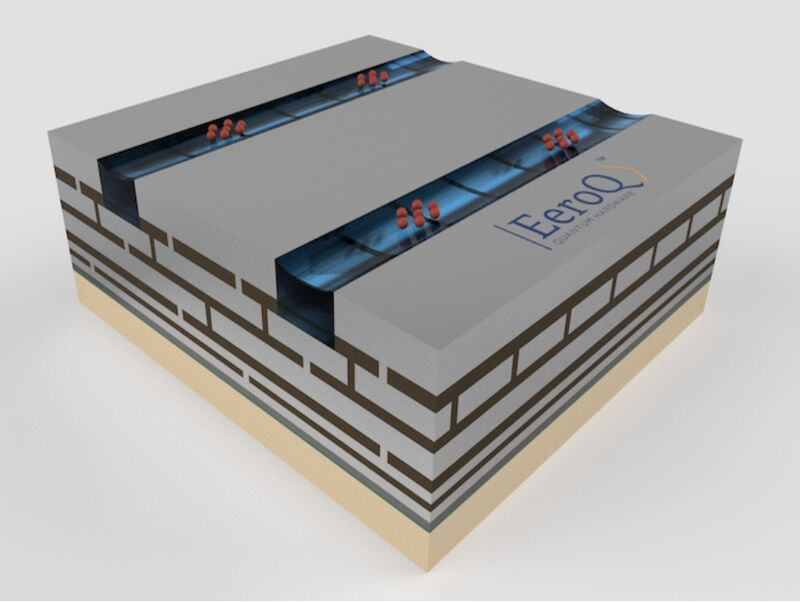
EeroQ Validates CMOS-Controlled Electron Shuttling on Superfluid Helium for All-to-All Qubit Routing
July 11, 2026