SandboxAQ Secures $500 Million CHIPS Act R&D Award to Insulate Semiconductor Supply Chains
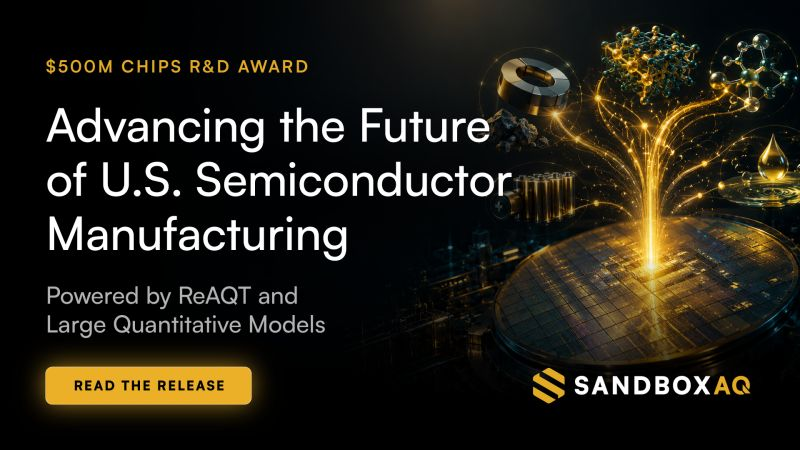
The U.S. Department of Commerce’s CHIPS Research and Development Office has signed a definitive agreement awarding $500 million to AI-and-quantum technology startup SandboxAQ to address acute supply chain vulnerabilities in domestic semiconductor manufacturing. Part of a broader federal push under the Trump administration to reshore high-assurance tech manufacturing, the multi-million-dollar contract tasks the NVIDIA-backed enterprise with inventing and commercializing alternative chemical formulations and advanced materials to bypass foreign chokepoints. In a unique structuring of federal R&D awards, the Department of Commerce will receive a minority, non-voting equity stake in SandboxAQ, alongside future royalty payments derived from formulas licensed out to industrial partners for mass production.
Large Quantitative Models (LQMs) and the ReAQT Physics-Based Infrastructure
To compress materials discovery timelines from decades into weeks, SandboxAQ will deploy its proprietary ReAQT simulation platform and Large Quantitative Models (LQMs). Unlike typical large language models trained on human text or code, LQMs are trained directly on the fundamental laws of physics, chemistry, and biology. The platform generates its own training sets via high-fidelity quantum chemistry simulations—including Density Functional Theory (DFT) and Molecular Dynamics—establishing a reliable predictive map of molecular behaviors before committing to physical laboratory synthesis. This physics-first methodology enables researchers to orchestrate automated Design-Make-Test-Learn (DMTL) loops, screening millions of untried chemical candidates to locate high-performing, commercially viable alternatives without the need for traditional trial-and-error laboratory experimentation.
Mitigating Regulatory Exposure with PFAS-Free Alternatives and Advanced Catalysts
The first half of the programmatic mandate addresses critical chip-fabrication chemistries, focusing on the replacement of Per- and Polyfluoroalkyl substances (PFAS), or "forever chemicals," which are heavily utilized across lithography lines as heat-transfer fluids, lubricants, and insulating coatings. SandboxAQ is utilizing its predictive models to design compliant, drop-in replacement fluids while simultaneously developing specialized chemical techniques to break down legacy PFAS waste on-site before it enters municipal water lines. Concurrently, the firm will leverage its AQCat workflows—built on 13.5 million high-fidelity quantum calculations developed in partnership with NVIDIA—to screen novel catalyst materials. These catalysts are essential for synthesizing ultra-pure chemical precursors needed for sub-2nm node architectures, achieving screening speeds 20,000 times faster than conventional methods to significantly optimize manufacturing yields.
Disrupting Foreign Rare-Earth Monopolies and Stabilizing Backup Power Systems
The second phase of the award addresses equipment hardware vulnerabilities, targeting the development of high-performance permanent magnets that eliminate reliance on foreign-controlled rare earth elements like neodymium. Because permanent magnets drive the sub-nanometer precision actuators, vacuum pumps, and wafer-positioning systems inside every chip-printing tool, any supply chain disruption directly caps domestic factory output; SandboxAQ’s LQMs are explicitly optimized to find alternative magnetic chemistries compatible with existing U.S. manufacturing lines. Additionally, through its AQVolt battery-modeling workflows, SandboxAQ will develop next-generation, localized energy storage storage technologies that completely phase out lithium and cobalt precursors, ensuring that cleanroom fabrication nodes maintain uninterrupted backup power systems to insulate manufacturing yields against grid-level power disturbances.
Capitalization Milestones and Institutional Growth Vectors
The $500 million federal award cements SandboxAQ’s position as a category leader in physical-world artificial intelligence, pushing its total cumulative funding past the $1 billion threshold following an institutional valuation of $5.75 billion. Spun out as an independent growth entity, the Palo Alto-based firm continues to scale its operations under the direction of CEO Jack Hidary and VP of Engineering Dr. Stefan Leichenauer. Backed by marquee global investment groups—including funds advised by T. Rowe Price Associates, Alphabet, Paladin Capital, and Eric Schmidt—the company’s expanding technical roadmap bridges the gap between foundational quantum-mechanical research and industrial resilience, establishing a sovereign material foundation for long-term national security.
The official U.S. Department of Commerce award announcement and executive press release can be reviewed here. For an operational briefing detailing LQM architectures and the physics behind autonomous DMTL material discovery loops, read the corporate report here, and monitor independent financial analysis of the transaction via the Reuters Public Index here.
June 17, 2026
Related Intelligence
Test of USydney article with HTML.
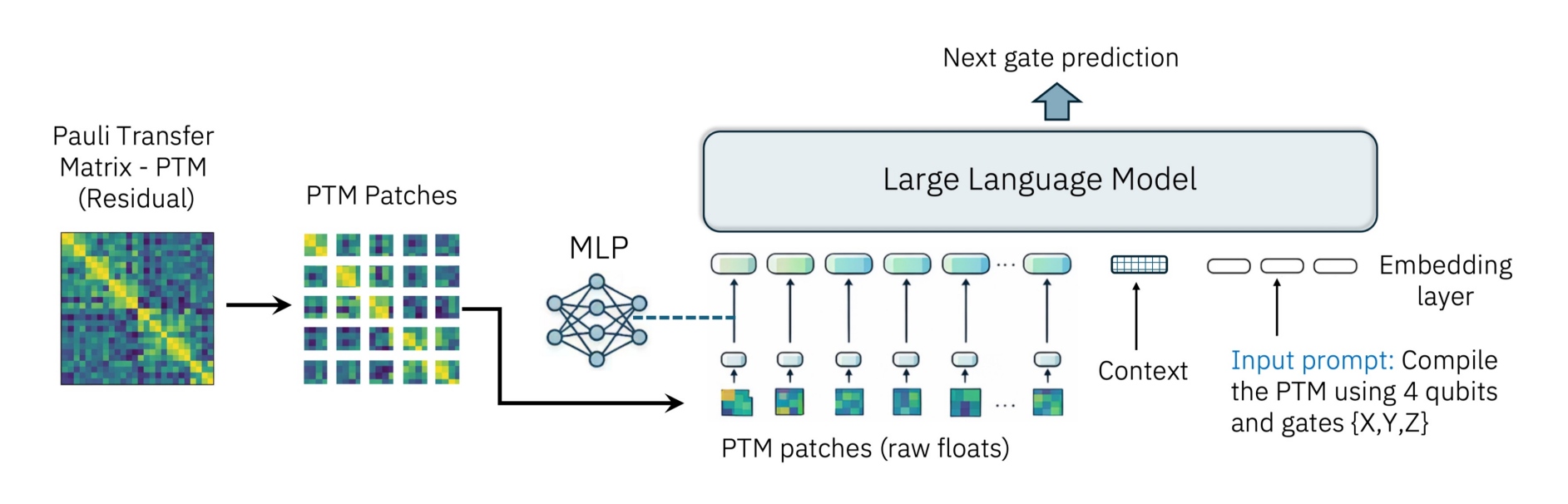
MIT and IBM Project Quantum Unity Operators into Language Model Latent Spaces for Multimodal Circuit Synthesis
July 11, 2026

ETH Zurich Combines Superconducting Qubits with Mechanical Resonators to Build Vibrating Quantum RAM
July 11, 2026

Google and Fraunhofer Launch Global Calls for Early Fault-Tolerant Algorithms and Enterprise Use Cases
July 11, 2026
Who’s News: Strategic Appointments at Photonic, Aliro Quantum, Florida Atlantic University, QuSecure, Quantum Elements, and QAI Ventures
July 11, 2026
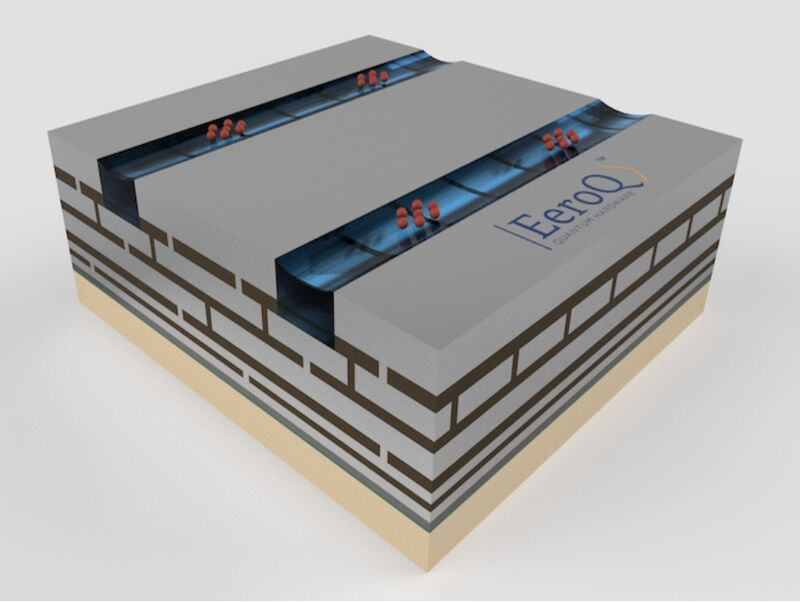
EeroQ Validates CMOS-Controlled Electron Shuttling on Superfluid Helium for All-to-All Qubit Routing
July 11, 2026