SDT Launches Korea’s First Commercial Quantum-AI Hybrid Data Center via NVIDIA NVQLink

SDT has inaugurated South Korea’s first privately-led Quantum-AI Hybrid Data Center in Gangnam, Seoul, marking a transition from laboratory research to commercial quantum services. The facility houses "Kreo," a 20-qubit superconducting quantum computer fully integrated with NVIDIA DGX B200 GPU servers. This "full-stack" environment is managed by QuREKA, SDT’s hybrid quantum cloud platform, which orchestrates workloads between classical GPUs and quantum processors (QPUs). The center serves as a commercial hub where GPUs handle data-intensive preprocessing while the Kreo system executes core quantum kernels, targeting industrial applications in materials science, logistics, and financial risk optimization.
In March 2026, SDT became the first South Korean company to join the NVIDIA NVQLink Ecosystem, an open architecture designed for high-bandwidth, ultra-low latency communication between GPUs and QPUs. This integration enables real-time feedback loops in microsecond (μs) increments, a critical requirement for advanced Quantum Error Correction (QEC) and the calibration of superconducting qubits. By adopting NVQLink, SDT has synchronized its QuREKA platform with global AI computing standards, allowing enterprise users to integrate quantum-AI workflows into existing infrastructures without the operational overhead of managing heterogeneous hardware.
At NVIDIA GTC 2026, SDT unveiled its independently developed Qubit Controller Unit (QCU), a core hardware component providing high-precision multi-qubit control and readout with a signal bandwidth of up to 8.5 GHz. The QCU is engineered to maintain the stability of the Kreo system within the unified NVQLink environment, facilitating deterministic data exchange between the quantum control stack and classical accelerators. Following this launch, SDT’s roadmap includes the deployment of a 64-qubit superconducting system later in 2026 and the development of photonic integrated circuit (PIC) quantum computers by 2027, aimed at establishing a sovereign, scalable quantum-AI infrastructure for the global market.
For full details, see the data center opening here, the NVQLink ecosystem announcement here, and the QCU hardware unveiling here.
March 17, 2026
Related Intelligence

Test of USydney article with HTML.
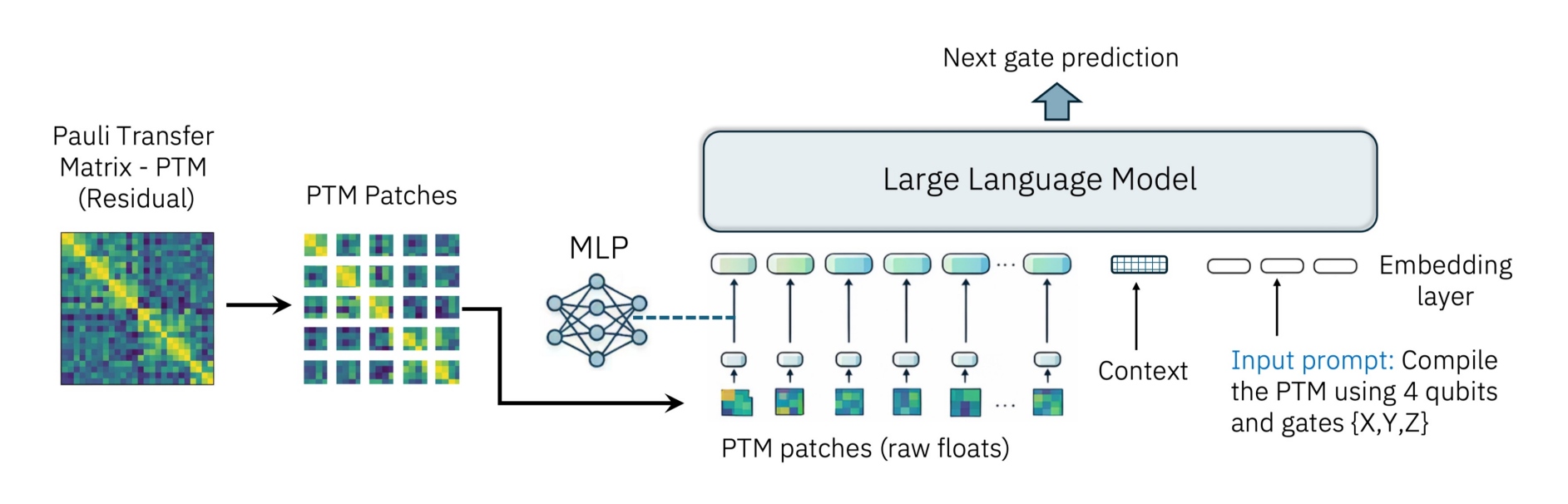
MIT and IBM Project Quantum Unity Operators into Language Model Latent Spaces for Multimodal Circuit Synthesis
July 11, 2026

ETH Zurich Combines Superconducting Qubits with Mechanical Resonators to Build Vibrating Quantum RAM
July 11, 2026
Google and Fraunhofer Launch Global Calls for Early Fault-Tolerant Algorithms and Enterprise Use Cases
July 11, 2026

Who’s News: Strategic Appointments at Photonic, Aliro Quantum, Florida Atlantic University, QuSecure, Quantum Elements, and QAI Ventures
July 11, 2026
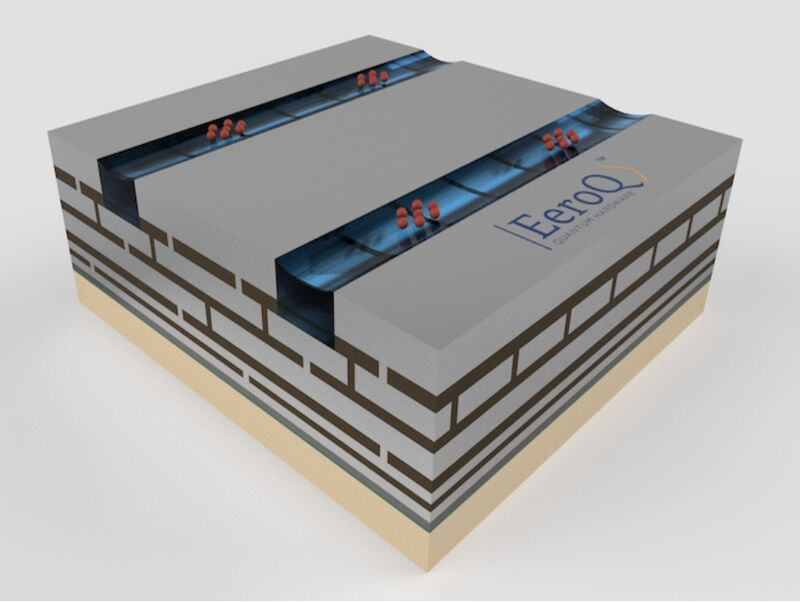
EeroQ Validates CMOS-Controlled Electron Shuttling on Superfluid Helium for All-to-All Qubit Routing
July 11, 2026