SkyWater Technology Introduces OnRamp Foundry Program and Details SP90 200 mm Silicon Nitride Quantum Photonics Platform
SkyWater Technology has launched the OnRamp program, an open-access foundry initiative for quantum hardware startups, providing engineering support and…
SkyWater Technology has launched OnRamp, an open-access foundry commercialization initiative aimed at transitioning early-stage quantum hardware startups from academic laboratory prototypes into commercial fabrication. Operating through SkyWater Quantum Solutions, the program provides direct engineering engagements to evaluate device stacks and define foundry-validated manufacturing roadmaps on 200 mm production lines without requiring founders to surrender underlying intellectual property. Alongside the initiative, the foundry disclosed initial characterization data for its SP90 silicon nitride (SiN) platform, targeting hardware modalities across computing, sensing, and communications.
SP90 Silicon Nitride Waveguide Backbone and Heterogeneous Architecture
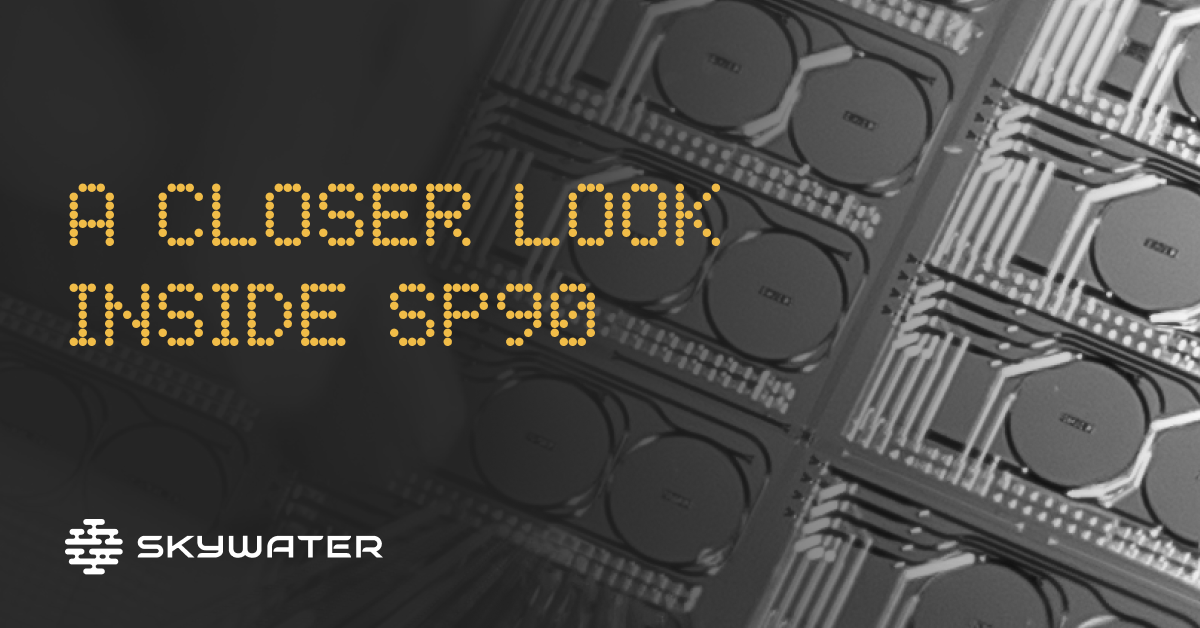
The core waveguiding infrastructure operates across a wide optical spectrum spanning 400 nm to over 2000 nm, bypassing the infrared-only operational limits typical of standard datacom silicon photonics. The foundational passive layer incorporates variable SiN thicknesses and multi-layer routing topologies to minimize optical propagation loss from visible to near-infrared regimes. Initial wafer-scale mapping across 45 measured die locations per wafer characterized loss profiles at 493 nm, 650 nm, and 1762 nm, supported by a 25-wafer physical vapor deposition (PVD) film uniformity study. To accommodate disparate quantum hardware platforms, the foundry interfaces this passive backbone with modular active layers, single-photon detectors, and optical interconnect packaging.
SkyWater SP90 Heterogeneous Integration Modules | ||
Module Designation | Material Integration | Target Quantum Implementation |
SP-CORE | Multi-thickness Silicon Nitride (SiN) | Broadband passive routing (400–2000+ nm) with interferometers, resonators, and splitters. |
SP-LAS | Bonded Active III-V Semiconductors | On-chip light generation and modulators (demonstrated at 780 nm and 1 μm) for trapped-ion addressing. |
SP-NBN | Niobium Nitride (NbN) Nanowires | Cryogenic superconducting nanowire single-photon detectors (SNSPDs) coupled to waveguides. |
SP-NLO | Thin-Film Lithium Niobate (TFLN) | Nonlinear frequency conversion and high-speed modulation to bridge visible qubits to telecom fiber. |
SP-DIA | Bonded Quantum-Grade Diamond | Interlayer evanescent coupling linking color-center spin memories and sensors to photonic circuits. |
SP-PKG | Tapered-Fiber Waveguide Packaging | Low-loss fiber-to-chip I/O (< 0.2 dB in visible bands) engineered to withstand cryogenic thermal cycles. |
Foundry Access Realities and Commercial Scaling Constraints
The OnRamp structure pairs no-cost technical scoping with paid access to internal multi-project prototype wafer runs, offering capital relief to ventures facing strict minimum-order volume commitments at conventional foundries. While SkyWater Technology operates as a DMEA-accredited Category 1A Trusted Foundry, migrating novel quantum architectures to commercial lines carries distinct operational bottlenecks. Successfully integrating heterogeneous materials—such as lithium niobate, diamond membranes, and superconducting films—onto standard 200 mm silicon substrates demands stringent contamination control, defect density mitigation, and qualification against cross-wafer thermal mismatches. The commercial runway for participating startups will hinge on translating initial hero devices into reproducible wafer-scale yields.
Program applications and engineering scoping are accessible through the SkyWater OnRamp Portal here, with complete technical platform specifications detailed in the SkyWater SP90 Overview here and official Foundry Initiative Announcement here.
October 28, 2026
Related Intelligence

Test of USydney article with HTML.
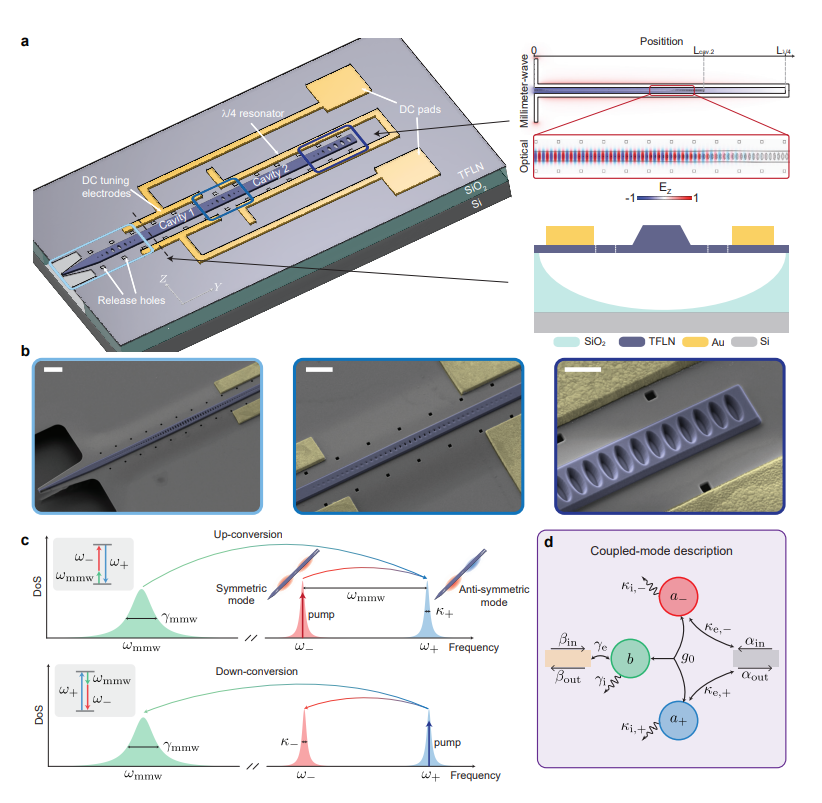
EPFL Demonstrates Millimeter-Wave-to-Optical Transducer with 67% Internal Efficiency
November 10, 2026

Why Quantum Hardware Needs Its Own Threat Model
November 9, 2026
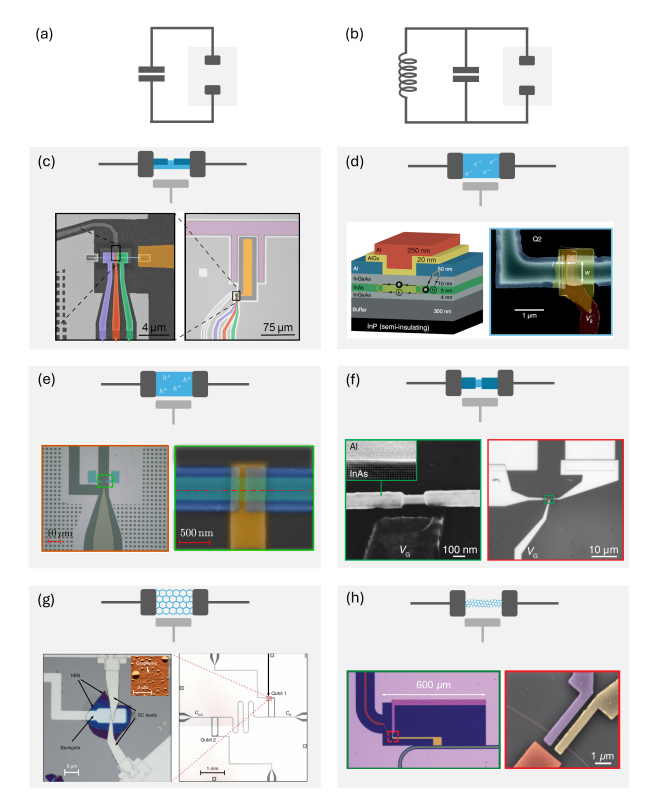
Physics Reports Analysis Evaluates Emergence of Hybrid Semiconductor–Superconducting Qubit Architectures
November 9, 2026
DLR Develops Scalable Unitary Data Encoding Beating Exponential State-Preparation Depth
November 9, 2026
IonQ and Classiq Outline Architectural Trade-Offs in Fault-Tolerant Resource Estimation
November 9, 2026