South Korea Expands PQC Pilot to Telecommunications, Finance, and Defense
South Korea’s Ministry of Science and ICT (MSIT) has announced the expansion of its Post-Quantum Cryptography (PQC) pilot conversion project to five new critical infrastructure sectors: telecommunications, finance, transportation, defense, and space. This follows an initial rollout in 2023 that targeted the medical, energy, and administrative sectors. The initiative is designed to mitigate the "Harvest Now, Decrypt Later" threat, where encrypted data is collected today to be decrypted once utility-scale quantum computers become available.
The ministry has selected specific industry partners to lead the transition within each sector. Dream Security will oversee the conversion for the National Science and Technology Research Network (KREONET); KSmartech will implement PQC for Hana Card’s payment infrastructure; and a KSign-led consortium will secure Contec’s satellite communication systems. In the defense sector, Daeyoung S-Tek will integrate PQC into the Ministry of National Defense’s Smart Unit Integrated Platform, while Mobilitus will apply the technology to autonomous transportation infrastructure in Pangyo Zero City.
Strategic R&D and Integrated Management
Beyond pilot applications, MSIT is launching four new R&D initiatives to secure "full-cycle" PQC self-reliance by 2030. These projects focus on the automated identification of vulnerable cryptographic assets within legacy systems and the development of an integrated management platform for rapid conversion. Technical objectives include:
Hardware Optimization: Developing PQC algorithms for ultra-lightweight hardware used in IoT and mobile devices.
Verification Standards: Establishing implementation conformance verification technology for PQC modules.
Hybrid Security: Researching the combination of PQC and Quantum Key Distribution (QKD) to create multi-layered "quantum-safe" defense architectures.
Post-quantum cryptography utilizes complex mathematical structures—such as lattice-based or hash-based schemes—that remain computationally difficult for both classical and quantum computers to solve. By establishing a conversion reference across these eight total sectors, South Korea aims to develop a standardized national transition model. MSIT officials emphasized that securing these core technologies is essential for national security as AI-driven quantum computing advancements continue to accelerate.
You can find the official announcement regarding South Korea’s PQC pilot expansion here.
May 7, 2026
Related Intelligence
Test of USydney article with HTML.
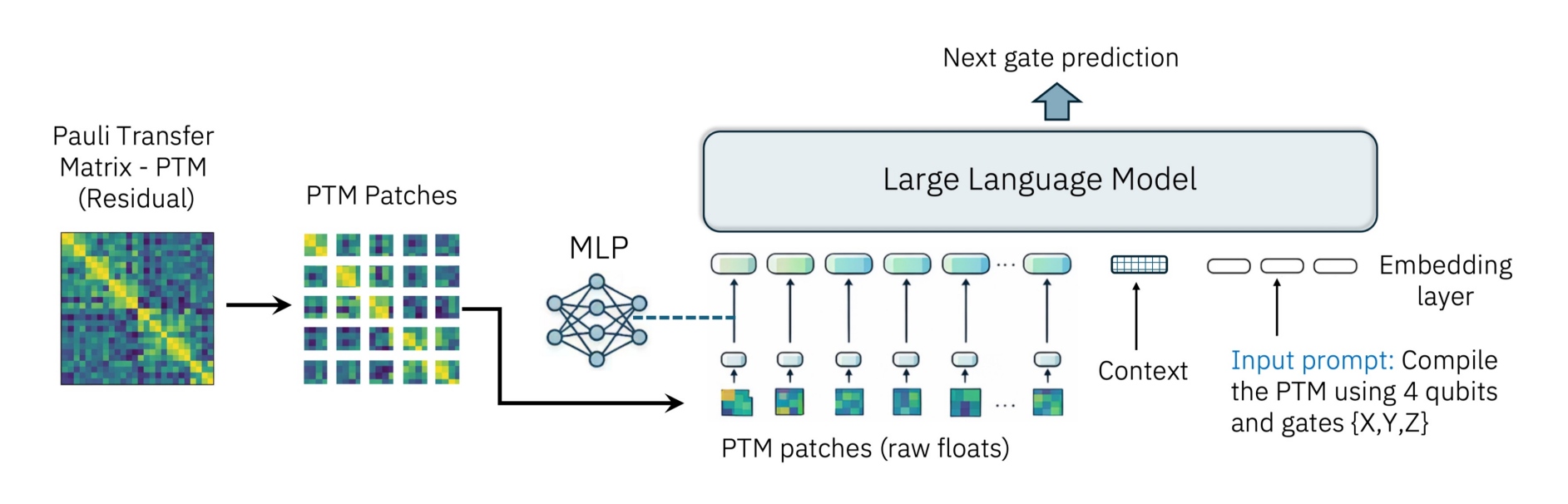
MIT and IBM Project Quantum Unity Operators into Language Model Latent Spaces for Multimodal Circuit Synthesis
July 11, 2026

ETH Zurich Combines Superconducting Qubits with Mechanical Resonators to Build Vibrating Quantum RAM
July 11, 2026
Google and Fraunhofer Launch Global Calls for Early Fault-Tolerant Algorithms and Enterprise Use Cases
July 11, 2026

Who’s News: Strategic Appointments at Photonic, Aliro Quantum, Florida Atlantic University, QuSecure, Quantum Elements, and QAI Ventures
July 11, 2026
EeroQ Validates CMOS-Controlled Electron Shuttling on Superfluid Helium for All-to-All Qubit Routing
July 11, 2026