Superpositions Launches Cloud-Based Quantum Software Ecosystem and Automated Use-Case Library
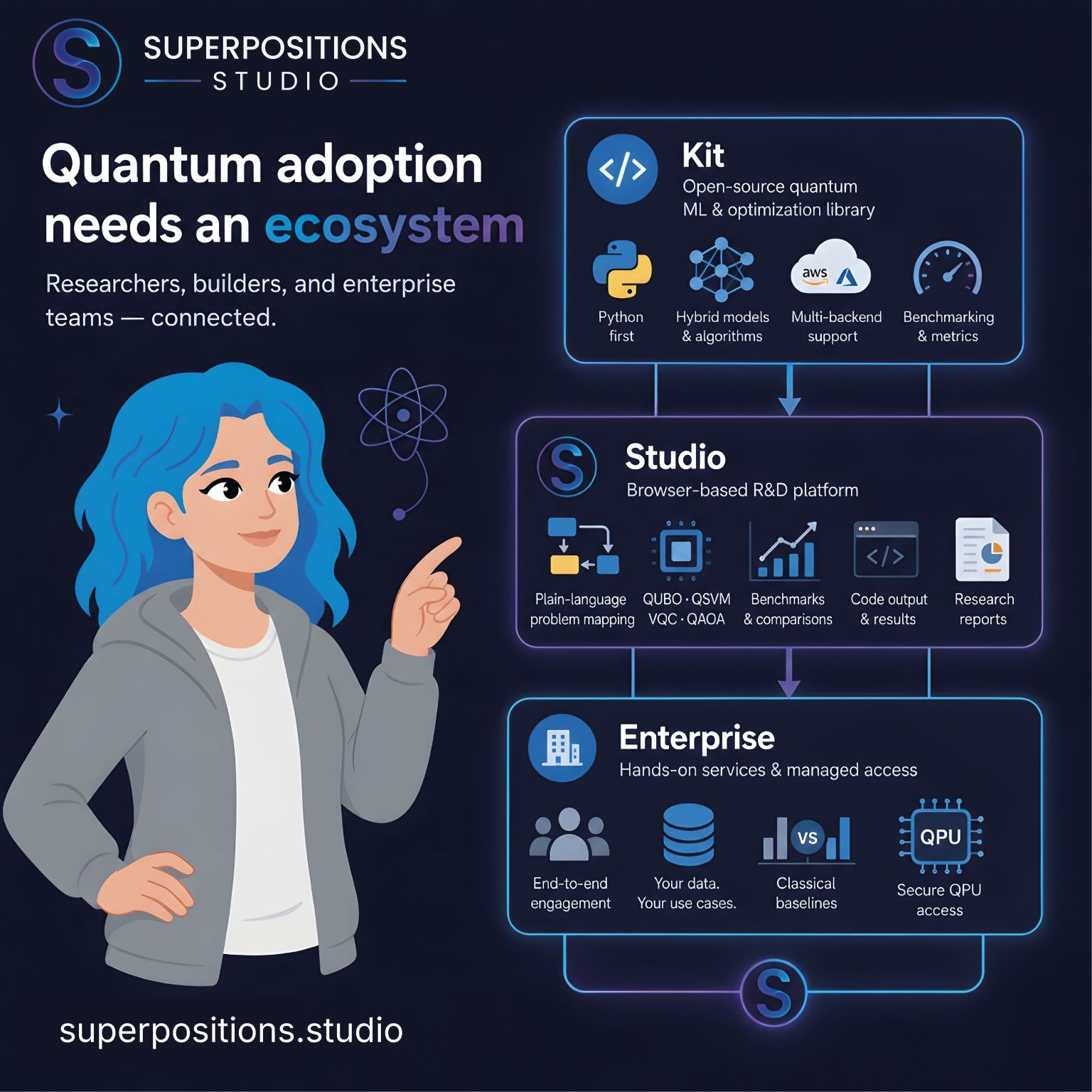
Quantum computing startup Superpositions has launched its integrated product ecosystem and open-access Quantum Solutions Library to streamline the operationalization of industrial quantum-hybrid software. The platform addresses standard bottlenecks in corporate adoption, such as restricted multi-vendor hardware access, inadequate benchmark auditing, and the engineering overhead associated with mapping enterprise data to noisy intermediate-scale quantum (NISQ) devices. The company's business model transitions from custom proof-of-concept (PoC) consulting toward a credit-based, non-lock-in software-as-a-service (SaaS) architecture. The cloud infrastructure connects classical programmers, financial analysts, and industrial engineers to managed backend processors through a tiered software stack.
Technical Architecture & Specifications / Operational Implementation
The software ecosystem consists of three interconnected layers designed to unify development pipelines. The foundational layer, Kit, is an open-source Python library optimized for hybrid quantum machine learning (QML) and combinatorial optimization with native multi-backend execution capabilities. The intermediate layer, Studio, is a browser-based integrated development environment (IDE) featuring an automated multi-agent AI copilot that translates plain-language business constraints into mathematical models like Quadratic Unconstrained Binary Optimization (QUBO) or Ising formulations. The system auto-generates executable code and schedules workloads across accelerated simulators or real Quantum Processing Units (QPUs) from IBM Quantum, IonQ, Rigetti, and IQM without requiring manual circuit re-configuration. The final layer, Enterprise, handles data ingestion pipelines for managed cloud services, enforcing rigid benchmarking against verified classical baselines.
Strategic Positioning & Ecosystem Integration
The launch includes a production-ready repository containing 24 public reference use cases and algorithmic explainers categorized across six industrial pillars. In financial engineering, the library provides templates for Value at Risk (VaR) estimation via Iterative Quantum Amplitude Estimation (IQAE), market volatility forecasting utilizing Quantum Reservoir Computing (QRC), and mean-variance portfolio optimization using the Harrow-Hassidim-Lloyd (HHL) linear-systems algorithm. For manufacturing and healthcare, the platform deploys Quantum Support Vector Machines (QSVM) and Hybrid Quantum Neural Networks (HQNN) to execute predictive maintenance telemetry analysis, steel plate fault classification, and breast cancer diagnostic image checks. To incentivize early enterprise migration, Superpositions has initialized a 3-month trial program granting users baseline compute credits, dashboard tracking, and exportable, inspection-ready PDF verification reports.
You can review the official corporate announcement on LinkedIn here, explore the core capabilities of the development environment here, and browse the complete analytical reference repository via the Quantum Solutions Library here.
May 20, 2026
Related Intelligence

Test of USydney article with HTML.
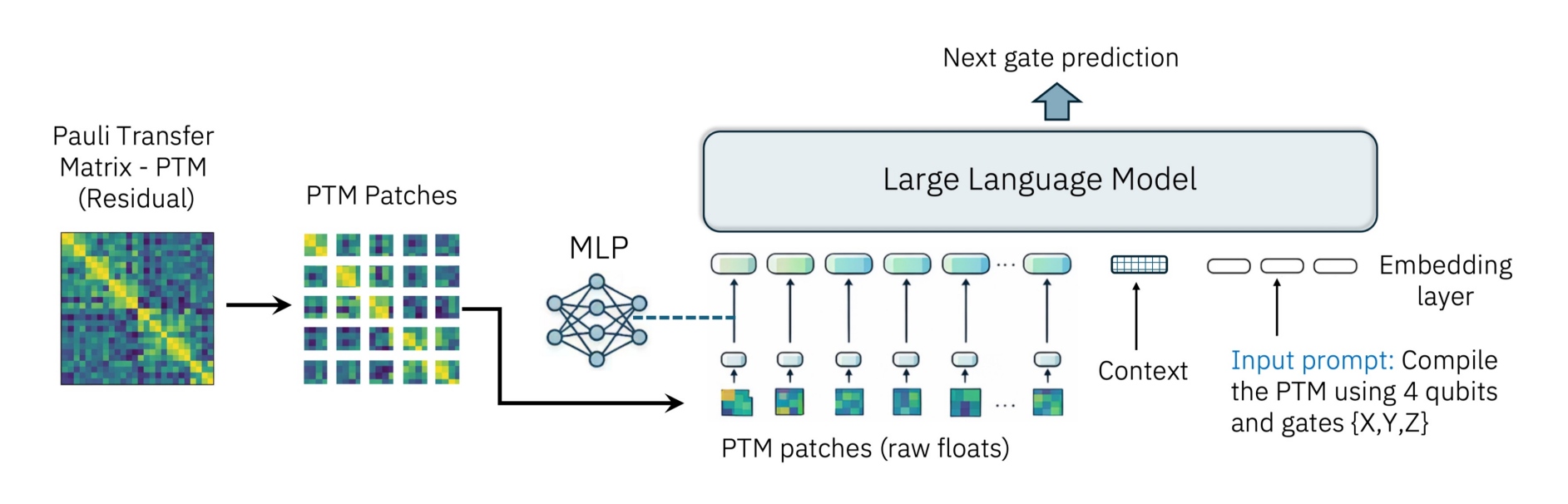
MIT and IBM Project Quantum Unity Operators into Language Model Latent Spaces for Multimodal Circuit Synthesis
July 11, 2026

ETH Zurich Combines Superconducting Qubits with Mechanical Resonators to Build Vibrating Quantum RAM
July 11, 2026
Google and Fraunhofer Launch Global Calls for Early Fault-Tolerant Algorithms and Enterprise Use Cases
July 11, 2026

Who’s News: Strategic Appointments at Photonic, Aliro Quantum, Florida Atlantic University, QuSecure, Quantum Elements, and QAI Ventures
July 11, 2026

EeroQ Validates CMOS-Controlled Electron Shuttling on Superfluid Helium for All-to-All Qubit Routing
July 11, 2026