The Ohio State University Secures $4 Million NSF Phase II Award to Lead National Quantum Sensing Testbed

The Ohio State University has been awarded a $4 million USD Phase II design grant from the U.S. National Science Foundation (NSF) under the National Quantum Virtual Laboratory (NQVL) program. The two-year project, titled Distributed-Entanglement Quantum Sensing of Chemical Properties (DQS-CP), positions the university to spearhead a national research consortium focused on bringing sub-atomic measurement precision into real-world industrial and biomedical applications. If successful during this design phase, the consortium will be positioned to contend for full implementation scaling under the NSF's broader virtual lab infrastructure initiative.
The DQS-CP initiative aims to engineer a highly flexible, multi-component quantum sensing platform to capture atomic and molecular interactions with unprecedented accuracy. The underlying system architecture relies on three primary technical layers: the localized molecule under analysis, a thin "spin-relay" intermediate layer designed to propagate data across boundaries, and a centralized quantum readout mechanism. By intentionally entangling these distinct segments, the sensing apparatus can bypass the structural resolution barriers that restrict classical electronic instruments, creating a shared hardware testbed designed to accelerate the commercialization of post-classical molecular diagnostics.
                           [ DQS-CP Core Sensing Architecture ]
  Target Analyte      ──► Target molecule or crystalline structure undergoing real-time evaluation.
  Spin-Relay Layer    ──► Ultrathin intermediate transport film used to propagate information streams.
  Quantum Readout     ──► Entanglement-assisted receiver pushing sensitivities beyond classical limits.
Led by Principal Investigator and Physics Professor Ezekiel Johnston-Halperin, the Ohio State research cluster integrates cross-departmental engineering faculties to customize the sensor platform for harsh and dynamic environments. Within the College of Engineering, Professor Carlos Castro is tasked with designing nanodevices to track biomolecular dynamics and cellular movements. Professor Raymond Cao is expanding diamond-based quantum sensors to monitor high-energy neutron degradation in materials, while Professor Glenn Daehn is aligning the project's manufacturing processes with the NSF-funded Engineering Research Center for Hybrid Autonomous Manufacturing, Moving from Evolution to Revolution (HAMMER).
The project is structured around a highly collaborative translation network. The academic consortium includes the Massachusetts Institute of Technology (MIT), the University of Chicago, the University of Iowa, the University of California, Santa Barbara (UCSB), and the University of Colorado Boulder. To mitigate domestic workforce shortages in quantum infrastructure, Ohio State is partnering with QuSTEAM to build interdisciplinary educational curricula spanning physics, chemistry, and materials science. Concurrently, translation partner QuantCAD will supply algorithmic software modeling to establish a standardized commercial roadmap for the finished quantum devices.
The formal project award profiles, institutional research tasks, and academic leadership directories can be reviewed here, and the corresponding engineering faculty updates can be accessed here. The data detailing parallel NQVL design selections can be audited here.
July 3, 2026
Related Intelligence
Test of USydney article with HTML.
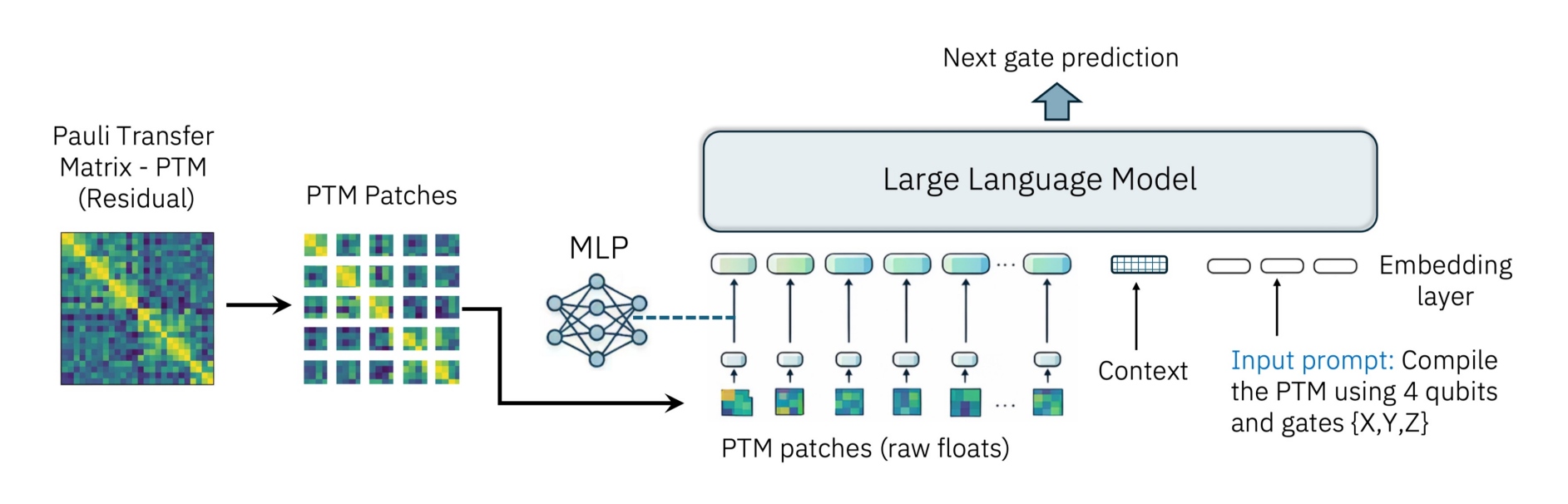
MIT and IBM Project Quantum Unity Operators into Language Model Latent Spaces for Multimodal Circuit Synthesis
July 11, 2026

ETH Zurich Combines Superconducting Qubits with Mechanical Resonators to Build Vibrating Quantum RAM
July 11, 2026

Google and Fraunhofer Launch Global Calls for Early Fault-Tolerant Algorithms and Enterprise Use Cases
July 11, 2026

Who’s News: Strategic Appointments at Photonic, Aliro Quantum, Florida Atlantic University, QuSecure, Quantum Elements, and QAI Ventures
July 11, 2026
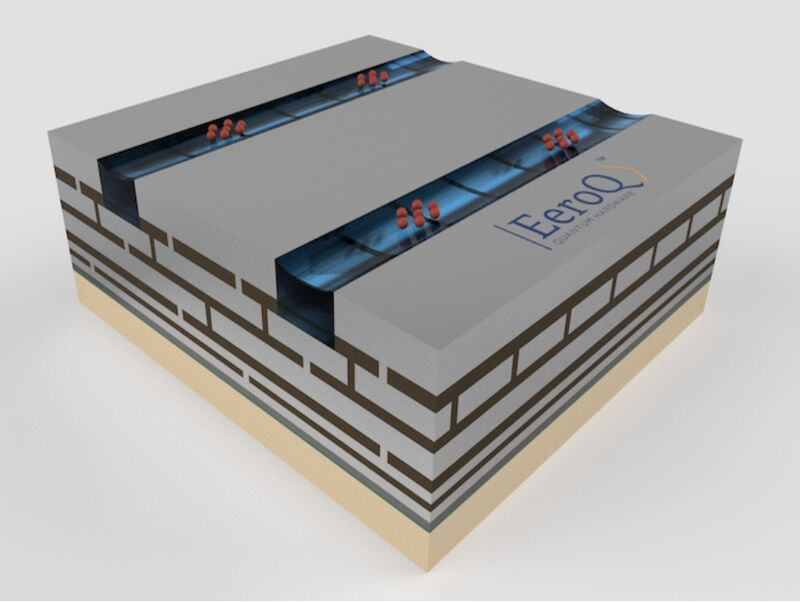
EeroQ Validates CMOS-Controlled Electron Shuttling on Superfluid Helium for All-to-All Qubit Routing
July 11, 2026