Universal Quantum Unveils the iQPU: Foundry-Fabricated Trapped-Ion Processor Engineered for Modular Scaling
Universal Quantum has launched the iQPU, a foundry-fabricated trapped-ion processor designed for modular scaling. …
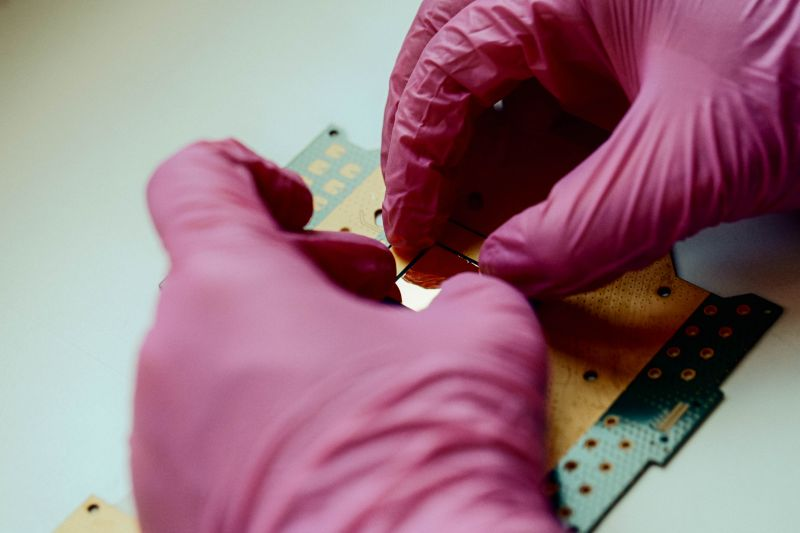
Trapped-ion hardware developer Universal Quantum has commercially launched the iQPU (Integrated Quantum Processing Unit), a monolithic processor architecture designed to eliminate the physical wiring bottleneck in large-scale trapped-ion systems. The chips will serve as the core compute engine for two quantum computers currently being delivered under a €67 million ($73 million) contract with the German Aerospace Center (DLR).
Universal Quantum iQPU Technical & Manufacturing Specifications | ||
Architecture Dimension | Reported Specification | Industrial & Scaling Function |
Active Compute Surface | > 400 mm² active area | Provides large-scale planar surface routing for QCCD ion shuttling and multi-zone operations. |
Fabrication Process | Commercial 200 mm wafer line | Leverages standard semiconductor manufacturing tools to ensure yield repeatability and lower unit cost. |
Control Architecture | Integrated ultra-low-noise electronics | Brings voltage-control signals directly on-chip, mitigating external coaxial and optical routing overheads. |
Modular Interconnect | Proprietary UQConnect technology | Coherently links multiple discrete iQPU modules to operate as a unified, multi-chip quantum processor. |
Customer Deployment | DLR System Delivery | Supports institutional projects across space mission planning, climate modeling, and materials design. |
Trapped-ion quantum computing achieves high operational fidelities through natural atomic homogeneity and long coherence times, but scaling beyond dozens of qubits typically induces severe optical and electronic congestion. Delivering independent radio-frequency, direct-current, and laser channels from external cryostat ports creates a physical "wiring wall." Universal Quantum addresses this by combining its Quantum Charge-Coupled Device (QCCD) layout with integrated control silicon, dynamically shuttling ions across the substrate to execute gates without dedicated beam paths for every qubit site.
To scale beyond the thermal and physical dimensions of a single chip, the architecture uses the company’s UQConnect interface to link adjacent modules without degrading global register coherence. Following the company’s recent $100 million Series A round, the launch positions Universal Quantum alongside Quantinuum and IonQ in the transition from bespoke laboratory assemblies to standardized, foundry-compatible multi-core QCCD engines.
Further specifications are outlined on the Universal Quantum Announcement Page here.
November 3, 2026
Related Intelligence

Test of USydney article with HTML.
EPFL Demonstrates Millimeter-Wave-to-Optical Transducer with 67% Internal Efficiency
November 10, 2026

Why Quantum Hardware Needs Its Own Threat Model
November 9, 2026
Physics Reports Analysis Evaluates Emergence of Hybrid Semiconductor–Superconducting Qubit Architectures
November 9, 2026
DLR Develops Scalable Unitary Data Encoding Beating Exponential State-Preparation Depth
November 9, 2026
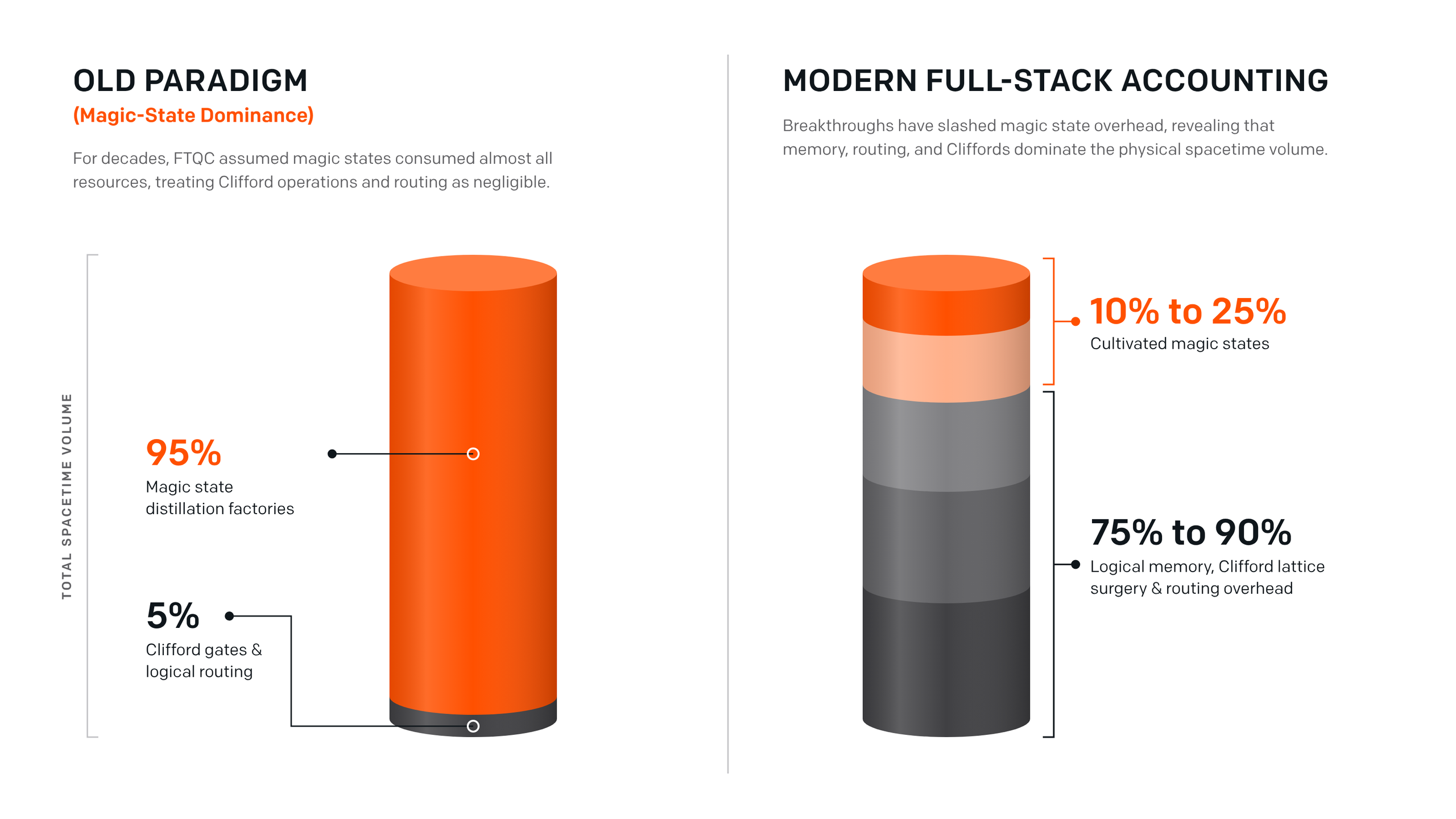
IonQ and Classiq Outline Architectural Trade-Offs in Fault-Tolerant Resource Estimation
November 9, 2026