US Department of Energy Releases National Quantum Roadmap Establishing 2028 Fault-Tolerance Milestones
The U.S. Department of Energy (DOE) has released its National Quantum Roadmap, aiming for error-corrected quantum computing by 2028. …
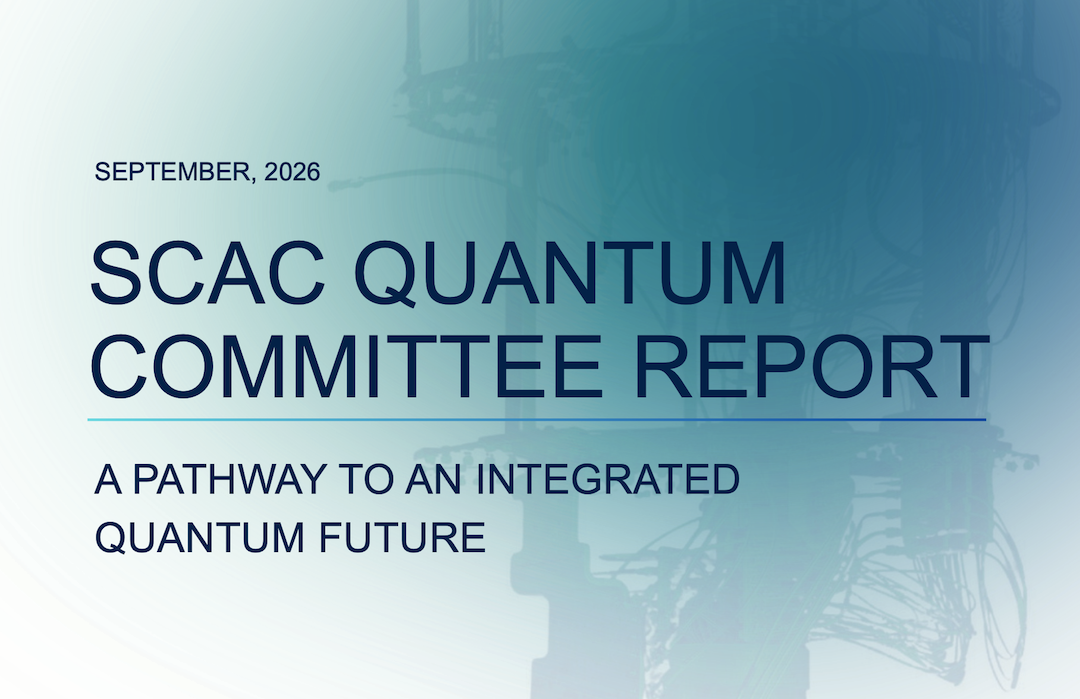
The U.S. Department of Energy (DOE) Office of Science Advisory Committee (SCAC) Quantum Subcommittee has published its comprehensive report, titled "SCAC Quantum Committee Report: Path to an Integrated Quantum Future." Chaired by Dr. Anna Grassellino (Fermilab) with Dr. Supratik Guha (Argonne National Laboratory / University of Chicago) as vice-chair, the national strategy establishes a science-first, milestone-driven roadmap targeting a scientifically relevant, error-corrected quantum computing capability by 2028.
The SCAC report mandates a fundamental metric shift across federal quantum investments: replacing physical qubit counts with demonstrated scientific utility. Rather than evaluating hardware solely through raw physical qubit numbers, federal research programs will measure progress by a system's capacity to execute intractable calculations across quantum chemistry, drug discovery, catalytic material design, fusion plasma simulation, and fundamental high-energy physics.
Aligned with the Administration's Quantum Genesis Initiative and the DOE Q Competition, the roadmap outlines a three-phased strategic framework designed to transition quantum processing units (QPUs) from isolated lab instruments into integrated co-processors across the DOE's high-performance computing (HPC) and artificial intelligence infrastructure:
[ DOE SCAC National Quantum Computing Strategy & Phased Execution Roadmap ] | ||
Implementation Phase | Core Mandate & Operational Structure | Strategic Objectives & Technical Deliverables |
• Phase I: Quantum Grand Challenges (2026–2028) | • Multidisciplinary competitive challenges • National Labs, university, and industry co-design | • Milestone-driven co-design of hardware, algorithms, and software to demonstrate error-corrected scientific utility by 2028 |
• Phase II: DOE Quantum Computing User Facility (QCUF) | • National open-access scientific user facility • On-premises co-located QPU hardware | • Replaces opaque "black-box" cloud APIs with open, co-developed control stacks, cryogenics, and hardware architectures |
• Phase III: Integrated Quantum Future (2030+) | • Ecosystem-wide technology integration • Hybrid Quantum-HPC-AI network integration | • Embeds quantum co-processors, simulators, and sensors into leadership supercomputers (Frontier, Aurora) and user facilities |
To preserve technological flexibility, the SCAC report emphasizes a modality-neutral stance, advocating for continued co-design investments across superconducting circuits, neutral atom arrays, trapped ions, photonics, and silicon spin qubits. Furthermore, the report recommends new partnership models to accelerate technology transfer, including 6-to-18-month embedded co-design fellowships, joint laboratory-industry personnel appointments, and open interconnect standards for hybrid classical-quantum software stacks.
Review the official executive announcement on the DOE Office of Science Portal here, inspect the laboratory release on the Fermilab Newsroom here, read the complete text via the SCAC Quantum Committee Report Document here, and examine our previous coverage on the DOE's Quantum Genesis Initiative and Q Competition launch here.
October 2, 2026
Related Intelligence

Test of USydney article with HTML.
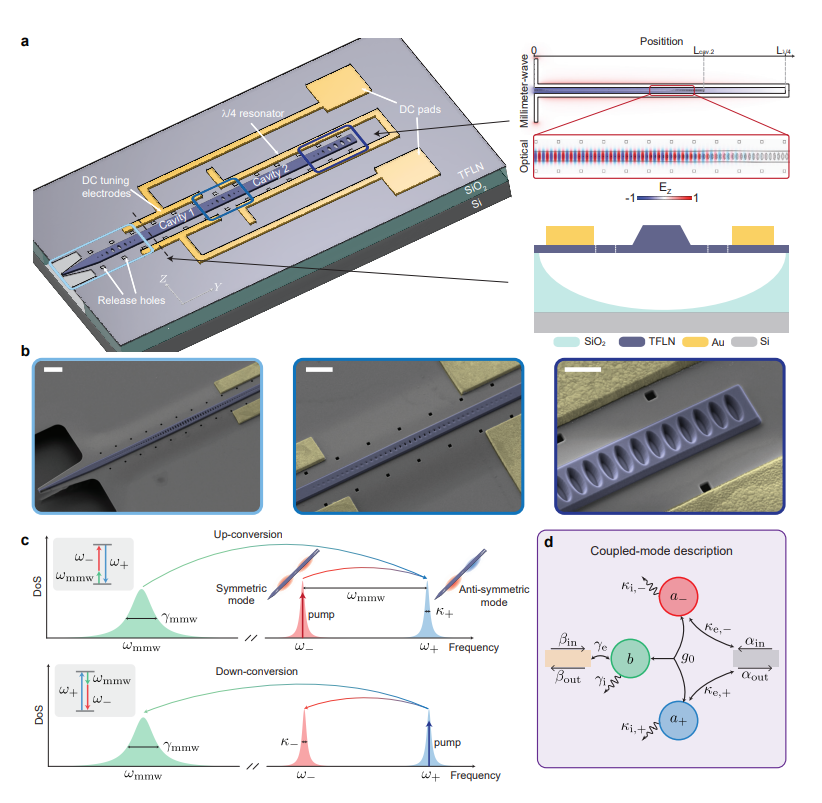
EPFL Demonstrates Millimeter-Wave-to-Optical Transducer with 67% Internal Efficiency
November 10, 2026
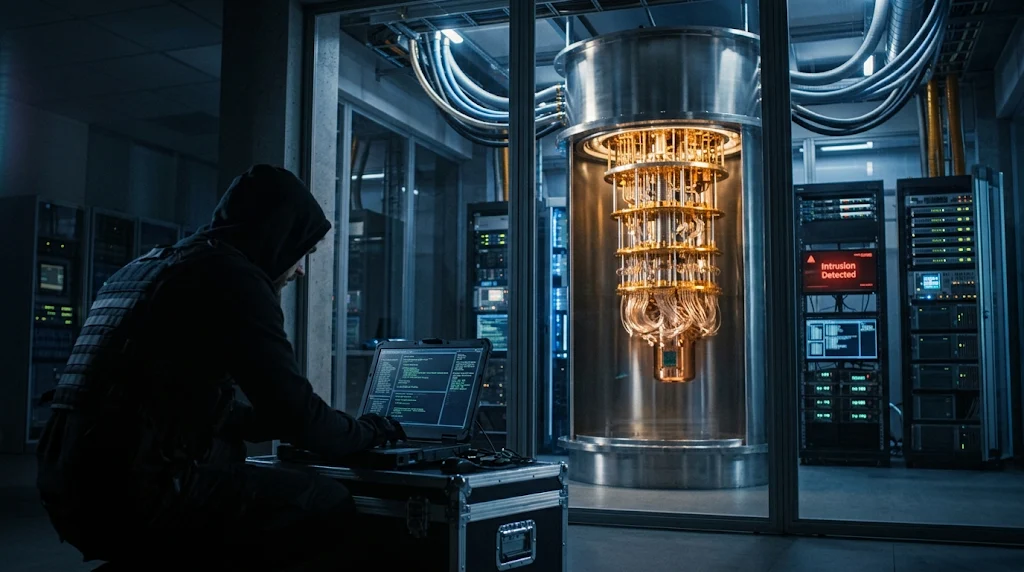
Why Quantum Hardware Needs Its Own Threat Model
November 9, 2026
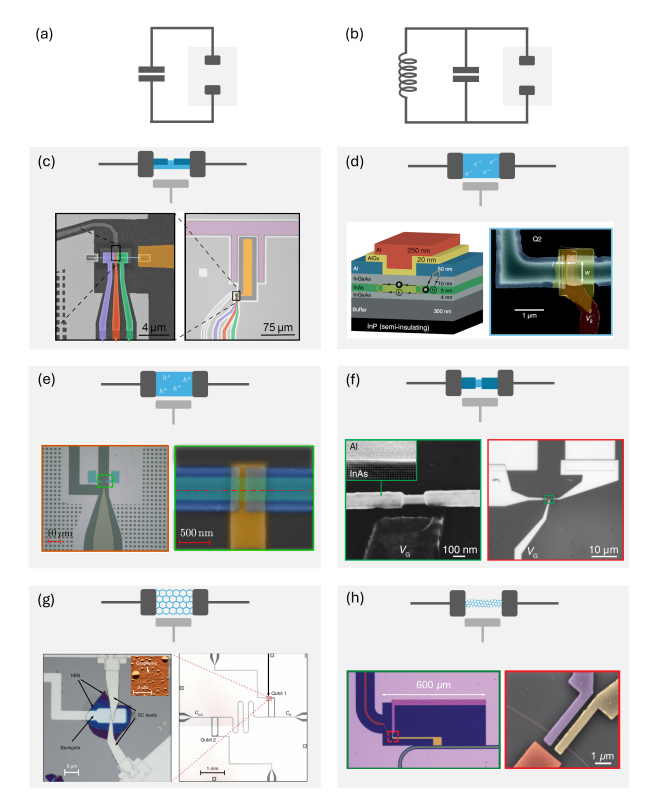
Physics Reports Analysis Evaluates Emergence of Hybrid Semiconductor–Superconducting Qubit Architectures
November 9, 2026
DLR Develops Scalable Unitary Data Encoding Beating Exponential State-Preparation Depth
November 9, 2026
IonQ and Classiq Outline Architectural Trade-Offs in Fault-Tolerant Resource Estimation
November 9, 2026