Zapata Quantum and NVIDIA Integrate Agentic AI to Automate Quantum Resource Estimation
Zapata Quantum and NVIDIA have partnered to integrate agentic AI into quantum algorithm development by automating quantum resource estimation workflows. The collaboration focuses on streamlining a process used to determine the exact hardware specifications, error-correction budgets, and physical execution times required to run quantum applications. Initial engineering efforts are directed at complex quantum chemistry challenges, including pharmaceutical drug discovery, energy grid optimization, and advanced materials development, where benchmarking quantum algorithms has historically stood as a significant developer bottleneck.
Conventional algorithm benchmarking and resource estimation typically require extensive multi-year efforts from domain experts spanning molecular modeling, software compilation, and hardware architecture evaluation. The joint workflow compresses this timeline by implementing an orchestrated multi-agent AI framework designed to automate these separate steps into a scalable system. The automated pipeline utilizes the NVIDIA Agent Toolkit software to establish tracking, observation, and operational guardrails for the underlying multi-agent AI setup, combining continuously verified software compilation layers with predictive models capable of calculating physical qubit counts and gate depths before a computation is initiated on live hardware backends.
The cooperative methodology has been validated by testing its automated estimation protocols on homogeneous catalysis, building on Zapata’s previous benchmarking datasets created during its participation across all technical segments of the DARPA Quantum Benchmarking program. Homogeneous catalysis presents a significant computational bottleneck for classical simulation, making it a critical test case for verifying how effectively the automated framework can identify high-value industrial workloads. To secure the intellectual property of this verification-aware automation approach, Zapata has also filed a provisional patent application detailing the implementation of its agentic framework for quantum computing applications.
The official corporate disclosure detailing the technical collaboration, software workflows, and patent filings can be reviewed directly via the Zapata Quantum Investor Relations Portal here.
June 23, 2026
Related Intelligence
Test of USydney article with HTML.
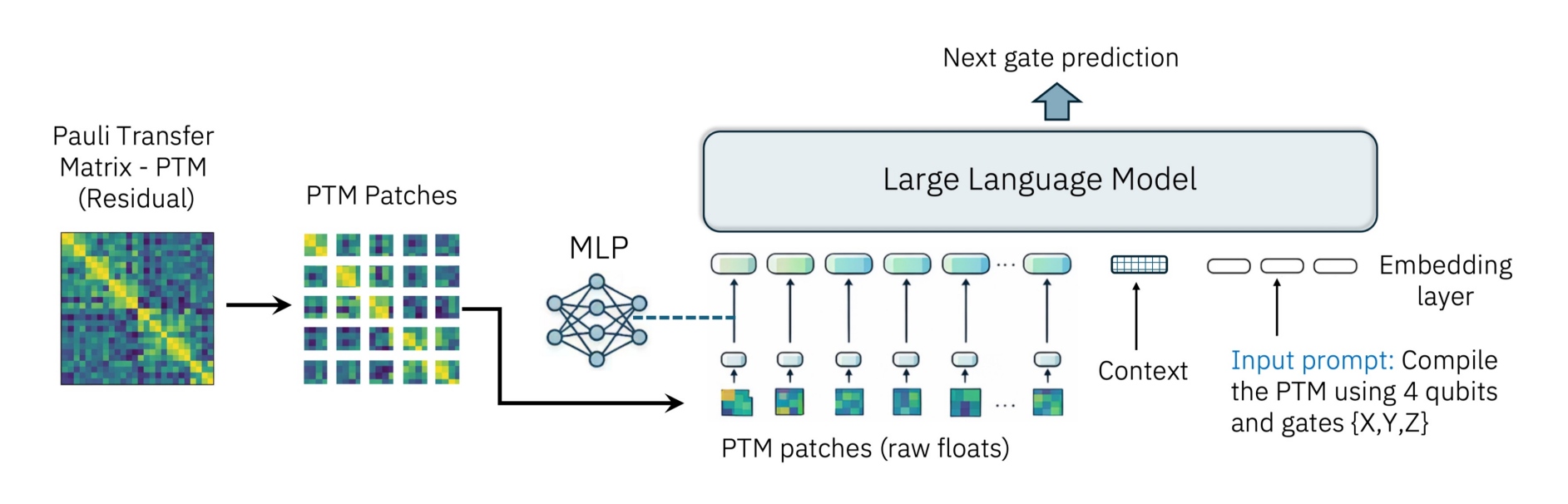
MIT and IBM Project Quantum Unity Operators into Language Model Latent Spaces for Multimodal Circuit Synthesis
July 11, 2026

ETH Zurich Combines Superconducting Qubits with Mechanical Resonators to Build Vibrating Quantum RAM
July 11, 2026
Google and Fraunhofer Launch Global Calls for Early Fault-Tolerant Algorithms and Enterprise Use Cases
July 11, 2026

Who’s News: Strategic Appointments at Photonic, Aliro Quantum, Florida Atlantic University, QuSecure, Quantum Elements, and QAI Ventures
July 11, 2026
EeroQ Validates CMOS-Controlled Electron Shuttling on Superfluid Helium for All-to-All Qubit Routing
July 11, 2026