ZuriQ and Rhonexum Form Multi-Year Partnership to Integrate Cryogenic Control ICs into 2D Trapped-Ion Processors
ZuriQ and Rhonexum have partnered to integrate low-temperature control electronics into ZuriQ's 2D trapped-ion processors. …

Swiss quantum computing startup ZuriQ and cryogenic integrated-circuit developer Rhonexum have entered into a multi-year commercial framework agreement to co-develop and integrate low-temperature control electronics into ZuriQ’s trapped-ion hardware architecture. Under the agreement, Rhonexum will deliver cryogenic integrated circuits (ICs) and customization engineering services, with the inaugural hardware shipment scheduled for deployment by the end of 2026.
Spun out of Professor Jonathan Home’s laboratory at ETH Zurich in 2024, ZuriQ is building trapped-ion quantum processors based on a natively two-dimensional, reconfigurable ion-trap architecture that combines static magnetic and dynamic electric fields. As trapped-ion architectures scale from tens to thousands of physical qubits, routing individual room-temperature radio-frequency (RF) and DC voltage control lines down into cryogenic vacuum chambers creates prohibitive thermal loads, footprint constraints, and interconnect bottlenecks. Spun out of EPFL’s AQUA Lab in 2025, Rhonexum develops semiconductor ICs engineered to operate directly at sub-Kelvin and 4-Kelvin cryogenic stages, enabling localized signal routing, digital multiplexing, and waveform generation close to the physical qubits.
[ ZuriQ & Rhonexum Trapped-Ion Cryogenic Integration Matrix ] | ||
System Domain | Institutional & Technical Scope | Scaling Objective & Engineering Role |
• Trapped-Ion Architecture | • ZuriQ (ETH Zurich Spin-out, 2024) | • Natively 2D, reconfigurable microfabricated ion-trap arrays targeting thousands of physical qubits. |
• Cryogenic Electronics | • Rhonexum (EPFL AQUA Lab Spin-out, 2025) | • Cryogenic integrated circuits (RX-IC) operating inside cryostats to reduce room-to-cryo cable overhead. |
• Commercial Scope | • Multi-year framework agreement | • Initial delivery of Rhonexum's inaugural control hardware by late 2026, followed by co-designed ASICs. |
• Regional Ecosystem | • Swiss Quantum Technology Network | • Direct translation of ETH Zurich and EPFL research into domestic commercial quantum hardware supply chains. |
Addressing the I/O Wiring Bottleneck in 2D Trapped-Ion Architectures
Traditional trapped-ion quantum computing designs rely on coaxial cables and multi-pin feedthroughs running between 300 K control racks and the cryogenic chamber. While manageable for linear chains of 10 to 50 ions, this direct-wiring approach becomes unviable for high-density 2D arrays, where electrode density scales quadratically.
By shifting analog voltage digital-to-analog converters (DACs), fast switching electronics, and multiplexing ICs directly to the cryogenic stage, the collaboration aims to drastically reduce the number of physical vacuum feedthroughs per qubit while maintaining high shuttle fidelity, individual addressing, and dynamic reconfigurability. The bilateral partnership also establishes a direct feedback loop, allowing ZuriQ’s operational trapped-ion performance metrics to guide Rhonexum’s cryogenic semiconductor modeling tools and future ASIC iterations.
Review the commercial collaboration announcement on the Rhonexum Portal here.
October 23, 2026
Related Intelligence

Test of USydney article with HTML.
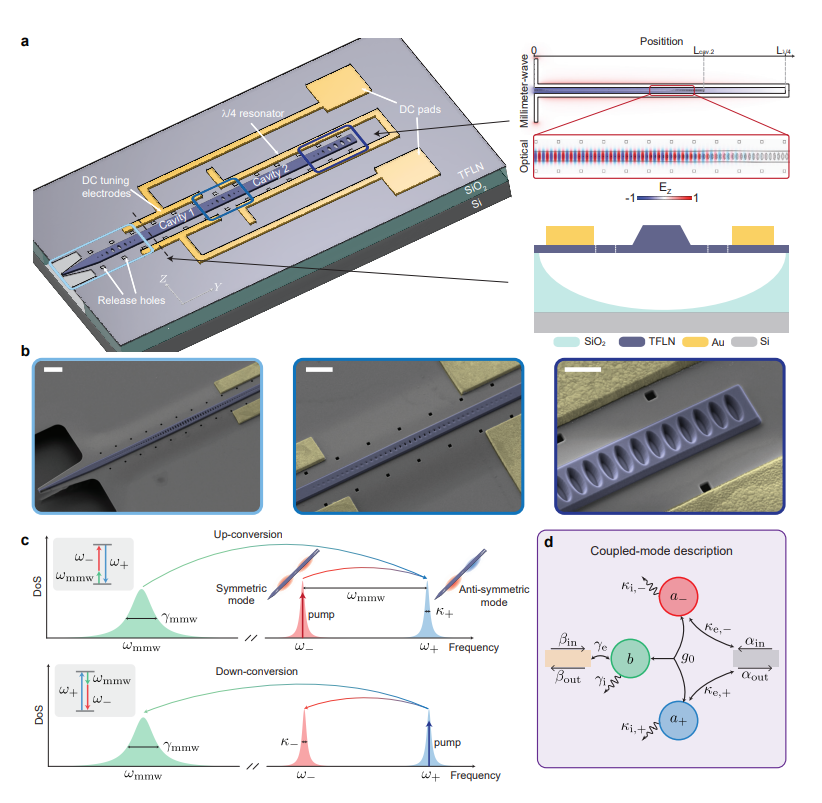
EPFL Demonstrates Millimeter-Wave-to-Optical Transducer with 67% Internal Efficiency
November 10, 2026
Why Quantum Hardware Needs Its Own Threat Model
November 9, 2026
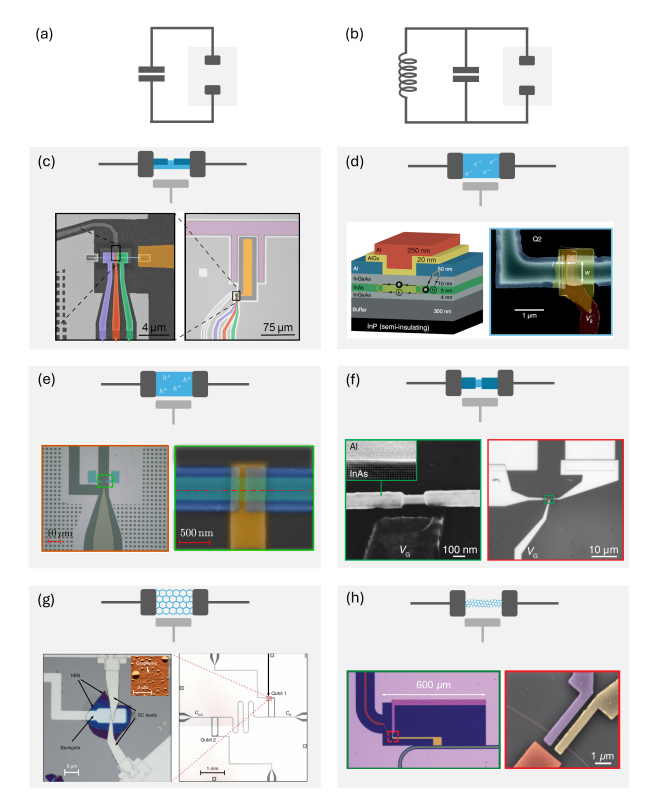
Physics Reports Analysis Evaluates Emergence of Hybrid Semiconductor–Superconducting Qubit Architectures
November 9, 2026
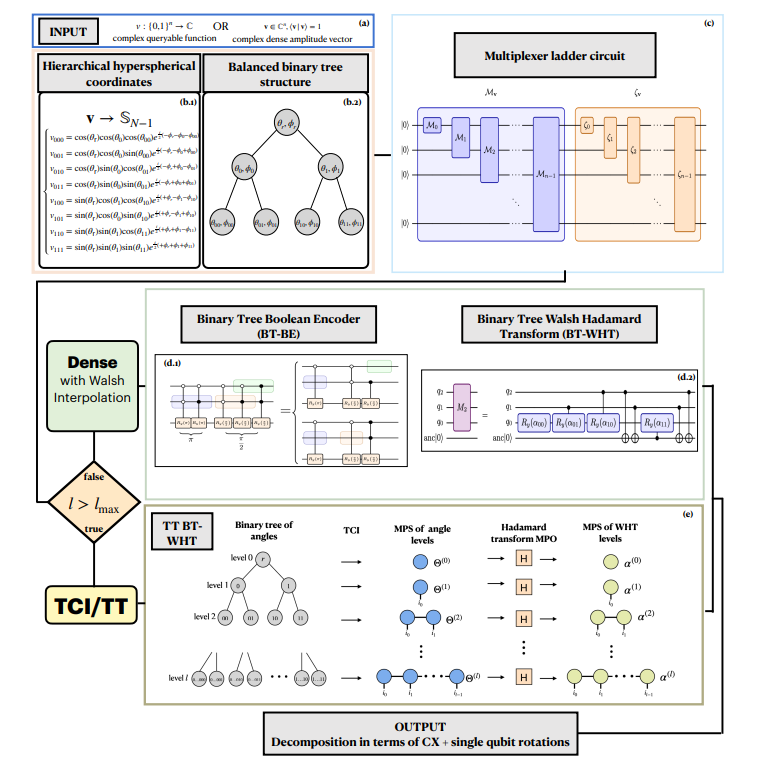
DLR Develops Scalable Unitary Data Encoding Beating Exponential State-Preparation Depth
November 9, 2026
IonQ and Classiq Outline Architectural Trade-Offs in Fault-Tolerant Resource Estimation
November 9, 2026