Cleveland Clinic and IBM Implement Quantum Workflow for Protein Simulation

Cleveland Clinic and IBM have reported the first simulation of a protein’s electronic structure using a quantum-centric supercomputing (QCSC) workflow. The research team modeled the 303-atom miniprotein Trp-cage using an IBM Quantum Heron r2 processor integrated with classical high-performance computing (HPC) resources. This impledddmentation addresses the computational bottleneck of electronic structure calculations, which scale combinatorially on classical systems. The study demonstrates that hybrid workflows can effectively partition complex biomolecular problems, moving quantum utility closer to industrially relevant pharmaceutical and materials science applications.
The technical framework relies on wave function-based embedding (EWF) to decompose the Trp-cage molecule into computationally manageable segments called "clusters." In this EWF scheme, the protein is fragmented into local regions where each atom and its entangled environment are analyzed. While simple clusters with minimal entanglement are processed via classical methods, the most complex clusters—characterized by a high density of intermolecular interactions—are assigned to the quantum processor. This load-sharing approach allows for a high-accuracy quantum-mechanical treatment of specific molecular cores that are otherwise impractical to model using classical configuration interaction (CI) methods alone.
To solve for the electronic structure within these clusters, the team utilized the sample-based quantum diagonalization (SQD) algorithm. SQD is a quantum-selected configuration interaction method where the quantum hardware samples the vast space of possible electron configurations to identify the most significant states. A classical supercomputer then uses this sampled data to compute the final solution. The workflow includes error mitigation procedures, such as configuration recovery, to maintain the symmetry of the ansatz state, ensuring the results remain physically consistent across the 6 to 33 molecular orbitals (MOs) evaluated in each cluster.
The Trp-cage miniprotein was selected as a benchmark because, despite its compact size, it possess features common to larger proteins, including a hydrophobic core and complex hydrogen bonding. The researchers successfully modeled both the folded and unfolded conformers of the protein, predicting their relative energies with an accuracy competitive with high-level classical benchmarks such as MP2 and CCSD. This successful scaling from a few amino acids to a 300-atom system validates the EWF-SQD workflow's ability to handle diverse chemical environments and varying steric effects in a biologically relevant context.
Looking forward, the researchers indicate that the EWF-SQD framework is theoretically capable of scaling to molecules containing thousands of atoms. The long-term objective is to utilize these QCSC workflows to generate extensive databases of simulated molecular behaviors. These datasets could eventually train machine learning algorithms to predict and design novel molecules for drug discovery and energy applications. The project utilized HPC resources from Michigan State University and the Cleveland Clinic, highlighting the necessity of deep integration between quantum hardware and classical infrastructure to achieve large-scale electronic CI simulations.
For technical details on the EWF-SQD workflow and the Trp-cage simulation results, consult the official IBM Research blog here and the full research paper on arXiv here.
For technical details on the EWF-SQD workflow and the Trp-cage simulation results, consult the official IBM Research blog here, the full research paper on arXiv here, and our previous coverage of Cleveland Clinic’s supramolecular simulations here.
March 26, 2026
Related Intelligence

Test of USydney article with HTML.
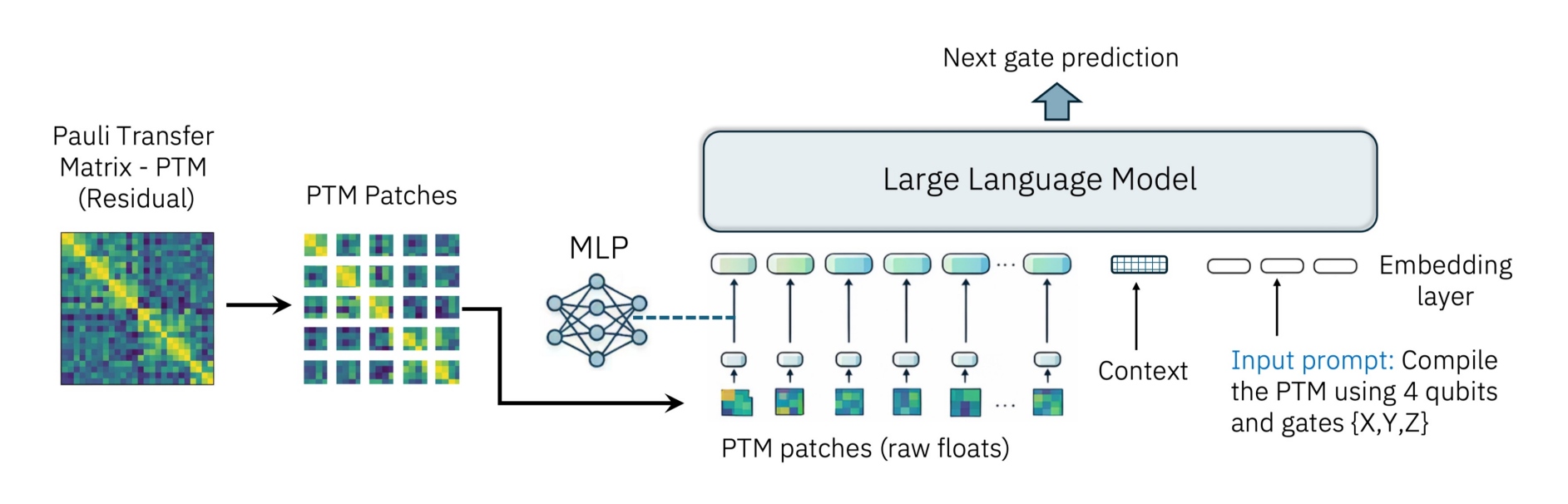
MIT and IBM Project Quantum Unity Operators into Language Model Latent Spaces for Multimodal Circuit Synthesis
July 11, 2026

ETH Zurich Combines Superconducting Qubits with Mechanical Resonators to Build Vibrating Quantum RAM
July 11, 2026

Google and Fraunhofer Launch Global Calls for Early Fault-Tolerant Algorithms and Enterprise Use Cases
July 11, 2026

Who’s News: Strategic Appointments at Photonic, Aliro Quantum, Florida Atlantic University, QuSecure, Quantum Elements, and QAI Ventures
July 11, 2026
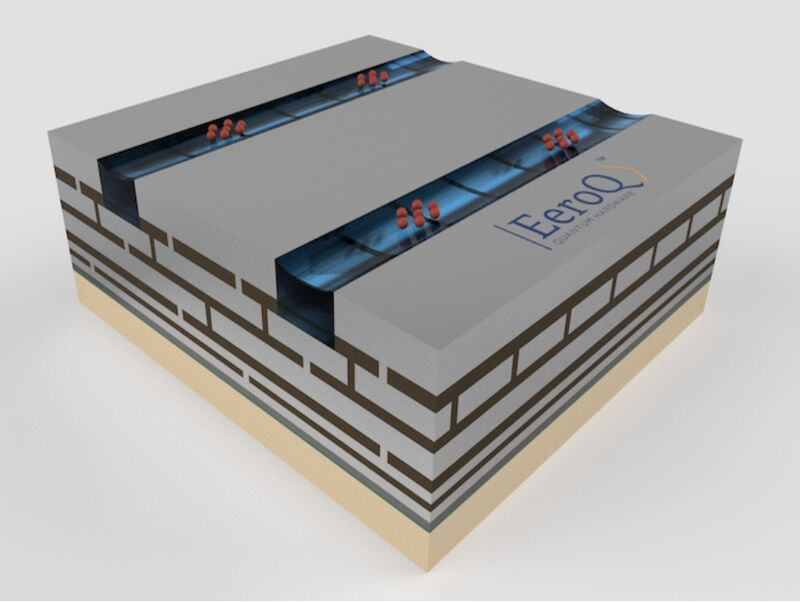
EeroQ Validates CMOS-Controlled Electron Shuttling on Superfluid Helium for All-to-All Qubit Routing
July 11, 2026