OTI Lumionics Establishes Iterative Qubit Coupled Cluster Benchmark on NVIDIA Blackwell GPUs
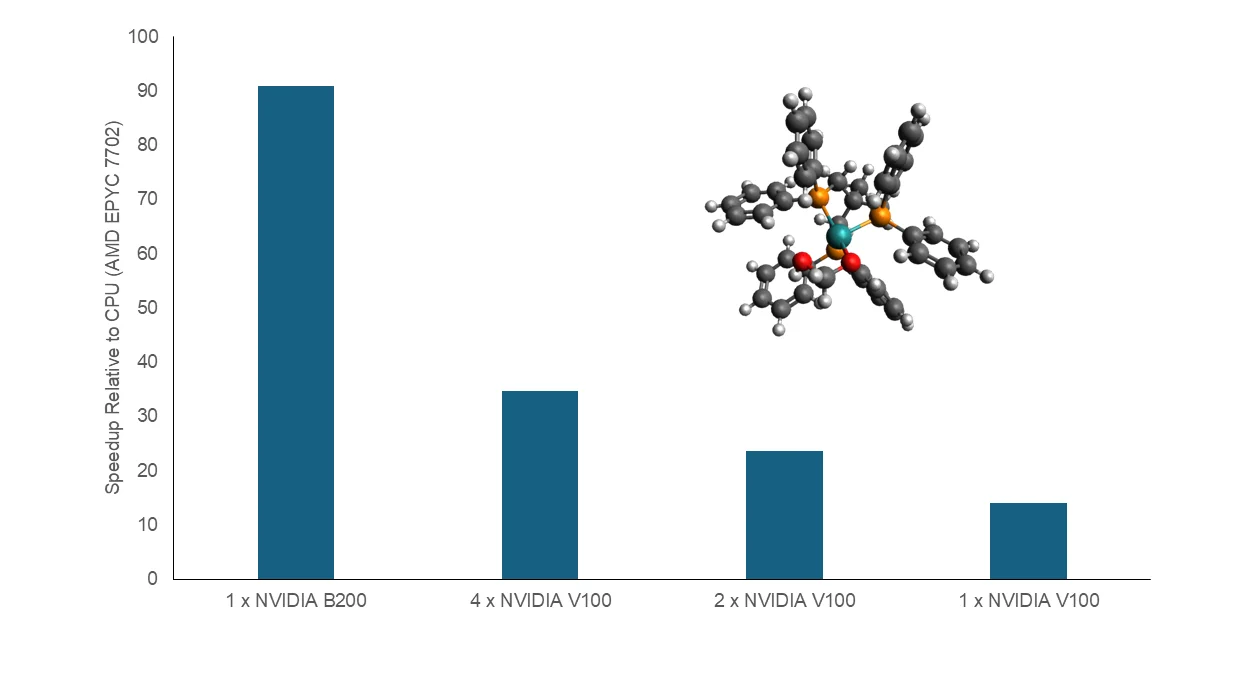
OTI Lumionics developed a parallel, GPU-accelerated implementation of the Iterative Qubit Coupled Cluster (iQCC) algorithm, migrating computational chemistry workloads from CPU-intensive environments to the NVIDIA Blackwell GPU platform. The architecture utilizes bit-wise partitioning to distribute Hamiltonian terms across compute nodes and offloads Pauli contractions to the GPU to manage the exponential growth of transformed Hamiltonians. This hardware-specific optimization resulted in a 90x performance increase, reducing ground-state energy calculation steps for complex catalysts from several days to approximately one hour on a single processing unit.
The implementation achieved the simulation of electronic-structure Hamiltonians for ruthenium catalysts in the 100–124 qubit regime, outperforming the accuracy metrics of Density Matrix Renormalization Group (DMRG) benchmarks. In a specific validation involving a greenhouse gas capturing catalyst requiring 112 qubits, the iQCC algorithm completed a variational ground-state energy calculation in 65 minutes. This processing duration is significantly lower than the 28 to 200 hours estimated for a theoretical quantum computer to execute an equivalent task, establishing a new high-precision standard for classical emulation of quantum chemistry circuits.
The iQCC algorithm restricts variational evolution to a classically simulable operator subspace by selecting entanglers exclusively from the Direct Interaction Space, ensuring non-vanishing energy gradients during every iteration. This algorithmic constraint prevents the barren-plateau phenomenon, maintaining the trainability of complex circuits as the system size increases toward industrially relevant scales. The successful execution of these simulations suggests that the threshold for quantum advantage in molecular structure determination has moved beyond the 200-qubit scale, requiring higher-capacity quantum hardware to compete with current accelerated classical simulations.
For full technical details on the iQCC implementation and the Ruthenium catalyst benchmarks, consult the official OTI Lumionics announcement here and the arXiv paper here.
March 17, 2026
Related Intelligence

Test of USydney article with HTML.
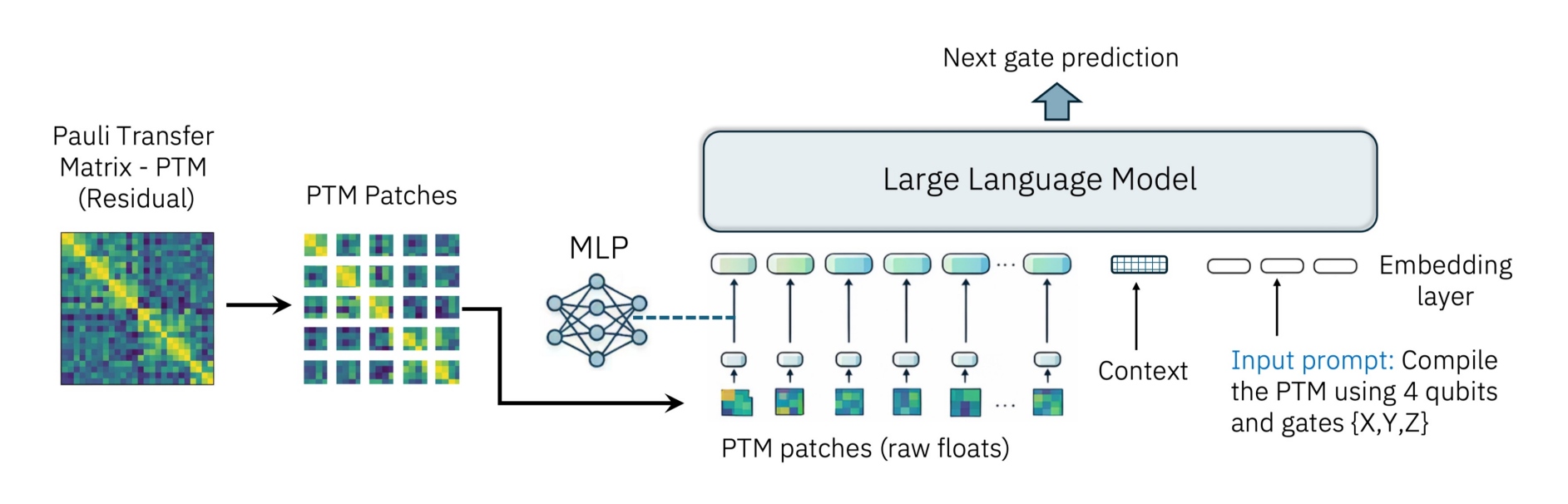
MIT and IBM Project Quantum Unity Operators into Language Model Latent Spaces for Multimodal Circuit Synthesis
July 11, 2026

ETH Zurich Combines Superconducting Qubits with Mechanical Resonators to Build Vibrating Quantum RAM
July 11, 2026

Google and Fraunhofer Launch Global Calls for Early Fault-Tolerant Algorithms and Enterprise Use Cases
July 11, 2026

Who’s News: Strategic Appointments at Photonic, Aliro Quantum, Florida Atlantic University, QuSecure, Quantum Elements, and QAI Ventures
July 11, 2026
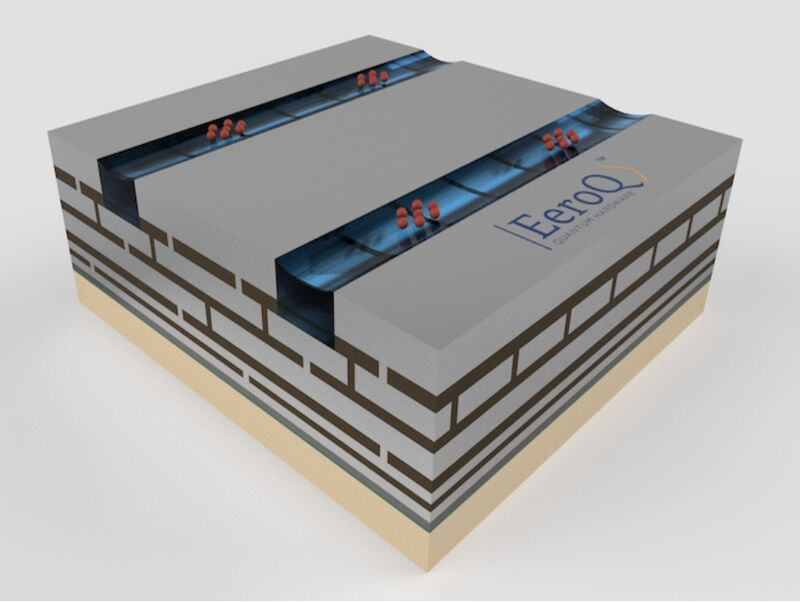
EeroQ Validates CMOS-Controlled Electron Shuttling on Superfluid Helium for All-to-All Qubit Routing
July 11, 2026