Photonic Inc. Secures Firgun Ventures Investment and Demonstrates World-First Quantum Teleportation

Photonic Inc. (Vancouver, Canada) has reached two major milestones: securing a strategic investment from the newly launched Firgun Ventures and successfully demonstrating a world-first quantum teleportation over 30 km of commercial fiber-optic infrastructure. These developments follow Photonic's $130M USD ($180M CAD) Series C round in early 2026 and solidify its "Entanglement First" architecture as a primary contender for utility-scale quantum networking.
The investment marks the first deployment from Firgun Ventures, a London-based $250 million specialist fund dedicated to Series A/B quantum scale-ups. Founded by Dr. Kris Naudts and Zeynep Koruturk—both early angel investors in Cambridge Quantum (now Quantinuum)—Firgun focuses on bridging the gap between research-stage breakthroughs and commercial viability. The fund is notably anchored by the Qatar Investment Authority (QIA). Photonic was selected for its credible path to fault-tolerant systems, a status reinforced by its participation in DARPA's competitive quantum benchmarking programs.
In a technical breakthrough with telecom giant TELUS, Photonic demonstrated quantum teleportation over 30 km of active metropolitan fiber (TELUS' PureFibre network). Unlike previous experiments that teleported "disappearing ink"—photonic qubits that could be measured but not further utilized—this demonstration successfully transferred quantum information into a matter-based quantum processor (silicon spin qubits) at a remote node. This "permanent ink" capability means the teleported information was stored and remains available for further computation, a prerequisite for distributed quantum computing.
The success of this trial validates Photonic’s unique Entanglement First™ approach, which utilizes silicon T-centre qubits to emit spin-entangled photons at native telecom wavelengths (1550 nm). This eliminates the need for lossy frequency conversion, allowing for seamless integration with existing global telecom infrastructure. By leveraging Quantum Low-Density Parity Check (QLDPC) codes—specifically Photonic's proprietary SHYPS family—the architecture aims to achieve fault-tolerant operation with significantly fewer physical qubits than traditional surface code models.
Explore the technical details of the TELUS teleportation demonstration here, and refer to our previous coverage of Photonic's $130M funding round here.
February 19, 2026
Related Intelligence

Test of USydney article with HTML.
Chips JU and Pasqal Launch €50M ($57.2M USD) Q-PLANET Pilot Line to Industrialize Neutral Atom Quantum Chips
July 13, 2026
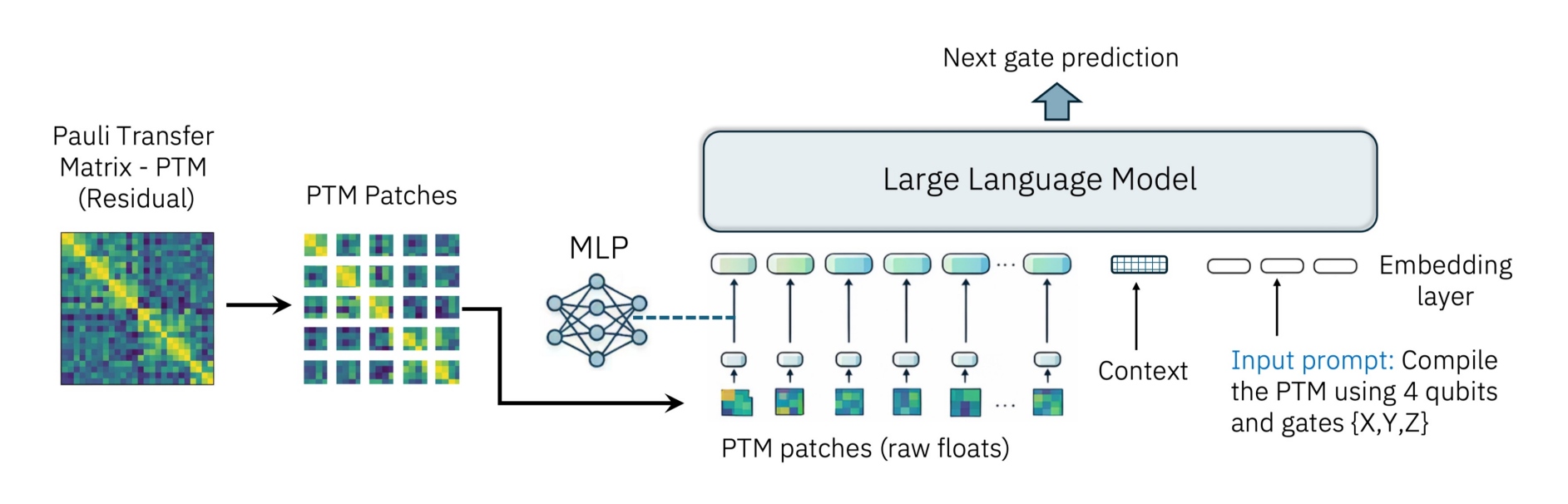
MIT and IBM Project Quantum Unity Operators into Language Model Latent Spaces for Multimodal Circuit Synthesis
July 11, 2026

ETH Zurich Combines Superconducting Qubits with Mechanical Resonators to Build Vibrating Quantum RAM
July 11, 2026
Google and Fraunhofer Launch Global Calls for Early Fault-Tolerant Algorithms and Enterprise Use Cases
July 11, 2026

Who’s News: Strategic Appointments at Photonic, Aliro Quantum, Florida Atlantic University, QuSecure, Quantum Elements, and QAI Ventures
July 11, 2026