QoreChain Implements Complete NIST Post-Quantum Cryptography Stack on Public Mainnet

Swiss-registered blockchain network QoreChain has recorded a transaction on its live public mainnet utilizing a complete, end-to-end post-quantum cryptography (PQC) stack. The transaction involved a transfer of 1,000 QOR executed on July 2, 2026, routing directly into a standard address generated via the open-source Keplr self-custody wallet. While individual decentralized protocols have previously implemented partial quantum-resistant signatures at the transaction edge, this network deployment marks a milestone by applying standardized post-quantum math across the protocol's entire cryptographic path—covering signatures, key exchanges, and hash functions simultaneously.
                         [ QoreChain Full-Stack PQC Architecture ]
  Signature Layer   ──► ML-DSA-87 (FIPS 204 / Dilithium-5) Category 5 signature verification.
  Encapsulation     ──► ML-KEM-1024 (FIPS 203 / Kyber) quantum-safe asymmetric key exchange.
  Hashing Framework ──► SHAKE-256 state functions replacing traditional elliptic-curve primitives.
The comprehensive layer-1 deployment directly targets the "Harvest Now, Decrypt Later" vulnerability, where external actors record encrypted block data and public key histories from distributed ledgers today to compromise them retroactively once fault-tolerant quantum computers become available. Running on the Cosmos SDK v0.53 framework, the production mainnet (qorechain-vladi, EVM Chain ID 9801) integrates National Institute of Standards and Technology (NIST) FIPS 203 and 204 compliant algorithms natively within its genesis state layer. Rather than applying temporary application-level patches, the network's specialized engineering pairs hybrid secp256k1 + ML-DSA-87 signatures with an AI-optimized PRISM Consensus engine that executes deterministic, on-chain reinforcement learning inference to dynamically tune node parameters.
To support general-purpose web3 deployment, the protocol pairs its quantum resistance with a triple-VM runtime environment that natively executes EVM, CosmWasm, and SVM smart contracts on a single chain with native cross-VM messaging. For decentralized application development, the node architecture deploys sidecar containers running a dedicated anomaly detection and risk scoring engine (QCAI) alongside standard JSON-RPC, REST, and gRPC endpoints. Operated under the Swiss DLT Act by the QoreChain Association in Rolle, Switzerland, the platform features a deflationary utility token model where 30% of all gas fees are permanently burned. The organization holds a FINMA no-action letter classifying its native asset, QOR, as a utility token.
The official mainnet transaction parameters, cryptographic signature metrics, and executive deployment statements can be reviewed here, and the on-chain block allocation ledger can be audited directly via the QoreChain Public Block Explorer here. The core engineering specifications, triple-VM parameters, and node deployment documentation can be found here, while preceding architectural development profiles can be accessed here.
July 3, 2026
Related Intelligence
Test of USydney article with HTML.
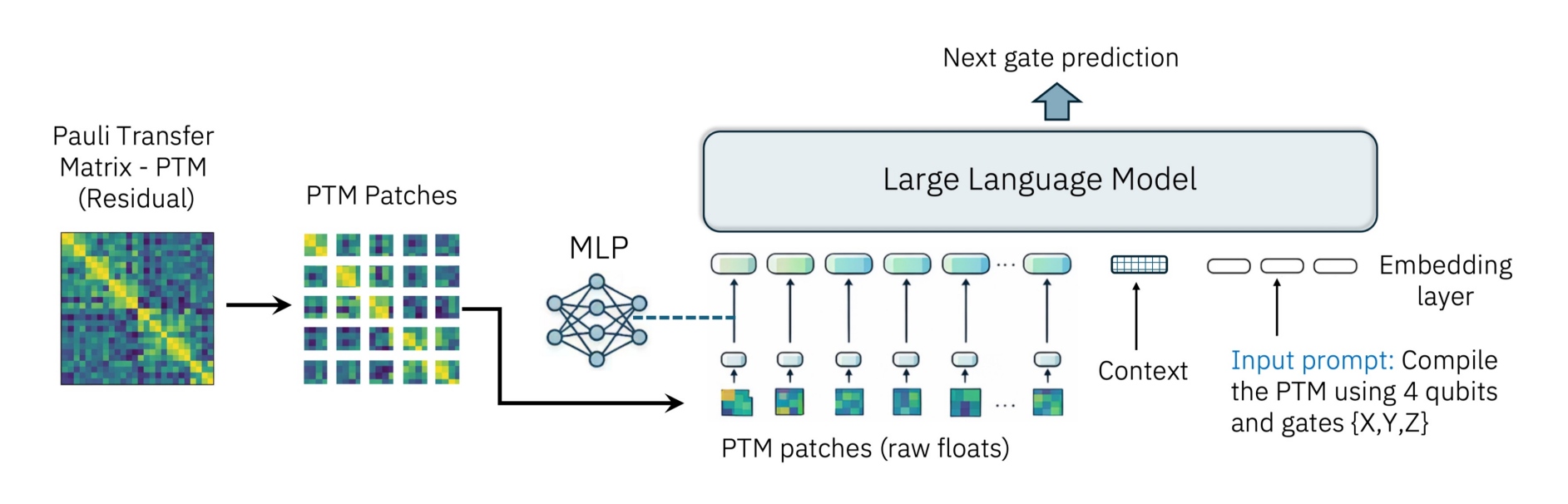
MIT and IBM Project Quantum Unity Operators into Language Model Latent Spaces for Multimodal Circuit Synthesis
July 11, 2026

ETH Zurich Combines Superconducting Qubits with Mechanical Resonators to Build Vibrating Quantum RAM
July 11, 2026
Google and Fraunhofer Launch Global Calls for Early Fault-Tolerant Algorithms and Enterprise Use Cases
July 11, 2026

Who’s News: Strategic Appointments at Photonic, Aliro Quantum, Florida Atlantic University, QuSecure, Quantum Elements, and QAI Ventures
July 11, 2026
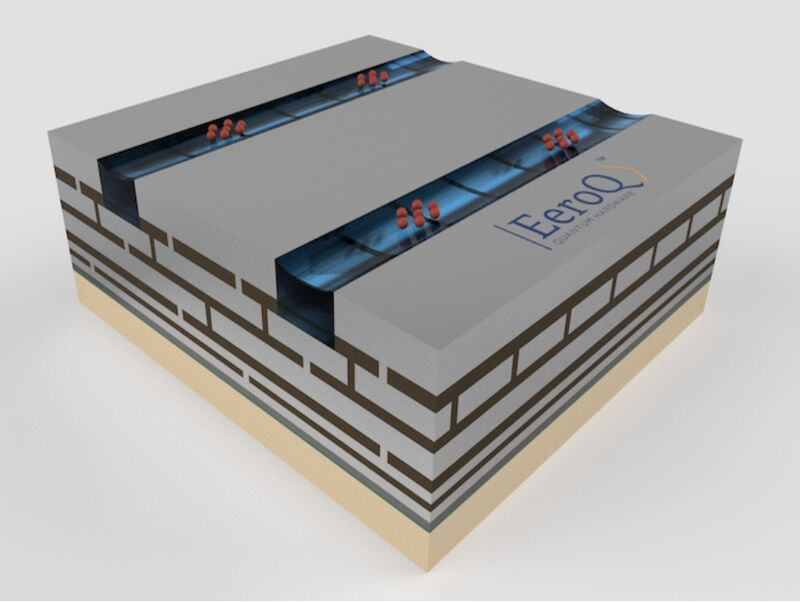
EeroQ Validates CMOS-Controlled Electron Shuttling on Superfluid Helium for All-to-All Qubit Routing
July 11, 2026