Quantinuum, RIKEN, and SoftBank Partner to Advance Quantum-AI Supercomputing and Domestic Fault-Tolerant Systems
Quantinuum, RIKEN, and SoftBank have partnered to advance quantum-AI supercomputing and develop fault-tolerant systems in Japan. …
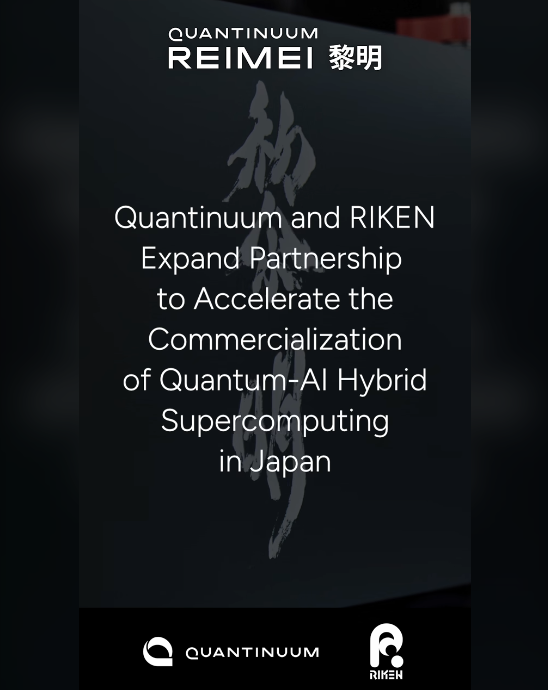
Quantinuum and RIKEN have signed an expanded memorandum of understanding to commercialize hybrid quantum-AI supercomputing across Japan, following the operational commissioning of the 56-qubit System Model H2 upgrade to the on-site "Reimei" trapped-ion quantum computer. Under the expanded partnership, the organizations will collaborate with domestic universities and component manufacturers to develop a "Made with Japan" fault-tolerant quantum computer, while entering a separate agreement with SoftBank Corp. to interface quantum hardware directly with commercial AI data centers.
RIKEN-Quantinuum Quantum-AI Hybrid Infrastructure & Strategic Roadmap | ||
Architecture Layer | Hardware & Platform Entity | Operational Role & Technical Scope |
Quantum Coprocessor | Completed upgrade from H1; provides fully connected, high-fidelity operations for classically intractable correlation sampling. | |
GPU & AI Supercomputer | RIKEN ROQUO GPU System | Executes tensor-network simulations, generative AI model training, and NVIDIA evolutionary optimization agents. |
Flagship Classical HPC | Supercomputer Fugaku (R-CCS, Kobe) | Performs large-scale baseline electronic structure calculations, geometry optimization, and matrix diagonalizations. |
Hybrid Orchestration | Quantinuum Nexus | Coordinates asynchronous job scheduling and data flow across heterogeneous QPU, GPU, and CPU clusters. |
Commercial Distribution | SoftBank Corp. Collaboration | Assesses infrastructure readiness to connect QPUs directly into commercial AI data centers across Japan. |
Hardware Roadmap | "Made with Japan" Fault-Tolerant Initiative | Combines Quantinuum QCCD technology with Japanese academic research and domestic industrial component supply chains. |
The operational platform introduces a three-tier heterogeneous compute architecture managed via Quantinuum Nexus. In this workflow, Fugaku handles wide-baseline classical modeling, the ROQUO GPU cluster executes tensor-network calculations and AI training, and Reimei targets dense electronic correlations where classical approximations fail. Ahead of public access under RIKEN's Test User Program, the platform validated this pipeline across two initial research projects:
Quantum-AI for Materials Discovery: Researchers executed quantum many-body circuits on a 6 × 6 two-dimensional spin lattice using Reimei to generate training data from classically intractable parameter spaces. The ROQUO GPU cluster was subsequently used to train a generative Transformer model using zero-noise extrapolation and active learning, allowing the AI model to predict phase diagrams and response functions across unsimulated material conditions.
Biomolecular Excited-State Simulation: Building on prior retinal photoisomerization benchmarks, the team coupled Reimei, Fugaku, and an NVIDIA evolutionary AI agent running on ROQUO to model the excited-state spectrum of zinc porphyrin. The quantum coprocessor identifies critical electronic configurations within strongly correlated active sites, while the classical supercomputers evaluate the broader molecular environment and reconstruct optical absorption properties.
The scientific collaborations support RIKEN’s AI for Science initiative and align with the $1 billion U.S.-Japan strategic research partnership established between the U.S. Department of Energy (DOE), MEXT, and METI under the bilateral Genesis Mission framework.
Beyond current hybrid workflows, the partnership outlines an industrial roadmap to co-develop a domestic fault-tolerant quantum computer. The initiative will integrate Quantinuum's trapped-ion Quantum Charge-Coupled Device (QCCD) architecture with Japanese precision manufacturing, cryogenic components, and academic research. In parallel, the collaboration with SoftBank will evaluate optical interconnects and deployment requirements to position quantum coprocessors within enterprise AI data center environments.
Official details are available from Quantinuum here and RIKEN here. Additional technical project context is outlined in Quantinuum’s blog post here, its open-source Tierkreis framework repository here, and its SC26 technical overview here. Prior QCR coverage of the H2 delivery is here, and the initial Fugaku–Reimei chemistry milestone is here.
November 10, 2026
Related Intelligence

Test of USydney article with HTML.
QuiX Quantum and Dutch Photonics Consortium Form National Mission for 100+ Qubit Computer
November 11, 2026
Colorado Partners with IBM to Deploy AI-Driven Quantum Ecosystem Mapping and Workforce Tools
November 11, 2026

Carahsoft Builds Federal Quantum Catalog with IonQ and PQSecure Partnerships
November 11, 2026
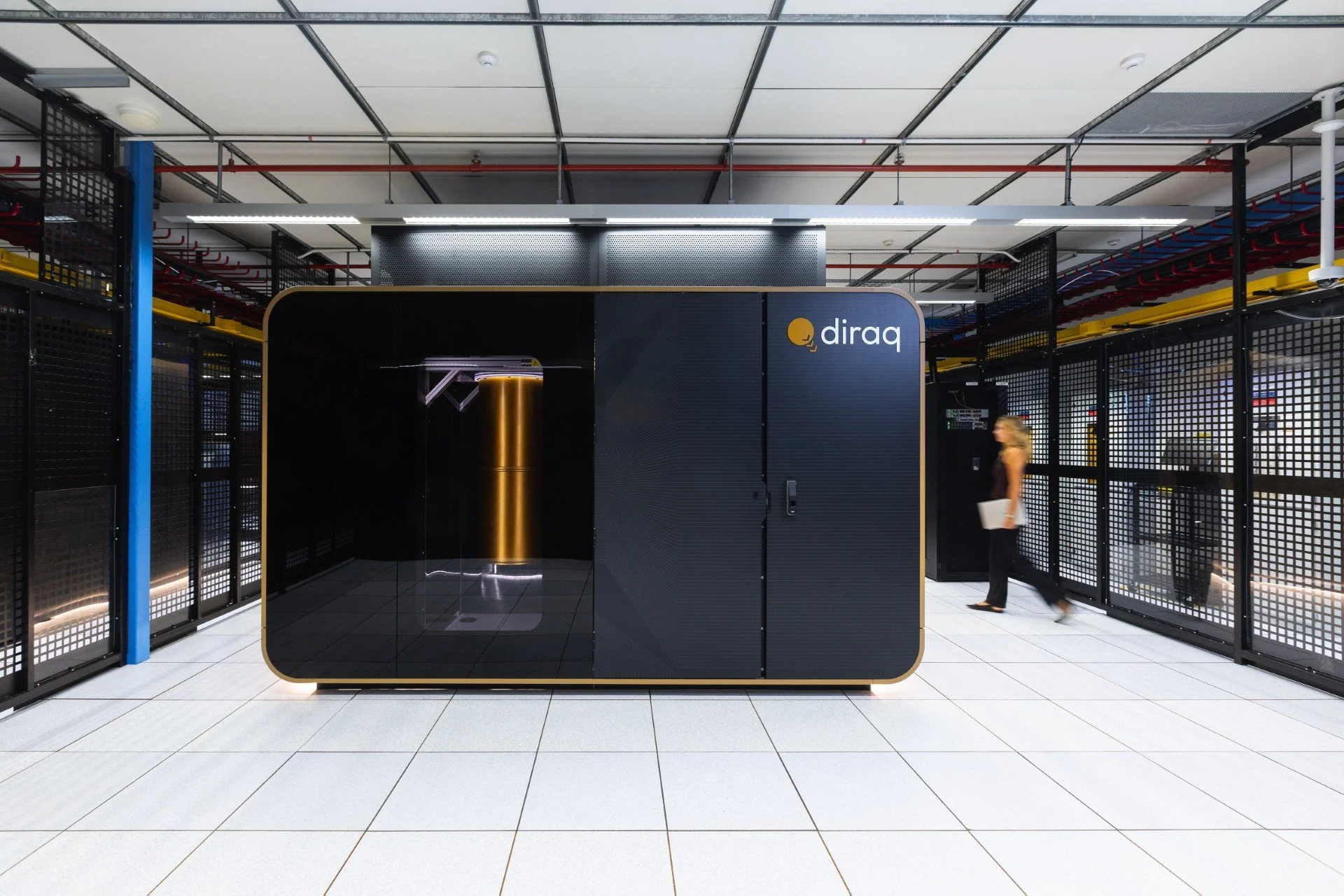
Diraq Installs Silicon Spin Quantum Computer in Equinix Commercial Data Center
November 11, 2026
University of Chicago and Tohoku University Establish Joint Quantum Materials Hub in Japan
November 11, 2026