Stanford Researchers Develop Cavity-Array Microscope for Parallel Atom-Array Interfacing
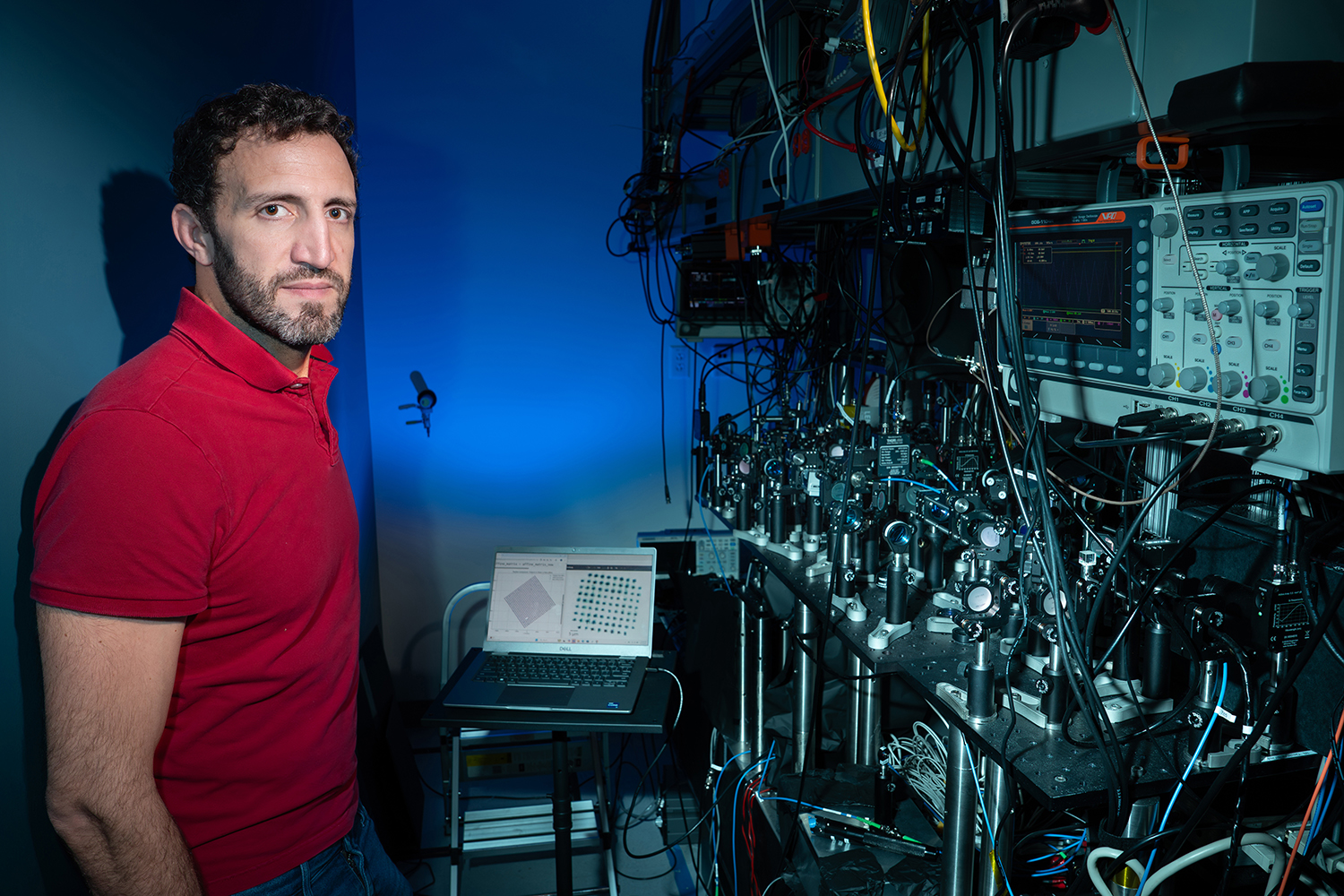
Researchers at Stanford University, led by physicists Jon Simon and Adam Shaw, have developed a cavity-array microscope that enables the fast, parallel readout of individual neutral-atom qubits. The system utilizes a free-space optical cavity architecture with intra-cavity lenses to create a two-dimensional array of over 40 optical modes, each strongly coupled to a single atom. This approach eliminates the previous bottleneck of interfacing entire atom arrays with a single global cavity mode, allowing for site-resolved data extraction without the need for nanophotonic elements.
The technical architecture involves a macro-scale resonator (approximately 34 cm) incorporating a microlens array (MLA) to stabilize beam trajectories and focus light tightly onto individual atoms. By demagnifying input beams at the atom plane, the system achieves above-unity peak cooperativity while maintaining micron-scale mode waists and spacings compatible with standard optical tweezer geometries. This design allows for fast, non-destructive, parallel readout on millisecond timescales, with experimental results showing cross-talk correlations below 1% between adjacent cavity modes.
A primary objective of the platform is the scalability of networked quantum systems. The team has already demonstrated a proof-of-concept prototype with over 500 cavities and achieved cavity-resolved readout into a fiber array, providing a modular path for linking quantum processing nodes via remote entanglement. The researchers anticipate that next-generation iterations will support tens of thousands of cavities, facilitating the development of distributed quantum supercomputers and high-resolution quantum sensing applications.
Read the official report from Stanford University here and the full technical study in Nature here.
January 29, 2026
Related Intelligence

Test of USydney article with HTML.

Chips JU and Pasqal Launch €50M ($57.2M USD) Q-PLANET Pilot Line to Industrialize Neutral Atom Quantum Chips
July 13, 2026
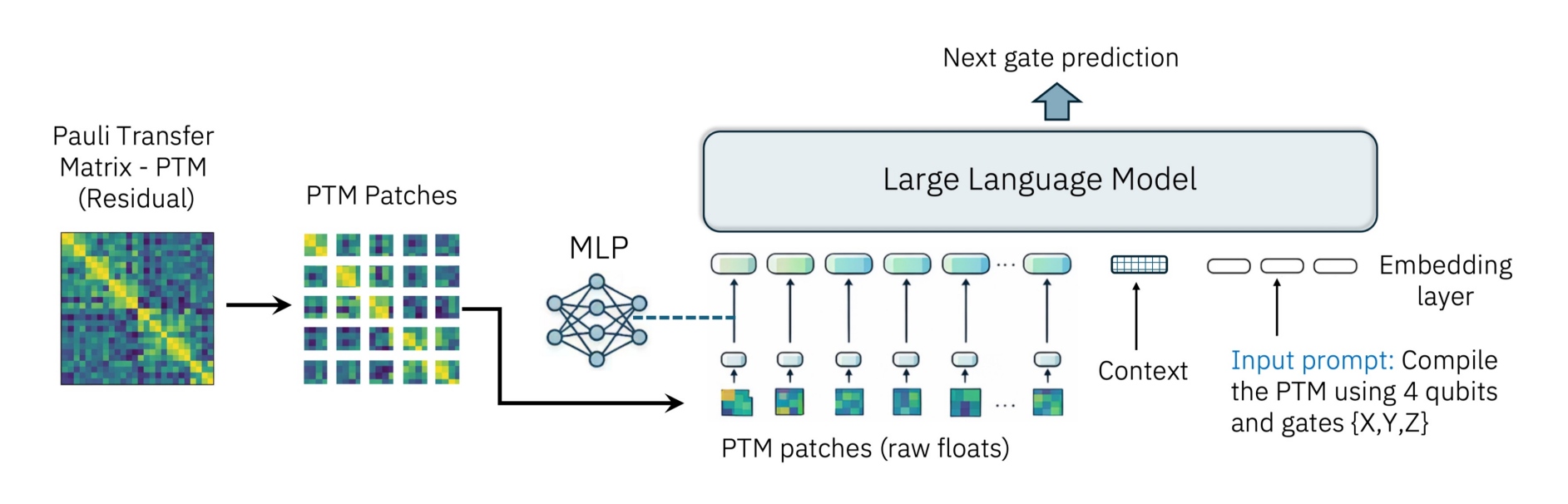
MIT and IBM Project Quantum Unity Operators into Language Model Latent Spaces for Multimodal Circuit Synthesis
July 11, 2026

ETH Zurich Combines Superconducting Qubits with Mechanical Resonators to Build Vibrating Quantum RAM
July 11, 2026

Google and Fraunhofer Launch Global Calls for Early Fault-Tolerant Algorithms and Enterprise Use Cases
July 11, 2026

Who’s News: Strategic Appointments at Photonic, Aliro Quantum, Florida Atlantic University, QuSecure, Quantum Elements, and QAI Ventures
July 11, 2026