Xanadu and HyperLight Cut Optical Switch Loss to 7 mdB Using Thin-Film Lithium Niobate
Xanadu and HyperLight Corporation have achieved a significant breakthrough in photonic quantum computing, demonstrating an optical switch insertion loss…
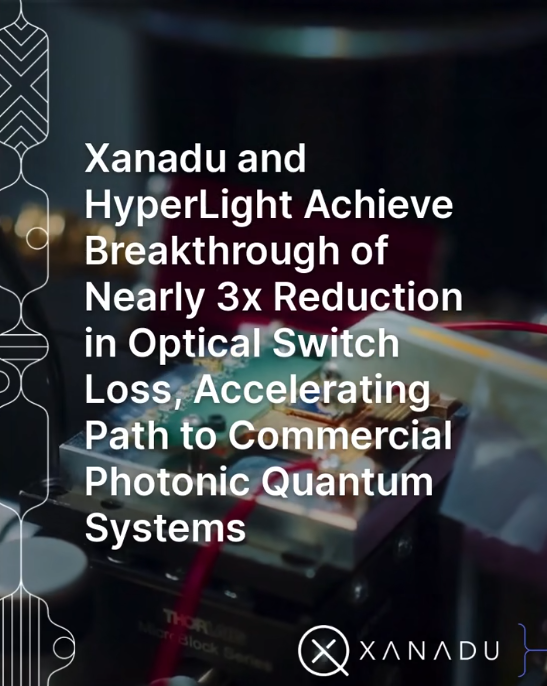
Photonic quantum hardware developer Xanadu (NASDAQ/TSX: XNDU) and integrated photonics vendor HyperLight Corporation have demonstrated an optical switch insertion loss of 7 millidecibels (mdB) using thin-film lithium niobate (TFLN) technology. Fabricated on a commercial wafer line via HyperLight’s TFLN Chiplet platform, the benchmark represents a nearly threefold loss reduction compared to the companies’ 20 mdB milestone in 2025, addressing one of the most severe physical constraints in scaling fault-tolerant photonic quantum processors.
High-Speed Photonic Quantum Switch Benchmarks & Material Platforms | ||
Platform Metric | Xanadu & HyperLight (TFLN Platform) | Published BTO Alternative (PsiQuantum Baseline) |
Active Electro-Optic Material | Thin-Film Lithium Niobate (TFLN) | Barium Titanate (BTO) on silicon nitride |
Switch Insertion Loss | 7 mdB (0.007 dB) | ~100 mdB (0.10 dB) |
Signal Degradation | Fewer than 2 photons lost per 1,000 transmitted | Roughly 23 photons lost per 1,000 transmitted |
Fabrication Pipeline | Commercial wafer-scale TFLN Chiplet manufacturing line | 300 mm foundry integration with molecular-beam epitaxy BTO |
Primary Quantum Function | Dynamic photon routing and resource multiplexing | Active feed-forward switching and spatial multiplexing |
In photonic quantum architectures, optical switches dynamically route non-classical single photons across interferometers to generate entangled cluster states and execute measurement-based gates. Because quantum signals cannot be amplified without destroying underlying quantum coherence, cumulative insertion loss along switching networks rapidly degrades quantum state fidelity. Higher optical losses require exponential increases in pump laser power and hardware redundancy to compensate for lost qubits before error-correction thresholds can be met.
The 7 mdB benchmark was verified across high-volume production wafers, establishing repeatability across die yields. Xanadu's switch loss metric compares against published benchmarks for alternative electro-optic materials, notably the 100 mdB insertion loss reported by PsiQuantum in Nature for barium titanate (BTO) phase shifters integrated on 300 mm silicon wafers. While BTO exhibits high electro-optic Pockels coefficients, thin-film lithium niobate benefits from mature commercial manufacturing infrastructure currently deployed in high-bandwidth optical interconnects for artificial intelligence and telecommunication networks.
Minimizing switch insertion loss is central to Xanadu's strategy of operating room-temperature photonic computing networks without massive cryo-refrigeration overhead. Beyond quantum processors, Xanadu and HyperLight indicated that the ultra-low-loss switching platform could offer power-efficiency advantages for optical routing inside energy-intensive enterprise AI data centers.
Official details are available via Xanadu's release here, video briefing here, and the referenced competitor benchmark in Nature here.
November 11, 2026
Related Intelligence

Test of USydney article with HTML.
QuiX Quantum and Dutch Photonics Consortium Form National Mission for 100+ Qubit Computer
November 11, 2026

Colorado Partners with IBM to Deploy AI-Driven Quantum Ecosystem Mapping and Workforce Tools
November 11, 2026

Carahsoft Builds Federal Quantum Catalog with IonQ and PQSecure Partnerships
November 11, 2026
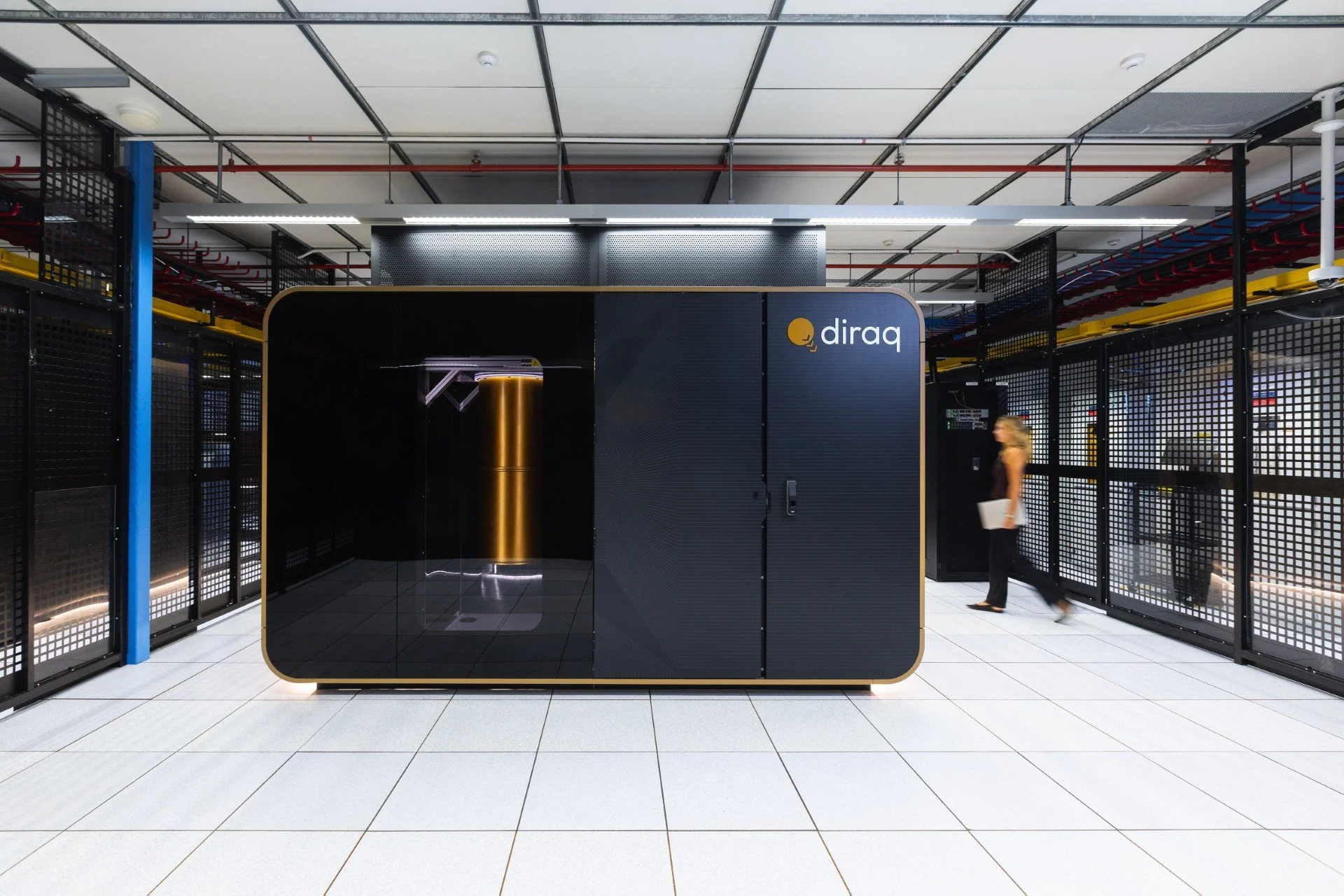
Diraq Installs Silicon Spin Quantum Computer in Equinix Commercial Data Center
November 11, 2026

University of Chicago and Tohoku University Establish Joint Quantum Materials Hub in Japan
November 11, 2026