IBM Unveils 520-Qubit Nighthawk r3 Processor, 1,040-Qubit Linked Roadmap, and Managed Hybrid Workflows at QDC 2026
IBM introduced the Nighthawk r3 processor with 520 programmable qubits and a roadmap to 1,040 qubits by 2027, demonstrating advancements in quantum…
At its annual Quantum Developer Conference (QDC 2026) in Yorktown Heights, IBM (NYSE: IBM) unveiled its next-generation superconducting processor, IBM Quantum Nighthawk r3, alongside operational benchmarks from its active Nighthawk r2 fleet and an expanded software stack uniting classical high-performance computing with quantum execution. Scheduled for 2027, the Nighthawk r3 architecture is engineered to execute 10,000 quantum operations across 520 programmable qubits, with plans to link two chips via high-fidelity couplers into a 1,040-qubit system.
IBM Quantum Nighthawk Architecture & Roadmap Progression | ||
System Specification | IBM Quantum Nighthawk r2 (Deployed Sept 2026) | IBM Quantum Nighthawk r3 (Planned 2027) |
Programmable Qubits | 120 programmable qubits (458 physical qubits) | 520 programmable qubits (2,034 physical qubits); 1,040 qubits via 2-chip link |
Gate Operation Budget | >7,500 accurate two-qubit operations | 10,000 accurate two-qubit operations |
Sampling & Reset Speed | Up to 100,000 samples/sec (100 kHz reset; 25× faster than Heron) | High-speed square-lattice architecture with rapid on-chip qubit reset |
Modular Interconnects | Single-chip deployment (4 l-couplers tested at 99.3% fidelity on r1) | 10 chip-to-chip l-couplers enabling multi-processor entanglement |
Production Throughput | >34 billion circuits executed across enterprise and research partners | Transitional stepping stone toward 2029 fault-tolerant IBM Quantum Starling |
Utility-scale applications in chemistry, materials science, and optimization increasingly require millions to billions of circuit samples. Since deploying in September 2026, Nighthawk r2 processors have executed more than 34 billion circuits for partners including E.ON, Algorithmiq, and Q-CTRL, delivering speedups of up to 19× over previous IBM Heron systems. In materials simulation benchmarks with Algorithmiq, Nighthawk r2’s square-lattice connectivity executed circuits 8× faster than Heron while requiring an estimated 240× more classical memory for competing tensor-network approximations.
To support its modular scaling path toward the fault-tolerant IBM Quantum Starling system targeted for 2029, IBM detailed parallel hardware breakthroughs across chiplet interconnects and cryogenics. The company demonstrated four chip-to-chip l-couplers linking Nighthawk processors with up to 99.3% quantum state transfer fidelity, alongside a dual-module cryogenic system cooled below 15 millikelvin in under five days. On the qLDPC memory side, design refinements to its Loon architecture using denser c-couplers reduced required Josephson junctions per module from roughly 5,000 to 2,000.
On the software front, IBM introduced Managed Workflows within the IBM Quantum Functions stack (formerly Qiskit Functions) under a unified Resource Units (RUs) billing model, providing persistent storage, GPU-accelerated classical compute, and parallel orchestration for multi-billion-sample hybrid jobs. Using automated sample-based quantum diagonalization (SQD) pipelines, IBM and RIKEN accelerated large-scale electronic structure calculations 5× while running 100× more computations than their foundational 77-qubit study, while Cleveland Clinic and RIKEN automatically processed 608 million samples for 12,000-atom biomolecular complexes 33× faster than unautomated workflows.
For low-level control and developer enablement, IBM unveiled the directed execution model (powered by Samplomatic, Executor, and client-side primitives), modular qiskit-mitigation and qiskit-noise-learning libraries, and pulse-level dynamic circuit tools capable of executing 1,000,000-round repetition codes end to end alongside Qiskit Paulice spacetime codes. The release also includes the Rust-based Quantum Resource Management Interface (QRMI) for HPC schedulers, Qiskit Fermions and alpha Qiskit Bosons utility mappers, the ffsim fermionic simulator, circuit usage profilers, and open-source Qiskit Agent Skills for AI coding assistants.
Official release details are available via the IBM Newsroom here, the main QDC 2026 overview blog here, and the QDC 2026 developer guide here. Open-source benchmarking suites on GitHub cover IBM’s device metrics (MCPS, CLOPS, EPLG) here and the utility-scale mirror test here. Supporting scientific preprints on arXiv detail the 12,635-atom Cleveland Clinic and RIKEN protein-ligand study here, the full-scale Fugaku closed-loop SQD study here, and IBM and RIKEN’s foundational SQD chemistry paper here.
Related QCR coverage includes the Nighthawk r2 launch here, Qiskit Paulice spacetime error detection here, IBM’s 99.3% fidelity l-couplers here, modular cryogenic cells for Starling here, trusted quantum advantage benchmarks here, the co-located ORNL and AMD quantum error-correction platform here, the Quantum System Two deployment at Hyde Park Labs here, and the 70-qubit generative quantum eigensolver study with Mitsubishi Chemical and Keio University here.
November 11, 2026
Related Intelligence

Test of USydney article with HTML.
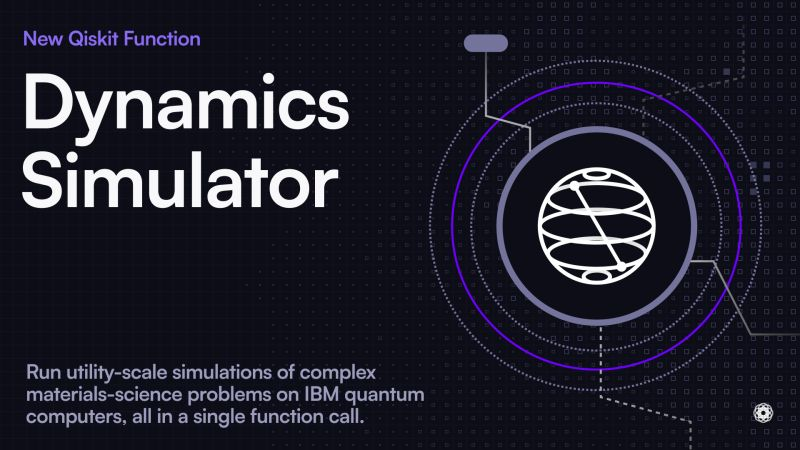
Q-CTRL Deploys Fire Opal Dynamics Simulator on IBM Quantum Functions, Achieving 12× Speedup on Nighthawk
November 12, 2026
Q-CTRL Expands Fire Opal Suite with Constrained Optimization, Estimator Twirling, and Monte Carlo Solver
November 12, 2026
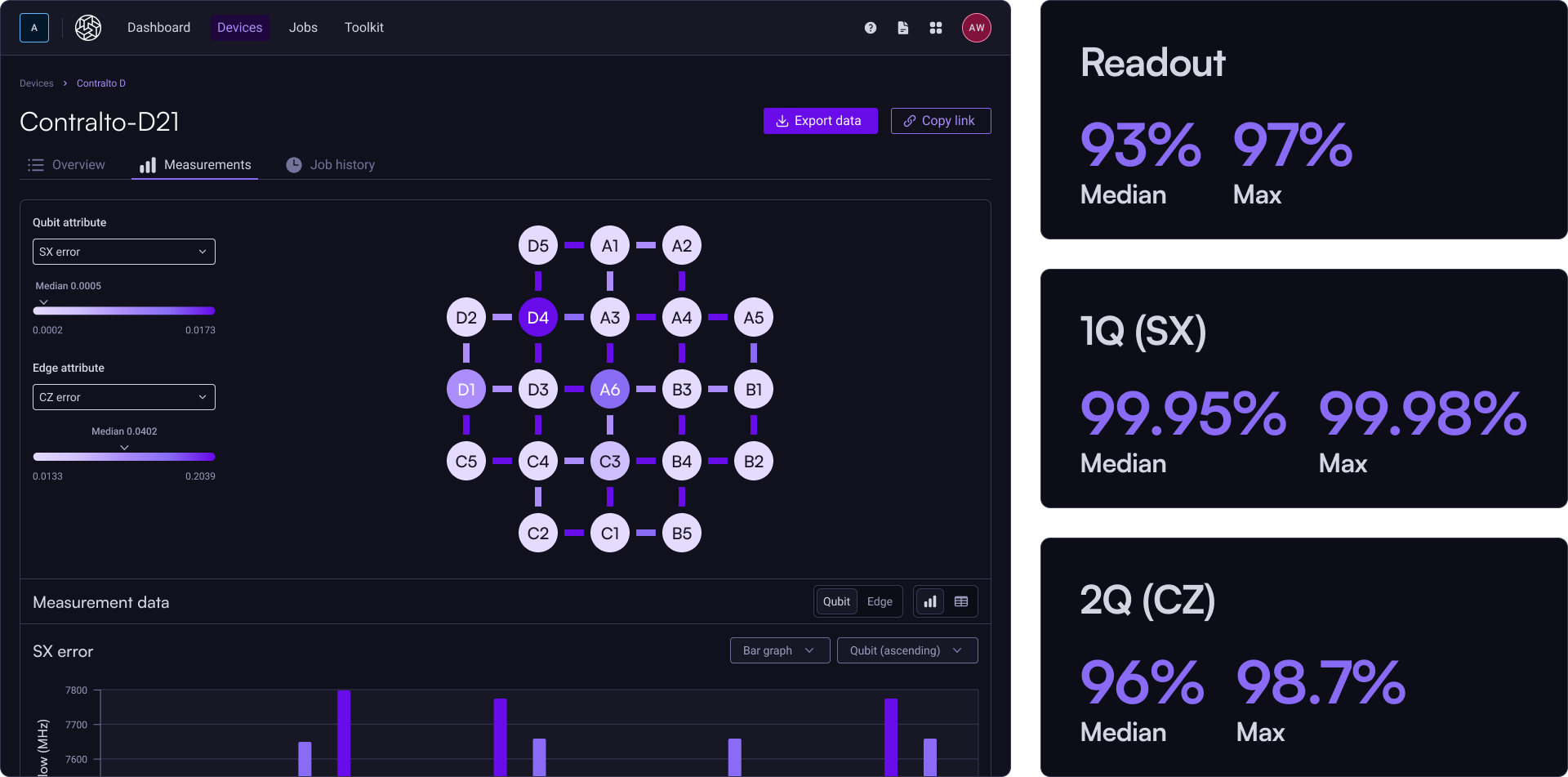
Q-CTRL Demonstrates Push-Button Cold-Start Calibration on QuantWare Superconducting QPUs
November 12, 2026

Q-CTRL Achieves RTCA DO-160 Airworthiness Qualification for Ironstone Opal Quantum Navigation
November 12, 2026
Anyon Technologies and Q-CTRL Partner on Self-Calibrating Hybrid Quantum Supercomputers
November 12, 2026