Q-CTRL Achieves RTCA DO-160 Airworthiness Qualification for Ironstone Opal Quantum Navigation
Q-CTRL's Ironstone Opal quantum magnetic navigation system has achieved RTCA DO-160 airworthiness qualification, becoming the first quantum navigation…

Quantum infrastructure and sensing company Q-CTRL has announced that its Ironstone Opal quantum magnetic navigation system has achieved safety-of-flight qualification under the commercial aviation RTCA DO-160 environmental testing standard. Unveiled ahead of live demonstrations at the Farnborough International Airshow, the milestone marks the first quantum navigation payload certified for commercial aerospace and uncrewed aerial vehicle (UAV) deployment.
Q-CTRL Ironstone Opal Operational & Certification Benchmarks | ||
Specification | Validated Performance / Standard | Operational Significance |
Airworthiness Standard | RTCA DO-160 Qualified | Meets commercial aerospace environmental, electromagnetic, and vibration safety-of-flight criteria. |
Navigation Accuracy | RNP 0.3 (<0.3 nautical miles over 95% of flight) | Satisfies international civil aviation accuracy thresholds without satellite signals. |
Hardware Variants | Crewed aviation unit & <1 kg UAV module | Supports fuselage or wing-mounted integration on commercial airliners and NATO Class II+ drones. |
Export Classification | ITAR-Free | Permits international commercial and allied defense deployment without U.S. munitions restrictions. |
Rising global incidents of GPS jamming and spoofing—disrupting more than 1,500 commercial flights daily—have prompted aviation regulators and defense agencies to seek passive alternatives to satellite-based positioning. Unlike conventional inertial navigation systems that accumulate positional drift over long flights, Ironstone Opal measures subtle variations in Earth’s crustal magnetic field using atomic quantum sensors and matches them to onboard geomagnetic maps.
To operate reliably inside magnetically noisy aircraft frames, the platform pairs quantum magnetometers with AI-driven software ruggedization that filters out airframe interference in real time. The passive, non-emitting architecture has undergone flight evaluations with commercial and defense partners, including Airbus and Lockheed Martin, as well as U.S. defense programs.
Details on the DO-160 qualification are available from Q-CTRL here, alongside background on Q-CTRL’s flight trials with Airbus here and Lockheed Martin's quantum PNT overview here. Related QCR coverage of Q-CTRL’s $24.4M DARPA Robust Quantum Sensors (RoQS) award is available here.
November 11, 2026
Related Intelligence

Test of USydney article with HTML.
IBM Unveils 520-Qubit Nighthawk r3 Processor, 1,040-Qubit Linked Roadmap, and Managed Hybrid Workflows at QDC 2026
November 12, 2026
Q-CTRL Deploys Fire Opal Dynamics Simulator on IBM Quantum Functions, Achieving 12× Speedup on Nighthawk
November 12, 2026

Q-CTRL Expands Fire Opal Suite with Constrained Optimization, Estimator Twirling, and Monte Carlo Solver
November 12, 2026
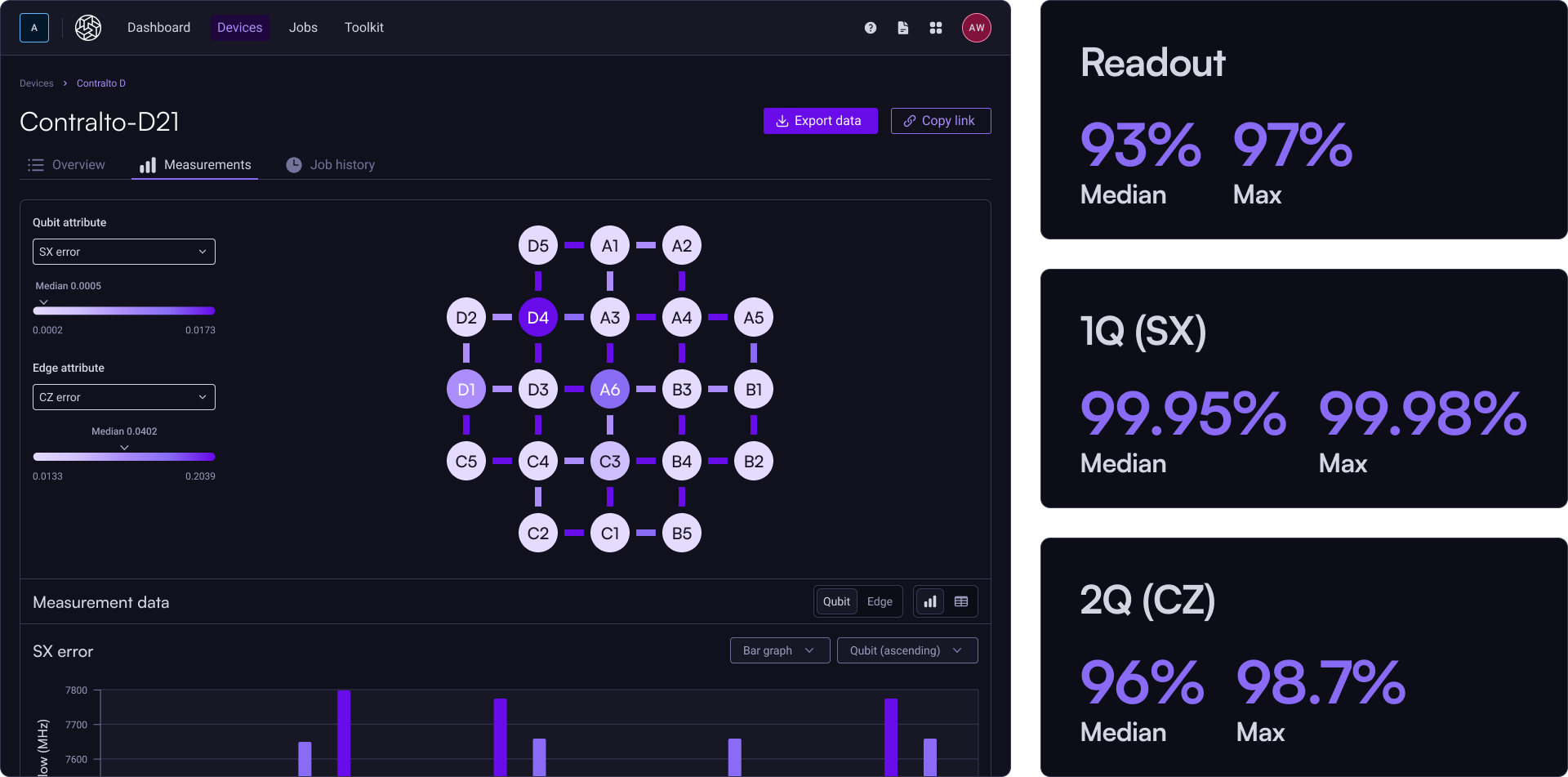
Q-CTRL Demonstrates Push-Button Cold-Start Calibration on QuantWare Superconducting QPUs
November 12, 2026
Anyon Technologies and Q-CTRL Partner on Self-Calibrating Hybrid Quantum Supercomputers
November 12, 2026